European Christian Identity and Self-Secularization

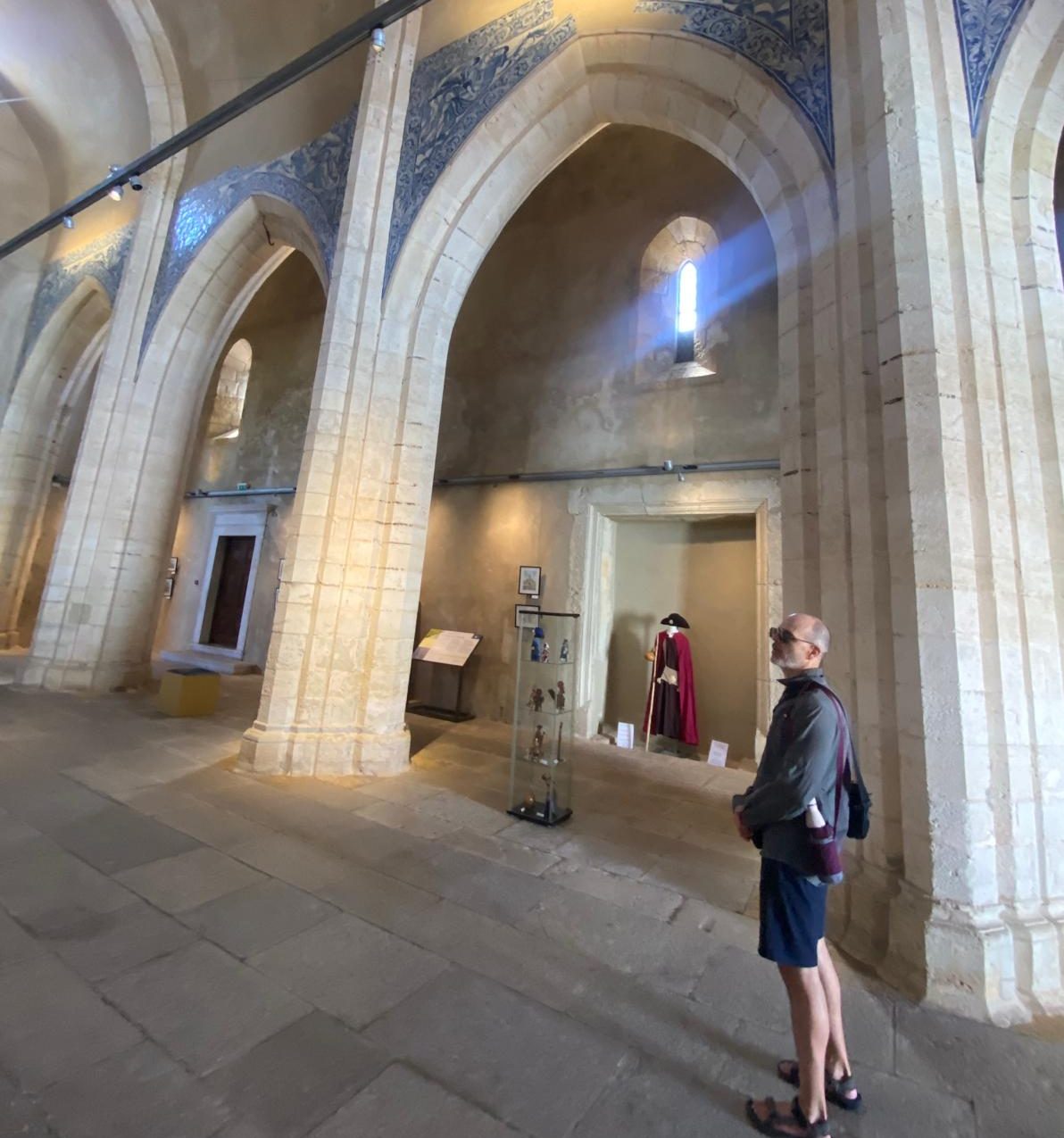
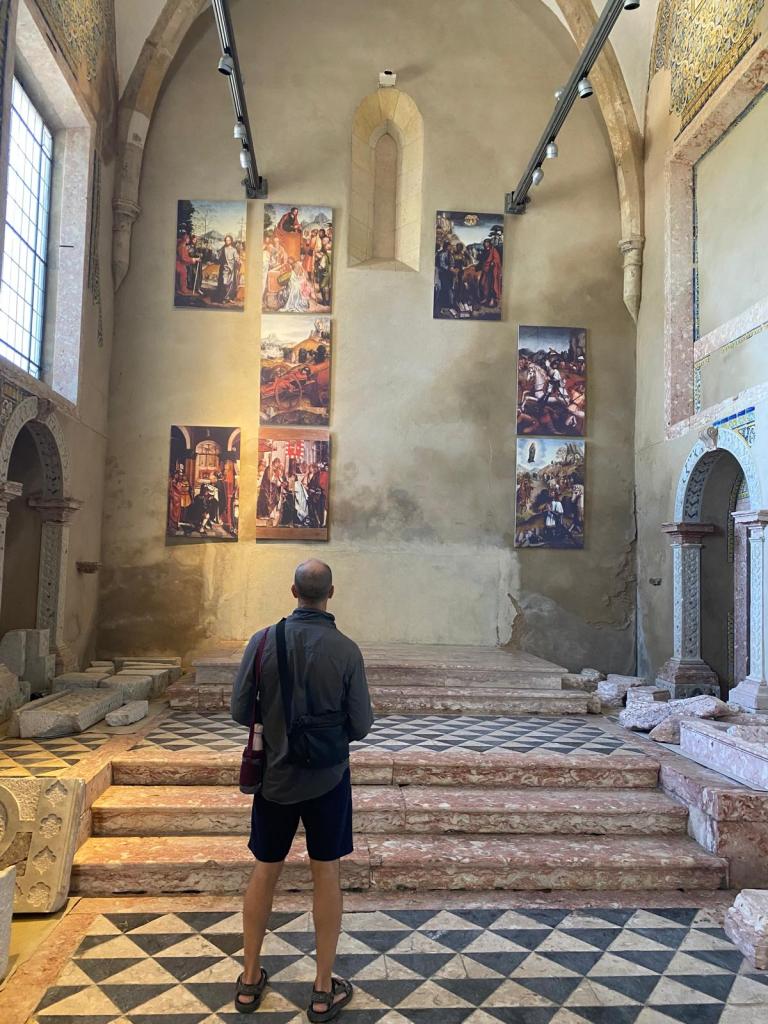
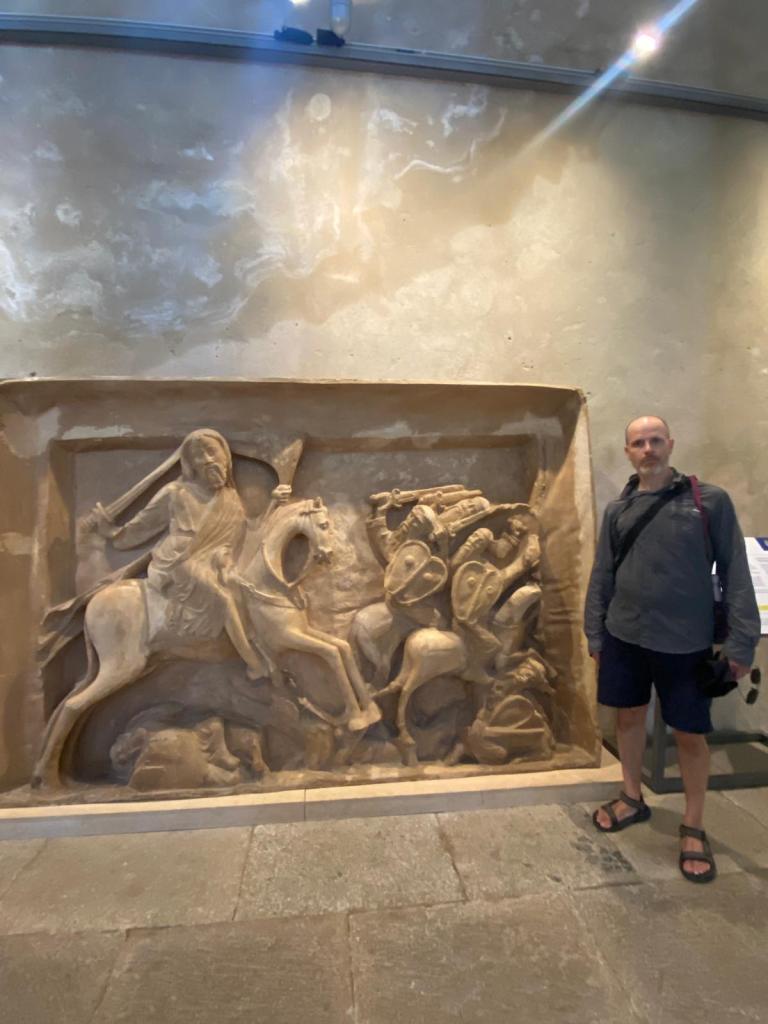
I believe that understanding the ancient history of Portuguese faith and culture is key to contributing to the work of the Spirit in this ancient land. Part of my field work for promoting reconciliation between Catholics and Protestants is to understant the history. My wife Kati and I recently visited the Castle of Palmela on the Peninsula of Setubal on the other side of the Tagus river. Dating from the 310 b.c., the Castle was built by the Romans and subsequently conquered by the Visigoths and the Moors. The site is a rich source of data on the conquest of the Moors and reconquest of Christian crusaders. The Moors built the original fort on the hilltop, which has been excavated and can be toured. A vast amount of Moorish arifacts are on display. The crusader spirit of the Spainish and Portuguese Christian armies would give rise to the crusades in the Holy Land. Islamic civilization dominated the Iberian peninsula lasted for 8 centuries, and is one of the reasons most Spanish and Portuguese see Catholic faith as patriotic and essential to their national identity. Kati was able to find the crest of her maternal family name Gonçalvez.
In a land so deeply rooted in Christianity, but also in religious wars, we pray that the ancient church of Christ can be continually renewed. The biblical vision for renewal and revival is not one of obliterating or ignoring the past, but of repentance and restoration, as the prophet Isaiah wrote “In repentance and rest is your salvation, in quietness and trust is your strength, but you would have none of it” (Is. 30:15). In so many nations the church seeks to vindicate itself against the accusations of those who focus only on the dark side of Christian history. But through repentance and loving witness the church can find new strength even in extremely secular Western Europe. 

Protestand and Catholic – who God used to bring the transforming values of Christ’s kingdom. But as the Muslim world often sees Christ as representing Western violence and enmity, we must pray for the restoration of the gospel message of peace, forgiveness, and reconciliation of all nations with the Heavenly Father. 

French Protestant sociologist Oliever Roy (2024, https://youtu.be/IAl6aOePZsQ?si=3XiCGBgQONS1NefK) argues that many Christian populists in Europe today are children of the 60s cultural revolution who don’t adhere to religious practice or belief but only use Christianity as an identity factor in juxtaposition to minorities such as Muslim immigrants. Roy argues that since the 1990s these populists blame groups like Muslim immigrants for de-Christianizing Europe. But Roy’s research indicates that the de-Christianizing of Europe resulted primarily from Enlightenment thinkers such as Descartes and Kant who tried to secularize Christian morals rather than coming up with new morals. Secularization of education was based on an idea of universal ethics that should not be questioned. Protestants we’re first to legally impose Christian ethics such as making homosexuality illegal. Both Protestants and Catholics banned abortion but this was only much later, lasting until the 1960s. Until the 1960s, the Christian identity of Europe wasn’t a concern because secularism preserved much of Christian ethics as the basis for law and education. The counterculture movement of the 60s was not an anti-religious. From the 60s to the 80s, the laws changed in Europe to accommodate the sexual / cultural “revolution” but there wasn’t any real political revolution. The Protestants self-secularized while the Catholics focused on resisting cultural changes on sexuality and family. Roy describes how populist politicians sinde the 1990s have said they represent Christian culture while supporting positions att odds with traditional Christian views on marriage, abortion, love of neighbor (immigration), etc.  

As the church in Europe is challenged with finding its role within secular nations, our prayer is that Christians will be both relevant as well as distinct from the systems of the world which are always a mixture of good and evil. Our prayer is that Christians seek the flourishing of the nations where they are citizens while understanding the Christ’s vision for the coming of the kingdom, distinct from the hegemony of any human institution.

Recently we also visited a popular festival in a rural village an hour north of Lisbon. This was a deep experience of rural Portuguese culture. A particularly insigtful moment was when the parish priest said a blessong over all the visiting family members who were working and living abroad. It helped us understand the deep connection the Portuguese maintain with their ancient agricultural communities while many work overseas. Many in the West feel that monetary gain and freedom from societal norms will ultimately prove the most powerful influences in modern society. But in Southern Europe, we have seen the enduring values of land, church, and ancestry. The less economically powerful countries on the perifery of Europe – sometimes prejoratively referred to as the PIGS (Portugal, Ireland, Greece, and Spain) have exported their young people for generations to work in richer nations. On a trip to Wengen, Switzerland years ago I read the names of workers who had died digging a passage way through the alps in the 1920s, all of them Italian, Spanish, and Portuguese. On our visit to a small Portuguese village, it was a privilege to witness how the traditions and affections of traditional Southern European life are preserved. 
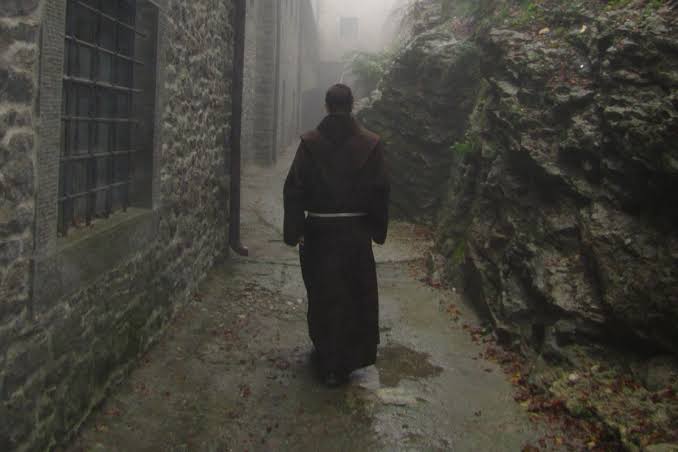
https://laycistercians.com/catholic-monks/

Do Anthropologists Think They can Learn Anything From Theologians?

A Place for Conservative Anthropology?

Perhaps current discussions in the field of sociology can speak to our topic. At a recent seminar of the Heterodox Academy, statistical evidence was presented that most applicants for sociology degrees are coming from an activist motivation, also known as action research (Heterodox Academy, 2026, https://youtu.be/fYCkOI6i7DE?si=DngoFqm9WzVq7kJz). According to the panel, inequality has become the dominant theme in sociological research. This situation is critiqued as producing research that merely denounces equality rather than seeking to contribute new data. In this way, equality has substituted all other paradigms of virtue. Against this predominant current, the Heterodox Academy seminar argued for the need for conservative sociology. For many conservatives, there is no place for their worldview in sociology because the field is completely dominated by activism targeting inequality. However, others have argued for a conservative sociology that prioritizes science over advocacy. 

Can Theology Teach Anthropologists How to Critique Culture?

Anthropologist Joel Robbins (2023, https://youtu.be/PtCGXLuIOAQ?si=FRfJMVWfCo_FNKLo) addressed how the issue of making judgements across cultures has become increasingly fraught among anthropologists. Robbins investigated what can be learned from religions about this. Cultural relativism (CR) is seen as the greatest contribution of anthropology to the academy and human thought in general; CR aims to suspend judgement to understand how people make sense of things, a form of asceticism that anthropologists increasingly don’t want to adopt. Robbins argued that whereas anthropologists used to look for the integrity of societies, now they look for what goes wrong in them. Anthropologists today often blame some source from outside or above that oppresses and exploits. 

Robbins posited that anthropologists could learn from theologians because they are trained in the opposite to CR: how to make judgements; (2018, https://youtu.be/EISLdAcnUgc?si=oXCA1dN4eT65IpCA). Robbins draws upon the work of Ortner (2006) who predicted a shift in anthropology from symbolic to practices in the 70s and 80s. In the 2010s, Ortner said that the focus of anthropology had become dealing with the neo-liberal world order. He described this as an “anthropology of darkness” focused on protest, activism, and liberation. In opposition to this trend, Ornter described the emergence of a counter movement which he described as the anthropology of the good. Drawing upon Ortner, Robbins proposed an anthropology of virtue which is better equipped to give us an approach to dealing with cultural differences. This approach is also more helpful for dealing with the problems of societies and cultures than an anthropology of darkness. Robbins describes cultural values as what is ethically desirable. Values are “the way things end up” – the societal norms that repeatedly manifest themselves in situations. In contrast to this, moral non-cognitivists say that values are simple people saying “yeah” or “boo” about things they arbitrarily approve or disapprove of. 

In this text, I have briefly addressed some discussions in anthropology and how theology can possibly contribute to them. Historically, anthropologists and missionaries were generally at odds with each other ideologically. However, the field of missions studies has increasingly recognized its situation in relation to the other social sciences (Kim et al., 2022). Missiologists increasingly study alongside sociologists and anthropologists in major universities. Coming decades will demonstrate whether such partnership and dialogue can bear fruit according to the perspectives of all parties involved. 

References

Heterodox Academy, 2026, https://youtu.be/fYCkOI6i7DE?si=DngoFqm9WzVq7kJz

Kim, K., Jørgensen, K., & Climenhaga, A. F. (Eds.). (2022). The Oxford handbook of mission studies. (First edition.). Oxford University Press. Biola Library Catalog (Upper Level BV2090 .O94 2022).

Ortner, S. B. (2006). Anthropology and social theory: Culture, power, and the acting subject / Sherry B. Ortner. Duke University Press. Biola Library ebooks (bio.on1097302820). https://research.ebsco.com/plink/832a8768-1e6c-3d6d-be47-b3080d7a5f5d

Robbins, Joel (2018, https://youtu.be/EISLdAcnUgc?si=oXCA1dN4eT65IpCA

Robbins, Joel (2023). https://youtu.be/PtCGXLuIOAQ?si=FRfJMVWfCo_FNKLo

http://southernbellecrochet.com/free-pattern-mini-prayer-cloth/

Challenging Common Notions Regarding Faith Today

Church is for the Disenfranchised of Society?

According to sociologist Nancy T. Ammerman (2015, https://youtu.be/xl9qYKcfWUo?si=d6H0-A1V_2-3KBO8), a key shift in the sociology of religion has been the blurring of boundaries that traditionally confined the field. Increasingly, sociologists are exploring how religion is manifest in diverse spheres of daily life. Some findings contradict common notions regarding religious affiliation and practice in the Western world. For example, religious vibrancy is often attributed to Evangelical Pentecostalism that attracts the poor and disenfranchised communities of large urban centers. However, Ammerman’s research indicates the opposite – that the poor and disenfranchised are the majority of those who don’t attend regular worship services in the U.S. On the contrary, most churchgoers tended to be upstanding enfranchised members of society.

Together with Spanish sociologist Jose Casanova, Ammerman’s research found that most Americans who leave their religious tradition do so because they don’t belong not because they don’t believe (Ammerman, 2022, https://youtu.be/RAgd4QmVWKA?si=6OjKExySg-hqFgTO). This reinforces the evidence that religious faith is often higher among the more educated because they feel they belong to society, including its religious expressions and institutions.

Spirituality Thrives without Community and Tradition?

Ammerman also researched religious “nones” in the U.S. (2016, https://youtu.be/W-uOims2A0A?si=RP3j4JaCeoldxvW0), the term referring to people who have religious beliefs and practices that are not expressed in the context of organized religion. Only a tiny percentage of these religious nones (RNs) are atheists. The biggest factors for the growth of the RNs since the 1980s was being raised by parents who were also RNs as well as the rise of the “moral majority” Evangelical political culture, which many credited with their decision to leave church. A common notion associated with the RNs is that vibrant individualized spiritual practice often thrives without association with any faith tradition or community. Ammerman found that doing so is very difficult and that community and tradition are extremely helpful for the development and maintenance of religious practice. Many RNs end up joining religious communities, and most of them are drawn by the experience of collective worship – the experience of connecting with God and community. Particularly attractive to RNs is the opportunity to converse with others in church about their faith. Ammernan also described a large category of marginal or “liminal” RNs that move in and out of religious communities and traditions in a cyclical pattern never developing roots. 

Spirituality Thrives Where there are Convincing Rational Arguments for Faith?

German Catholic sociologist Hans Joas (2020, https://youtu.be/BcuyrfhQ76Y?si=Eohb1T2UvT1GZGx0) argues that values develop from human experience, in contrast to the view that in modernity values develop from rational discourse. Joas cites the Holocaust, which came to be seen as evil not by rational discussion but historical experience. In contrast to the view that the modern era is disenchanted, Joas argues that universal human morals emerge through a process, concepts such as humanity as a common race across the earth with shared essential qualities. Joas sees a global genealogy of moral universalism, in which the individual’s moral values cannot be explained by the tradition they were raised in. Rather, individual’s values are shaped by paradigm-forming experiences. Joas argues that enchantment, which I would describe here as the consciousness of the spiritual, is a constant cyclical re-emerging human phenomena throughout human history and very much present today. In contrast to the secularism hypothesis, Ireland, Poland, Croatia, and southern Germany are examples of the pervasive relevance of religious faith and practice (Joas, 2002, https://youtu.be/N_f-MF19GSs?si=tL_xapiSi0AARfgS).

Implications for Faith in the Modern West

In this brief text, I have cited some interesting trends in the sociology of religion. As a Christian living in Southern Europe, I am encouraged to see such evidence of desire for God in the modern Western world. It has also been my experience that developing and maintaining the Christian life – a relationship with God and participation in His kingdom – is highly impeded by a lack of community. The body of Christ is where we experience the collective reality of Christ’s kingdom. Jewish philosopher Emmanuel Levinas held that ethics precludes ontology in philosophy (Zoloth, 2024, https://youtu.be/nCT_nS3z1aA?si=sCARFsRjXl-5VqUz). By this he meant that ethics can only be understood in the context of community. Enlightenment modern attempts at totality deny the particularity of the individual. Levinas argued that the encounter between the individual and God was the foundation of ethics, rooted in Torah. Levinas say this encounter as always involving three interlocutors: God, the individual, and the other. 

These trends in sociology of religion reveal the continued relevance of religious faith and practice. We don’t live in a time of increased irrelevance or marginality of faith and devotion. Even in the West, we are surrounded by a vast sea of individuals who seek the answers and experiences that we Christians have found in Jesus Christ and his church. 

References

Ammerman, 2015, https://youtu.be/xl9qYKcfWUo?si=d6H0-A1V_2-3KBO8

Ammerman, 2016, https://youtu.be/W-uOims2A0A?si=RP3j4JaCeoldxvW0

Joas, 2002, https://youtu.be/N_f-MF19GSs?si=tL_xapiSi0AARfgS

Joas, 2020, https://youtu.be/BcuyrfhQ76Y?si=Eohb1T2UvT1GZGx0

Zoloth, 2024, https://youtu.be/nCT_nS3z1aA?si=sCARFsRjXl-5VqUz

Rise of the Religious “Nones”

Sociologist of religion Linda Woodhead has done important work on the rise of the religious “nones”, i.e., those who claim no affiliation with any organized religion (Woodhead, 2017). Her reserach demonstrates that increased secularization in the UK is not due mostly to adults walking away from their religious traditions. The greatest demographic source of the rise of the religious nones is teenagers raised in religious homes that opt to not follow their parents’ religion.

Many nones do attest to some form of spiritual practice in their daily lives. It is interesting to note which form of spiritual practice they are most averse to. Think of what spiritual practices are most common – prayer, scripture reading, pilgrimage, worship, etc. Woodhead’s research indicates that attending public worship of some other form of formal gathering is the most unpopular spiritual practice among religious nones.

I found this fascinating – why is it that the UK population is increasingly averse to attending formal religious gatherings but still widely practices prayer, scripture reading, and meditation?

I love going to my local church, so much of whose ritual connects me to experiences rooted in my childhood. I have lived long-term on three continents as a missionary but I always found a local Christian community I grew to love. But I recognize that my faith journey really began in earnest with a radical conversion experience in my late teens. I can’t imagine myself ever having found interest in local church attendance if it wasn’t for the life crisis and conversion experience I had in my youth. It was during that formative time that I came to understand why people are drawn to faith communities.

This isn’t to say that I never miss a Sunday service. There have been periods where it took my wife and I months, even years to finally find a church we could call home. But I wonder how Christians like myself can help make the curch a place people want to come to in contexts like Western Europe.

References

The Van Leer Jerusalem Institute. (2016, December 15). The Growth of “No Religion” — Secularisation but Not as Predicted | Prof. Linda Woodhead [Video]. YouTube. https://www.youtube.com/watch?v=HC-9hgBtwgM

Woodhead, L. (2017). The Rise of “No Religion”: Towards an Explanation. Sociology of Religion, 78(3), 247–262. Atla Religion Database with AtlaSerials. https://doi.org/10.1093/socrel/srx031

Vertical, Horizontal, and Circular Reconciliation

Major Ideas of Al Tizon’s Whole and Reconciled and Application to Ecumenism

Tizon (2018) proposes that in our diverse, fragmented, and globalized world the ministry of reconciliation is central to a current concept and practice of mission (p. xvi). The church’s mission must be holistic in a way that goes beyond uniting word and deed, but that puts the world back together (p. xvi). As a work of missiology, Tizon defines the term as the investigation of the point of contact between faith and culture which informs those who promote the fruitfulness of this interaction (p. 1). 

A globalized world needs to experience the love of God in the small actions of individual believers (p. 19). This world can be described as post-Christendom as the faith has lost coherence in societies significatively founded upon its influence. On the bright side, this reality makes the need for a mission of reconciliation a clear priority. Current post-colonial ideology poses a challenge to the church as it rightfully disassociates itself from shameful distortions of mission while seeking to restore the true biblical vision. The practice of collective repentance is proposed as a legitimate practice accompanied by practical restitution wherever possible. False and half gospels of bigotry, prosperity, apathy, and social liberation lead millions of sincere seekers astray from the essence of the biblical vision (p. 63). A kingdom vision can be summarized as manifest where God’s reign exists, resulting in reconciliation with God, with fellow humans, and with creation – vertical, horizontal and circular (p. 28-86). 

The biblical vision of human being is integral, consisting of body and soul as inseparable, ideally in communion with God, others, and creation (p. 98). The trinity is the foundation for the church’s mission as an expression of God’s nature, in wholeness, community, diversity, and reconciliation. As the church has spread across the globe this reconciling mission places it in a prime position to spread this intergroup healing wherever conflict exists. This mission is only possible through the power of the Holy Spirit, sustaining joy in suffering and bringing holistic transformation. But such spirituality does not ignore the historic and present injustices that exist between human individuals and groups. Although the non-holistic concept of mission is largely a Western one, it has been largely exported to the church of the Global South, and therefore must be addressed across the globe. A complete vision of mission has developed through emphases such as societal transformation, signs and wonders, ecumenism, and social justice. This vision can be seen ultimately in Revelation 7 in what can be termed the Great Reconciliation (p. 112-168). 

Holistic mission cannot be reduced to a reconciliation of streams in Christianity that argue for the supremacy of evangelism versus social concern, beyond a balance between word and deed (p. 173). Again, the vision of integral mission must be vertical, horizontal, and circular – moving from a concept of Great Commission to Whole Commission. In conclusion, in a world of fragmented groups that shock against each other in a sea that all share, the church cannot ignore the mission of reconciliation. This must be done on the individual, intimate level of human relationships, not on big picture notions of ideological unity. This will require humility, vulnerability, confession, forgiveness, lament, and continuous steps towards justice. And all these efforts must be done in the fellowship of Christ’s body, not realized bey separate groups self-satisfied with their good works independent of their global brethren (p. 176-205). 

Questions After Reading

During the reading, I wondered about how the author’s experience has been different than my own as a person of color. As an immigrant to the U.S. from the Philippines, Tizon has experienced alienation and marginalization that a while male like me has not. Reading this book caused me to question how much I am aware of my privilege in US-American society, even as a missionary overseas for most of my life. Tizon does not shy from critical analysis of many aspects of Western Christianity, particularly US-American Evangelicalism. Tizon explores the extension of Western Evangelical doctrinal and practical phenomenon to missions. As a product of US-American missions I was stung by some of Tizon’s denunciations and wondered if he ran the risk of dishonoring a valuable legacy.

I wondered if certain aspects of Western Christianity that can be seen in the Global South – such as megachurches, individualism, and disembodied rationality – should be seen as the product of collaboration and synergy. Someone like Tizon and myself who have been steeped in the experience of US-American Christian institutions may erroneously diminish the agency of Global South Christianity as it has developed. Care should be taken against this type of reductive analysis even when the church of the Global South shares similarities to Western Christianity in several key areas. 

Implications for My Research on Iberian Postcolonial Ecumenism

I have been engaged in the Iberian diaspora world of Spanish and Portuguese speaking post-colonial nations from childhood through my career as a missionary. My research includes addressing questions of race and identity among descendants of both the colonizers and colonized in the Spanish and Portuguese speaking world. This is a vast demographic, but they are linked in ways that are particularly important for theories of race that still divide the world and the body of Christ. As I travel between Ibera and Latin America, I seek to bring awareness to the distortion in church history that resulted from the treaty of Tordesillas that gave the Spanish and Portuguese empires a colonizing mission directly from the Vatican. Tizon’s work is relevant to the question of the identity of the people of God as it was conceived by the Spanish and Portuguese colonizers. These sailors, traders, and missionaries received an identification that abolished the notion of Jew and Gentile described by Paul in Ephesians 2:12-17 as the new man. Instead of the body of Messiah being seen as the reconciliation of two formerly exclusive and adverse groups, the first division in the history of the church occurred. 

As I advocate at ecumenical gatherings of Catholics, Orthodox, Protestant, Messianic Jewish, and Pentecostal believers in Christ, the motif of mission as reconciliation is central. Tizon’s vision goes to the heart of what the ecumenical projects I serve in Europe and the Americas seek to address. However, I feel a sense of caution when critiquing the foundation of modern missions which I inherited. I consider myself to be someone standing on the shoulders of missionary giants who went before me. I am aware of the liability that the color of my skin and eyes, my language and my sex, all of these represent those of the Western Christian colonizer in all its ambiguity. Tizon’s work encourages me to seek constant awareness of the privilege I enjoy – even as to say these seems today like a politically correct troupe of self-abasement. However, Tizon’s contribution, in comparison to much postcolonial writing, is highly practical and specific. Therefore, this work provides me with not mere guilt and speculation of the sickness and wounds that are present in the global church today. Tizon provides a roadmap towards healing that Christians from many streams of the faith can follow. 

References

Tizon, Al (2018). Whole and Reconciled: Gospel, Church, and Mission in a Fractured World. Baker Publishing Group. Kindle Edition.

Lessons from Latin America on Secularism and Religious Pluralism

Towards an Ecumenical Vision?

Escobar (2012) describes the Crisis of Christendom in Latin America during the 20th century in which “vigorous minorities committed to evangelize” have challenged the Catholic status quo (p. 175). Dillon (2015) describes a similar situation in the U.S., where religious affiliation in the U.S. has declined in its “social desirability, or, and, in the actual relevance of religious affiliation” (p. 346). Although the historical foundations of US-America and Latin America are different, they share the common experience of a decline in Christendom. The first wave of challenge to Catholic supremacy in Latin America came with elites who favored the influence of Protestant missionaries as a means of promoting democracy and pluralism (Escobar, 2012, p. 176). The second challenge to the Christian status quo in Latin America came through the growth of Pentecostals, especially among the poor. Escobar (2012) describes Pentecostalism as “a movement coming ‘from below’, with its own religious and social dynamism and great expansive power” (p. 178). The rise from 5% to 15% of the US-American population affirming Pentecostal affiliation (Jacobsen, 2015, p. 208-9) since the 1950s shows the dynamism of this movement in that nation as well. 

The growth of Protestantism in Latin America during the second part of the 20th century was part of the larger phenomenon of a “massive exodus” from the Catholic Church whose centuries old form was “unable to cope with the challenges of the fast pace of social change” (Escobar, 2012, p. 177). And although the Catholic Church tried to these demands, such as with an emphasis on the marginalized poor, the poor themselves opted for Pentecostalism (Escobar, 2012, p. 178). Jacobsen (2015) describes the waves of growing Pentecostalism in US-America as reflecting the “increasing emphasis placed on experience instead of theology in almost all American churches” (p. 209). 

The growth of Pentecostalism in Latin America and the Catholic church’s response indicates the nuanced approach needed when Christianity attempts to follow the culture. While some adjustments of theology and practice have been fruitful throughout church history, some have not. Another way to view the matter of adjusting to culture is to be realistic about the results that may come. Whereas some Catholic faithful welcomed the new focus on the poor, others still found it to be too institutionally centered. This is perhaps an example of where a particular church must realize that its attempts at contextualization cannot impede people from opting for another church’s approach. An ecumenical vision that accepts God’s work through the diversity of Christian expression helps the different churches avoid discouragement and competition. 

Lessons from a Marginalized Christianity

The trend in US-America shows a different type of individualism since the 1960s expressed in a “culture of freedom and critique rather than of conformity and deference to external authority” (Dillon, 2015, p. 351). And more recently, the millennial generation has been described as “a generation of tinkerers” that adhere to a “mosaic of diverse beliefs and practices that is characteristic of the religiously affiliated and non-affiliated” (Dillon, 2015, p. 354). Particularly among younger US-Americans, the preference to be called spiritual than religious or to embrace double belonging to multiple religions indicates a “newly diverse and spiritually fuzzy landscape” (Jacobsen, 2015, p. 212). 

The challenge of the Christian status quo is present in Europe, North and South America regarding Catholic and Protestant opposition to same-sex relations (Dillon, 2015, p. 357-8). In contrast, although abortion attitudes vary much within the US-American Christian population, they have proven to be “highly stable over time” showing little variation among generations. Dillon (2015) interprets this phenomenon as indicating that “moral issues raise moral and value questions for individuals irrespective of religious identity and affiliation status” (p. 361). 

It seems that the Latin American Christian situation can inform the similar US-American situation of reduced centrality of Christianity in culture and society (Dillon, 2015, p. 363). There are significant demographic differences, such as the Latin American division between rich and poor versus the US-American fragmentation of diverse ethno-political interests. But the Latin American Catholic church’s two-pronged approach to cultural change is a lesson for US-American Christianity. Latin American Catholicism has attempted to change where necessary at the same time as it retains many foundational doctrines of the Christian faith. The decline of mainline US-American denominations can be interpreted as resting in part from the undermining of biblical authority which gives a sense of security and identity to its members.  

References

Dillon, Michelle. (2015). Christian Affiliation and Disaffiliation in the United States: Generational and Cultural Change. 

Escobar, Samuel. (2012). Christianity in Latin America Changing Churches in a Changing Continent. In C.E. Farhadian (Ed.), Introducing World Christianity (1st Ed., pp. 171-185). Blackwell Publishing. 

Jacobsen, Douglas. (2015). North America. In Global Gospel

Different Legacies of Catholic, Protestant, and Orthodox Colonial Missions 

Catholic Counter-Reformation Missions

During the 15-16th Catholic Spain and Portugal became the richest kingdoms in Europe (Cooper, 2016, p. 86). They were given papal authorization to appoint priests and bishops in the Americas, Africa, and the Asian colonies. The Italian church also greatly enriched from treasures coming from Spain and Portugal, even as it reeled from the effects of the Reformation. But through all the changes during and after colonialism, Catholicism still thrives and expands across world till the present (p. 86). 

The Treaty of Tordesillas pope divided all newly discovered land between Spain and Portugal, separating the West and East respectively (p. 94). The main Christian influence in Latin America to this day is Spanish and Portuguese Catholicism. In the Caribbean, exploitative colonization led some Spanish monks to criticize settlers treatment of native peoples. But many priests benefitted from slavery, which only ended with the coming of English and Dutch colonies. The coming of Protestantism fragmented the Islands along national and ecclesiastical lines. In Cuba, the enduring presence of African cults, the failure of Catholicism to connect with locals, and the church’s association with Spain lead to a very low percentage of Christians in Cuba today (p. 94-96). 

The Catholics dominated Central America during colonialism, building banks, convents, churches, schools, and towns. The Catholic church became the largest landowner through tithes and taxes, but this changed after individual nations gained independence and the separation of church and state (p. 98). Protestant missions established a church that favored liberalism versus Catholics conservatism. But in the 20th century the Catholic Church made peace with liberalism and was able to minimize Protestant influence (p. 100). 

In South America, the Spaniard Pizarro conquered the Aztec and Inca Empires. Religious orders flooded the continent and the Catholic Church amassed huge wealth at the same time it was manipulated by totalitarian regimes. However, some prophetic voices of critique emerged from within the church having “marginal success” at curbing exploitation (p. 101); Protestantism came in the 19th century, gaining converts primarily among the middle class. Pentecostals followed with greatest response from the poor, and together with liberation theology these movements have been most influential in Latin American Christianity. The colonial connotations among Pentecostals are limited because in countries like Brazil the emergence of independent native leadership was almost immediate (p. 101-102). 

Protestants Enter the Scene

In Oceania British colonists constructed a modern world in Australia and New Zealand in which Christianity was initially foundational (p. 114). Among the natives of Melanesia, Micronesia, and Polynesia are some of the highest percentages of Christians in the world. This is remarkable since these island regions comprise one of the least evangelized parts of the world. Protestants were the first to send missions to Oceania n the 18th century followed by Catholics in the 19th century. Amidst a backdrop of historical isolation and warfare among diverse native peoples, Oceania is now united by Christianity, albeit influenced by rivalries of Protestant denominations (p. 114-115).

The end of slavery deprived Europeans of forced labor outside Africa, but within the continent colonial powers imposed forced labor upon indigenous peoples during the “Scramble for Africa” (p. 124). When the end of Western colonialism came, the church in Africa unexpectedly grew and spread once the Europeans left. Christianity reentered Africa in the 15th century with Islam already present. From the 17th to 20th centuries European (and later North American) Protestants came, with Portuguese missions in 16th century. But in the 20th century Africans dispossessed Europeans and established independent countries (p. 124-125). 

Formerly Christian Northern African is the region of greatest Muslim dominance in Africa today, but this transition occurred over centuries (p. 132). Western missions of the 19th century were seen as bringing a foreign, Western religion. Missions, however, were a small factor in the larger colonial project in North Africa, and those that did succeed were largely abandoned during decolonization after World War II (p. 132). 

Southern African countries today with Christian majority are those colonized by the English (p. 134). The Dutch Boers resented the English overlords when slavery abolished in the early 19th century. The Boers then embarked on the “Great Trek” out of British controlled areas seeing it as a form of biblical Exodus “leaving Egypt”. But those lands were inhabited by African tribes, and subsequent discovery of diamonds added to conflicts in the region. Afrikaners and British fought during the Boer Wars in late 19th and early 20th centuries, leading up to the establishment of an apartheid state with Dutch Reformed church approval. Western Africa is divided among Islam and Christianity because of Muslim conquest followed by Christian missions in the 15th century. The first Christian missions were the Catholic Portuguese along the coast, followed by the Spanish, Dutch and English (p. 135-136). 

Russian Orthodox Expansion

In Central Asia expansion of Russian empire brought Orthodox faith from the years 1500 to 1900 followed by era of religious repression under the USSR (p. 143). Eastern Asia saw the “Christian century” in Japan with Catholic missions from 1549-1650. This, however, was followed by expulsion of missionaries as the church was accused of being involved in political subversion. During this time from 5 to 6 thousand Christians were massacred. In Southeastern Asia the Portuguese, Spanish and French brought Christianity in 16th century with the Dutch and Germans bringing Protestantism in the 19th century. The pope granted Portugal religious jurisdiction over the East and Spain in West with the treaty of Tordesillas. The legacy of colonialism and Christian missions in Western Asia includes the domination of the church by foreign rulers for centuries – Islamic, Western Christian, and Ottoman. Many Christians ended up converting to Islam because of religious oppression. Although Christianity in Asian continues to grow consistently, it still largely bears association with Western imperialism (p. 144-154). 

References

Cooper, D. (2016). Introduction to World Christian History. IVP Academic.

Short-term Missions in a Postmodern, Postcolonial World

Various social institutions and sociological theories influence cross-cultural engagement. A postmodern anthropology looks at economics, development, religion, and social class. In this text, I will look at some sociological theories examining short term missions (STM).

Economics and Development

Christian anthropologist Mike Rynkiewich (2011) analyzes postmodernism and postcolonialism in his book Soul, self, and society. Attempts to provide a form of international assistance engage dynamics of reciprocity and exchange. A gift gives symbolic representation to a relationship, having “value and meaning beyond its appearance” (Rynkiewich, 2011, p. 81). Colonialism embodied the category of exchange known as redistribution, where goods move toward a center and then out from it. Globalization has brought the market exchange model where individuals bring their wares to a common market – physically or online – and seek exchange. Anthropologists have increasingly critiqued the notion that development and modernization are equivalent, and that advances in technology represent the most important aspect of development (Rynkiewich, p. 82-84). 

Practitioners of STM should be sensitive to each one of these paradigms of economics and development. Attempts by richer nations to help poorer ones as an expression of Christ’s love must not ignore the cultural dynamics of reciprocity and exchange. STMs runs the risk of inadvertently using colonialism’s paradigm of redistribution by acting as if Christ’s kingdom is centered in the sending country. This colonial association of Christianity with a particular culture – most notably the West – has been so destructive and yet runs the risk of being reproduced in the Global South. What makes students of church history think that the temptations of power will not affect the megachurches of the Global South. Why wouldn’t new emergent poles of Christian power assume that they are now the true people of God, as did the Portuguese and Spanish, Christened by the pope in the 15th century to colonize the New World (Coben, 2015)?

Perhaps the most accessible starting place for STMs in addressing cultural perspectives on economics and development is reciprocity and exchange. The giving of gifts is a universal mode of interaction between groups potentially symbolizing and communicating “the value of a relationship between groups” (Caillé, 2013). Reciprocity generally emerges through the “obligating social indebtedness” created by participants independent of the “coercive power of an external social institution” (Carrier, 1991). The spiritualization of reception is a process that “converts unequal material gifts from foreign hosts into spiritual understanding among STM travelers” (Addler & Offutt, 2017, p. 600). What is perceived as repayment takes the form of “spiritual gifts of self-understanding, growth, and awareness”. For example, American travelers in foreign countries become “aware of the blessing or bounty of their current life”. This is a hopeful example of how international partnerships can be done in a way that is “made meaningful across inequality” (Addler & Offutt, 2017, p. 612-617). 

Concept of Religion

STM must also consider the prominence of the Western concept of religion in the development of modern missions. It can be argued that the concept of religion as a belief system chosen by the individual is a Western construct. What Westerners conceived of as religion when they met with spiritual practices and traditions overseas was, for the indigenous peoples, a “way of life” consisting of many beliefs and practices that cannot be separated from each other (Rynkiewich, 2011, p. 99). For most peoples in human history, beliefs and rituals were understood as part of everyday experience, connected to land and community. To these premodern civilizations, spiritual forces were more conspicuous and evident than to the enlightened Westerners (p. 99). And contra the secularization hypothesis of the 20th century that predicted the demise of religion, the everyday reality of spiritual forces continues to be the majority opinion of the world population (Riesebrodt, 2000). Thus, STMs must account for the disruption that can occur when integral aspects of an individual or community’s identity are denigrated by the proclamation of the Christian gospel.

In a postcolonial world, STMs must abandon old paradigms of cultural development from simple to complex, used to justify Europe’s position “at the top of the ladder” (p. 99), simply because of their military superiority. Evolutionary theories of religion that posit progression from animism to polytheism and ultimately monotheism depict primitive peoples being benevolently guided to enlightenment by Western tutors (p. 101). But Western theories of the function of religion as a means of social cohesion and facing adversity negate humanity’s deep connection to spiritual belief and practice. Many in the West are content with explications of religion that provide a pretext to ignore it. But practitioners of STM must recognize the importance of the “middle range of religion” (Rynkiewich, 2011, p. 106) – the immanent, mystical experience of spiritual phenomena in the daily life of most Majority World cultures. 

The encounter of different cultural groups can cause the social constructions of each to come undone (Offutt, 2011, p. 805). As STM practitioners engage in the local world-building activities of indigenous peoples, they much take care not to cause harmful disruption. Hosts and travelers can mitigate against such damage by seeking “common stocks of knowledge” shared between them. What is shared can begin at the level of global culture such as international sports and then move to shared Christian beliefs. Once rapport is established between traveler and host, more profound dialogue can ensue as trust has been established (Offutt, 2011, p. 805). 

One ambitious STM model that has emerged is multicultural joint teams which recognizes that mission is now truly “from everywhere to everywhere”. This strategy mobilizes teams from two different cultures and perhaps different denominations. The two groups are then sent to a third cultural context where it is hoped that new forms of missional engagement may emerge. Another aspiration is that this practice bring reconciliation to cultural and denominational differences (Mulieri, 2020). 

Caste, Class, and Ethnicity

Rounding off this analysis, STMs must take account of caste, class, and ethnicity in its cross-cultural endeavors. Westerners may sneer at the concept of caste in Asia, but the idea of hierarchy is found in the West as well. The difference is that in most societies religion is used to provide the explanation and justification for social inequality (Rynkievich, 2011, p. 115). Ambiguity related to the conversion of indigenous peoples to Christianity for social advancement is something STM participants should be aware of. Since most STMs have come from richer countries endeavoring to serve poorer ones, the reality of class difference must also be considered. The influence of Western concepts of class associated with income, residence, profession, and education has come into stark conflict with non-Western communities concepts of identity. The Western concept of ethnicity has arisen in the colonial confrontation between different cultures, languages, and customs. Ethnic identity has been formed not within a community with certain biological, linguistic, and geographical connotations, but through this community’s interaction with others. As STM participants go into the world, they must consider how the context of caste, class, and ethnicity can undermine cross-cultural relationships (Rynkiewich, 2011, p. 117-123).

Research indicates that STM can help foster a “thicker global civil society within Christianity” (Offutt, 2011, p. 810). STM still currently consists of most Western teams and long-term missionaries going into the Majority World. But those Majority World churches that do send STMs feel enabled to engage in missions themselves locally and internationally. STMs result in the establishment of “overlapping networks that criss-cross the globe” establishing “higher levels of trust” between cultures. Unfortunately, research also indicates that STMs from the new non-Western centers of Christianity often have little or no intercultural training resulting in cultural misunderstandings and offenses (Offutt, 2011, p. 810). 

Other research, however, indicates that harmful attitudes about ethnicity are hard to mitigate against in the context of STMs (Huang, 2019, p. 55). International travel offers helpful challenges to the identity of STM participants. However, the inherent privilege of STM participants is often invisible to themselves. This level of privilege has led some to the conclusion that STM has little potential to reduce participants’ prejudice. More optimistic voices suggest STMs seek to be aware of the power and privilege of its participants and the “invisible ways” these “penetrate their organization”, intentionally embracing “ways that counter these tendencies” (Huang, 2019, p. 68-70). 

References

Adler, Gary J. & Offutt, Stephen (2017). The Gift Economy of Direct Transnational Civic Action: How Reciprocity and Inequality Are Managed in Religious “Partnerships”. Journal for the Scientific Study of Religion, 56(3):600–619

Caille ́, Alain (2013_. Anti-utilitarianism and the gift-paradigm. In Handbook on the economics of reciprocity and social

enterprise, edited by Luigino Bruni and Stefano Zamagni, pp. 44–48. Edward Elgar Publishing.

Carrier, James. 1991. Gifts, commodities, and social relations: A Maussian view of exchange. Sociological Forum

6(1):119–36.

Coben, L. A. (2015). The Events that Led to the Treaty of Tordesillas. Terrae Incognitae, 47(2), 142–162. Complementary Index. https://doi.org/10.1179/00822884.2015.1120427

Huang, Lindsay A. (2019). Short-Term Mission Trips: Developing the Racial and Ethnic Consciousness of White Participants. Journal of Sociology and Christianity, Volume 9, Number 2

Mulieri Twibell, Simone (2020). Contributions, challenges, and emerging patterns of short-term missions. Missiology: An International Review, Vol. 48(4) 

Offutt, Stephen (2015). The Role of Short-Term Mission Teams in the New Centers of Global Christianity. Journal for the Scientific Study of Religion, 50(4):796–811

Riesebrodt, M. (2000). Fundamentalism and the Resurgence of Religion. Numen47(3), 266–287.

Rynkiewich, M. (2011). Soul, self, and society: A postmodern anthropology for mission in a postcolonial world. Cascade Books.

How Europe Became the Center of Christianity Over 15 Centuries

In his book Introduction to World Christian History, Derek Cooper (2016) explores the underappreciated history of the church beyond Europe and North America. At the turn of the first millennium, Christianity began to fade in the eastern and southern Mediterranean world while it simultaneously grew in its western and northern parts (Cooper, 2016, p. 66). The crowning of Charlemagne by Pope Leo III in 800 marked was a watershed moment in the fusion of the Germanic and Roman cultures through a common faith and an imperialistic mindset. The other great part of European Christianity was the Byzantine Empire which had evangelized Belarus, Bulgaria, Greece, Malta, Macedonia, Moldavia, Serbia, Romania, and Russia. But as the Byzantine Empire declined it became vulnerable to the Muslim threat. Western Catholicism in contrast would expand into Africa, Asia, and eventually the Americas by the 15th century (p. 66). 

Eastern Europe was either Catholic or Orthodox based on the link to the Holy Roman or Byzantine empires. Further east in Belarus, Bulgaria, Moldova, Romania, Russia and Ukraine was mostly Orthodox while the Czech Republic, Hungary, Poland and Slovakia were Catholic (p. 67). Internal missionary battles existed between Catholics and Orthodox along the fault lines, particularly intense in Bohemia (p. 68). Although this competition could be seen as undermining Christianity in Europe, I believe it contributed to the intensification of its influence. 

Northern Europe was the last part of the continent to be evangelized, except for the British Isles (p. 69). The last areas to convert were Scandinavia and the Baltics, and in the latter all nations had adopted Christianity as the state religion by the 14th century. The conversion of Denmark, Norway, and Sweden came through the conversion of their kings who then instituted religious authoritarianism opposing religious diversity. Thus, in the North the influence of Christianity flowed from its connection to political power (p. 69-70). 

Christianity had been in Southern Europe since the 1st century. In the Southwest Catholicism was supreme, holding the sword in the left hand and Scripture in the right uniting conquest and evangelization (p. 71). The Franks and Romans wed their powers under Charlemagne who, along with his successors, employed pious but violent imperial missionary efforts. From the 8-14th centuries Many Balkan kingdoms adopted Eastern Orthodox as official religion even as Byzantine Empire collapsed. In Serbia, the presence of Catholics and orthodox were grounds for future conflicts, eventually becoming predominantly Serbian Orthodox. The Balkans today are roughly one third Orthodox, Catholic, and Muslim. Serbian association with Orthodox Christianity made them not convert as willingly as groups with weaker national churches, such as Bosnians. Again, here in the South the evidence of the power of church survival and its connection to political power is evident (p. 71-73). 

The battle between Christianity and Islam continued in Western Europe decades after the Battle of Tours. The Carolingian Dynasty was blessed by the papacy, thus guaranteeing the survival of the Franks. This alliance became the basis of the Holy Roman Empire and led to crusades in Holy Land and Europe. But later, struggles would arise in the West between the papacy and monarchs (p. 74). Medieval monastic reform movements such as the Cluniacs and Cistercians spread from France across Europe playing a central role in education and evangelization. Fringe Christian protest groups emerged which were either suppressed or eventually approved by Rome, such as Dominican and Franciscan orders that invigorating the church. Urbanization and the decline of feudalism led to the creation of secular Christian universities derived from the cathedral schools Charlemagne had established. Scholasticism emerged in Paris with figures like Aquinas and other “spell-binding professors”, which some thought was “rotten” but eventually developed into the liberal arts education. The Black Death caused “widespread religious anxiety and despair” and the papal controversies contributed to the Hundred Years War between England and France in the 14th century (p. 74-77).

Thus, despite internal and external challenges, Europe became center of Christianity after second millennium, congealing by the 15th century into respective religious borders: Catholic Southwest, Northwest, and West versus Orthodox in the Southeast and Northeast (p. 77). 

References

Cooper, D. (2016). Introduction to World Christian History. IVP Academic.

Missiology for Plural Realities and Plural Christianties

In the 1980s, anthropology took a postmodern turn expressed in deconstruction and a “loss of certainty” in the social sciences and philosophy (Rynkiewich, 2011, p. 12). In the West, the individual was traditionally thought of as the “basic unit of society”. But neuroscience has increasingly cast doubt upon the objectivity of the individual’s perception of reality. It turns out that people do not perceive the world “as it is”, but in a highly fragmented and subjective way (p. 16-17). Thus “grand theories” of early anthropologists came to be seen as founded more upon their own Western philosophical tradition than observable human practice (p. 20). In my highly culturally diverse context of Western Europe, Christian witness that makes sweeping claims about the world are expected to come with the disclaimer, “in my opinion”. 

Since the emergence of anthropology as a discipline, a variety of successive attempts have been made to define culture. Some modern anthropologists believed that cultural differences could be explained by a universal evolutionary process. From a Western perspective, the peoples of the world could be conceived as moving from being savages, to barbarians, to civilized (Whiteman, 2020, p. 2). Another extrapolation from the notion of cultural evolution held that societies processed from “magic to religion to science” (p. 2). But the Darwinian theory was countered by historical particularism which argues that “historical, geographic and environmental factors” cause cultural development rather than a uniform evolutionary trajectory (Whiteman, 2020, p. 2). Later, missionaries found the interpretive definition of culture helpful, which defines culture as consisting of symbolic forms used to communicate and propagate knowledge and feelings about life (p. 3). These symbols may appear to have a straightforward meaning but have deeper meanings only discoverable through extensive field study (p. 4). In Portugal where I live, the religious symbols of Catholicism are present everywhere. As an Evangelical, it is easy for me to interpret Catholic architecture and liturgical art superficially versus seeking a thick understanding such as Geertz would recommend (Hua Cai, 2024). 

A common denominator in postmodern conceptions of culture is that it is a means people use to adapt to their environments (Rynkiewich, 2011, p. 20). “Entangled in language”, culture gives shape to the phenomena of our world, in a process that is learned and shared (p. 21,22). And culture is “peculiar” as a lens we acquire for seeing and interpreting the world while soon forgetting that culture is a “social construct” (p. 22). The linguistic turn of modern philosophy in the work of Wittgenstein and others ended up not offering a universal conception of language. I find this evident in my conversations with Europeans about spiritual matters as strident affirmations regarding the correct use of terms is perceived as arrogant. 

Postmodern anthropology critiques a modern ethnocentrism that seeks to understand non-Western cultures through its own unique perspective (Rynkiewich, 2011, p. 24). Cultural relativism, pioneered by anthropologist such as Franz Boas holds that each culture possesses knowledge which is original and constitutional, only to be understood within its own context (p. 25). I agree with the approach of methodological relativism which seeks to keep prejudices from distorting the interpretation of culture. Judgement is suspended initially while the anthropologist seeks to understand a culture. But aspects of a culture that undermine justice, for example, should be judged at the right stage of research, but not prematurely (p. 25). Even the most postmodern interlocutors I encounter in Portugal generally agree to the appropriateness of some degree of judging cultural phenomena. 

While modern anthropology tended to treat culture as something existing apart from human beings, the postmodern turn deconstructs culture by restoring agency to human beings (Rynkiewich, 2011, p. 30). This account reminds us that culture doesn’t do anything, people do. However, people’s actions are always contingent on their environments (p. 30). A constructivist view like this holds that while culture has powerful influence over people, it is also contingent on the materials and agency of people (p. 31). I find this perspective helpful in dialoguing with a population who values individual freedom and the subjectivity of human experience. As I witness to my experience of Christ to another human being – no matter what culture they represent – a constructivist account unites us in our shared experience of making sense of the world with the resources available. 

It has been argued that what unites postmodernism is: 

a commitment to a set of cultural projects that privilege heterogeneity, fragmentation, and difference and a widespread mood in literary theory, philosophy, and the social sciences that question the possibility of impartiality, objectivity, or authoritative knowledge (Whiteman, 2000, p. 5). 

It is easy to see why the postmodern turn in anthropology has received much criticism. Its attack on the objectivity of ethnography undermines the scientific legitimacy of anthropology as a field (p. 6). The obsession with polyvocality (multiple versions of reality or truth) and reflexivity threatens to make anthropologists overly anti-objectivist and introspective (p. 6,7). 

I believe that the concept of culture should still be used by missiologists as a heuristic descriptive device which acknowledges that culture is “contested, contingent, constructed, contextual, complex, changing, and creative” (Whiteman, 2000, p. 9). What is problematic is when missionaries use the concept of culture “prescriptively instead of descriptively”, such as in essentialist paradigms of people groups and honor/shame cultures (p. 9). We do a disservice to the field of missions studies when we try to reduce the complexity of the cultural phenomenon of our world in ways that “papers over complexity and camouflages important and critical differences in human beings” (p. 9). Polycentric missiology is a promising paradigm which recognizes the existence of “plural realities” and even plural Christianities (p. 9-10). If we hope to be able to combat racism and ethnocentrism, we must embrace the beneficial points of postmodernism such as cultural relativism without relinquishing critical thought (p. 10). 

References

Hua Cai. (2024). The predicament of social sciences in the 20th century: A dialogue with Clifford Geertz’s essay “Thick description: Toward an interpretive theory of culture” (Part I). International Journal of Anthropology and Ethnology, 8(1), 1–20. Directory of Open Access Journals. https://doi.org/10.1186/s41257-023-00102-2

Rynkiewich, Michael A. (2011). Soul, Self, and SocietyA Postmodern Anthropology for Mission in a Postcolonial World. Cascade Books  

Whiteman, D. (2020). The Concept of Culture in Missiology: To abandon or adapt considering the rise of postmodern anthropology. Biola University.