
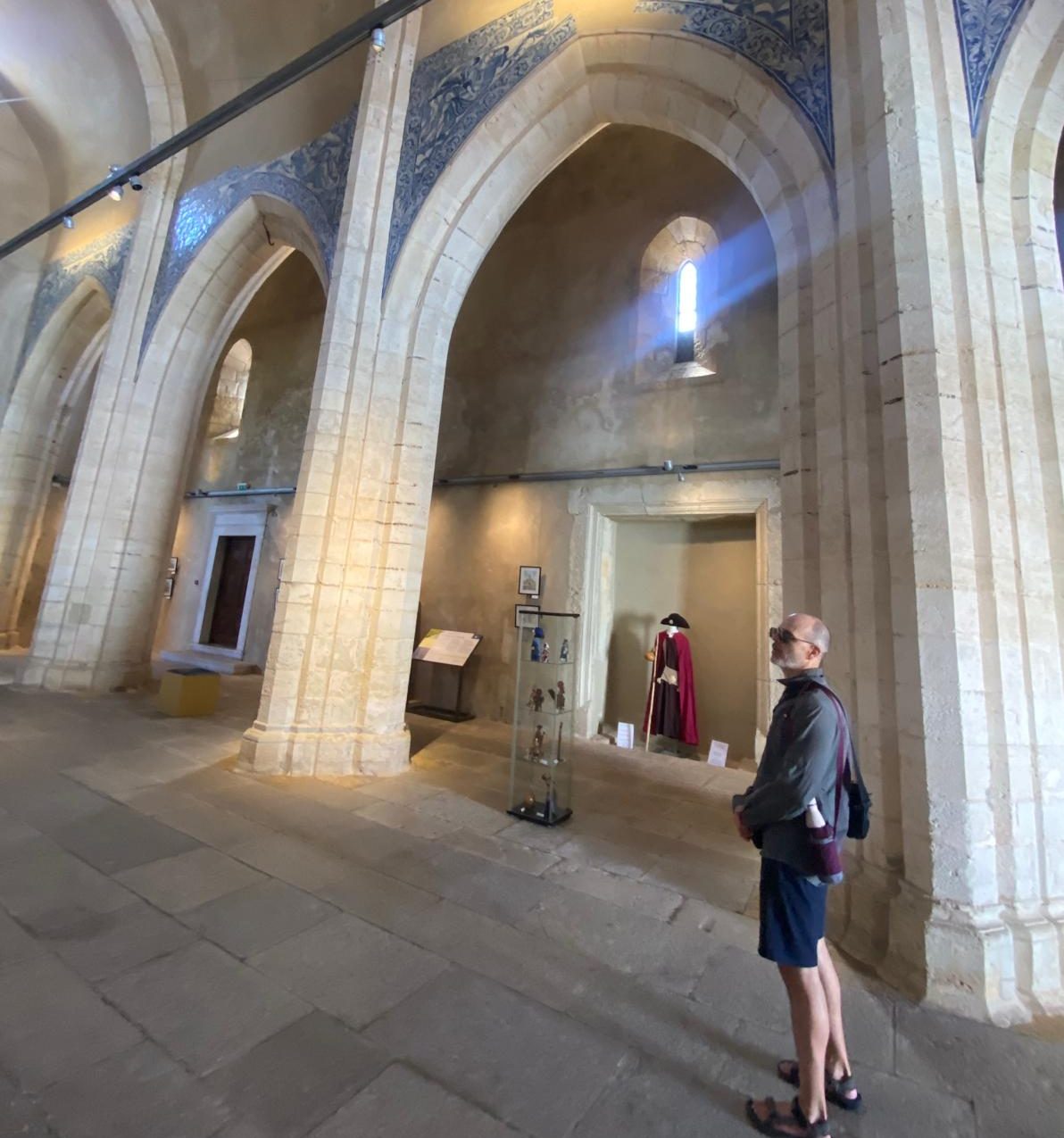
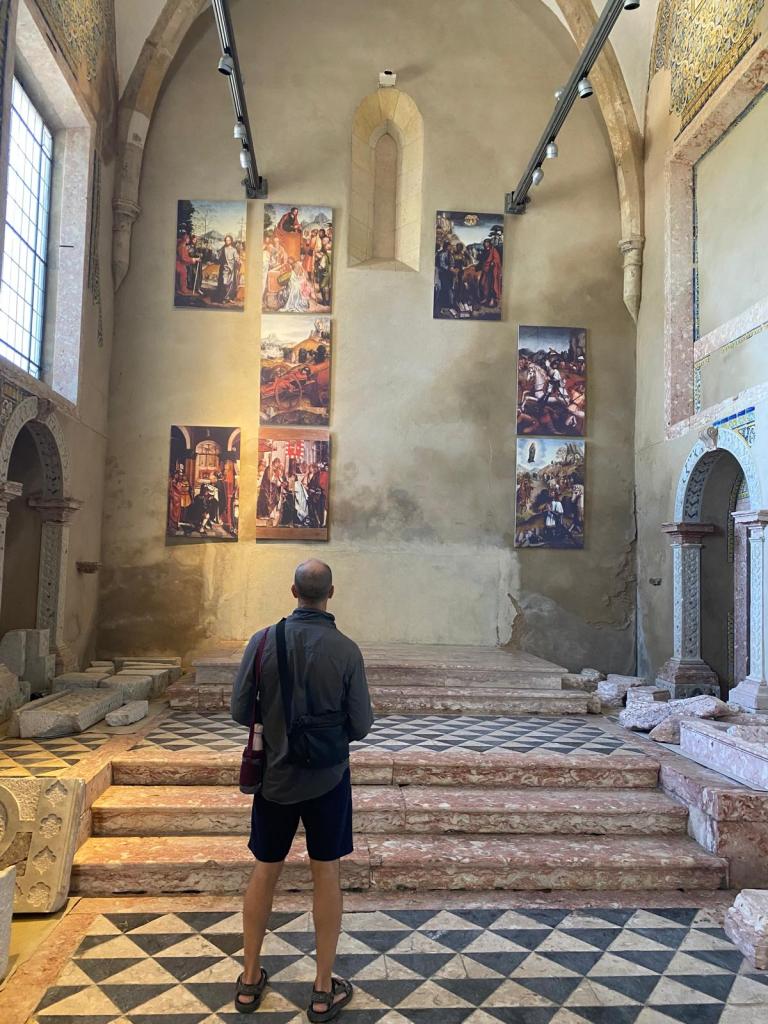
I believe that understanding the ancient history of Portuguese faith and culture is key to contributing to the work of the Spirit in this ancient land. Part of my field work for promoting reconciliation between Catholics and Protestants is to understant the history. My wife Kati and I recently visited the Castle of Palmela on the Peninsula of Setubal on the other side of the Tagus river. Dating from the 310 b.c., the Castle was built by the Romans and subsequently conquered by the Visigoths and the Moors. The site is a rich source of data on the conquest of the Moors and reconquest of Christian crusaders. The Moors built the original fort on the hilltop, which has been excavated and can be toured. A vast amount of Moorish arifacts are on display. The crusader spirit of the Spainish and Portuguese Christian armies would give rise to the crusades in the Holy Land. Islamic civilization dominated the Iberian peninsula lasted for 8 centuries, and is one of the reasons most Spanish and Portuguese see Catholic faith as patriotic and essential to their national identity. Kati was able to find the crest of her maternal family name Gonçalvez.
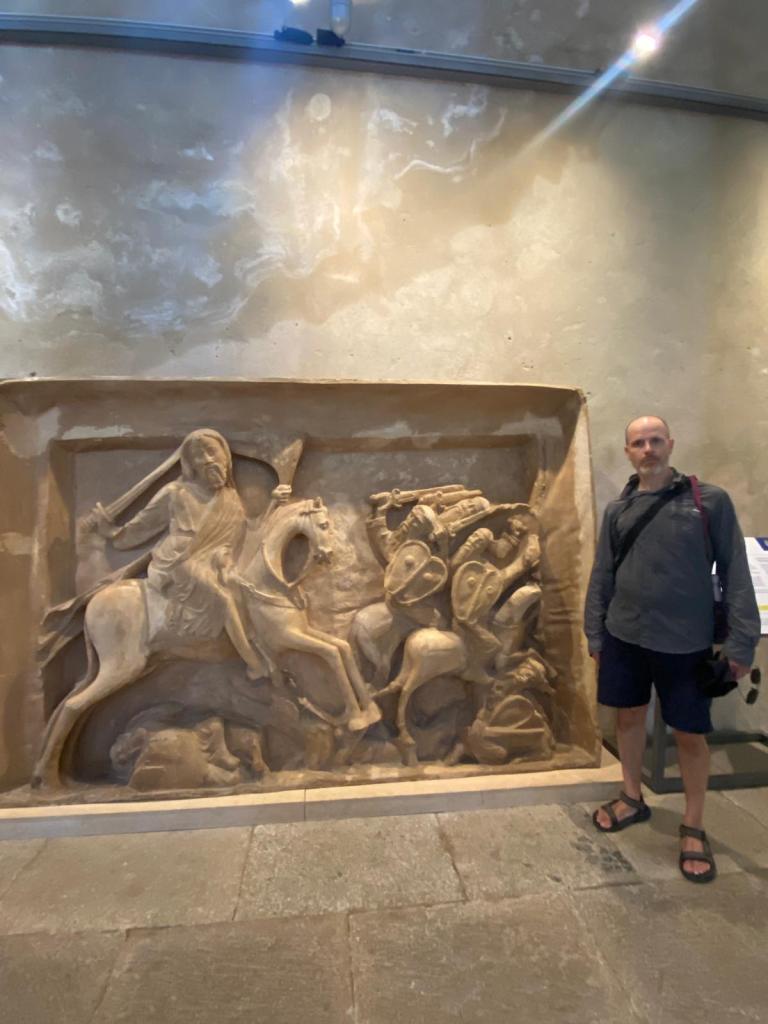
In a land so deeply rooted in Christianity, but also in religious wars, we pray that the ancient church of Christ can be continually renewed. The biblical vision for renewal and revival is not one of obliterating or ignoring the past, but of repentance and restoration, as the prophet Isaiah wrote “In repentance and rest is your salvation, in quietness and trust is your strength, but you would have none of it” (Is. 30:15). In so many nations the church seeks to vindicate itself against the accusations of those who focus only on the dark side of Christian history. But through repentance and loving witness the church can find new strength even in extremely secular Western Europe.
Protestand and Catholic – who God used to bring the transforming values of Christ’s kingdom. But as the Muslim world often sees Christ as representing Western violence and enmity, we must pray for the restoration of the gospel message of peace, forgiveness, and reconciliation of all nations with the Heavenly Father.
French Protestant sociologist Oliever Roy (2024, https://youtu.be/IAl6aOePZsQ?si=3XiCGBgQONS1NefK) argues that many Christian populists in Europe today are children of the 60s cultural revolution who don’t adhere to religious practice or belief but only use Christianity as an identity factor in juxtaposition to minorities such as Muslim immigrants. Roy argues that since the 1990s these populists blame groups like Muslim immigrants for de-Christianizing Europe. But Roy’s research indicates that the de-Christianizing of Europe resulted primarily from Enlightenment thinkers such as Descartes and Kant who tried to secularize Christian morals rather than coming up with new morals. Secularization of education was based on an idea of universal ethics that should not be questioned. Protestants we’re first to legally impose Christian ethics such as making homosexuality illegal. Both Protestants and Catholics banned abortion but this was only much later, lasting until the 1960s. Until the 1960s, the Christian identity of Europe wasn’t a concern because secularism preserved much of Christian ethics as the basis for law and education. The counterculture movement of the 60s was not an anti-religious. From the 60s to the 80s, the laws changed in Europe to accommodate the sexual / cultural “revolution” but there wasn’t any real political revolution. The Protestants self-secularized while the Catholics focused on resisting cultural changes on sexuality and family. Roy describes how populist politicians sinde the 1990s have said they represent Christian culture while supporting positions att odds with traditional Christian views on marriage, abortion, love of neighbor (immigration), etc.
As the church in Europe is challenged with finding its role within secular nations, our prayer is that Christians will be both relevant as well as distinct from the systems of the world which are always a mixture of good and evil. Our prayer is that Christians seek the flourishing of the nations where they are citizens while understanding the Christ’s vision for the coming of the kingdom, distinct from the hegemony of any human institution.
Recently we also visited a popular festival in a rural village an hour north of Lisbon. This was a deep experience of rural Portuguese culture. A particularly insigtful moment was when the parish priest said a blessong over all the visiting family members who were working and living abroad. It helped us understand the deep connection the Portuguese maintain with their ancient agricultural communities while many work overseas. Many in the West feel that monetary gain and freedom from societal norms will ultimately prove the most powerful influences in modern society. But in Southern Europe, we have seen the enduring values of land, church, and ancestry. The less economically powerful countries on the perifery of Europe – sometimes prejoratively referred to as the PIGS (Portugal, Ireland, Greece, and Spain) have exported their young people for generations to work in richer nations. On a trip to Wengen, Switzerland years ago I read the names of workers who had died digging a passage way through the alps in the 1920s, all of them Italian, Spanish, and Portuguese. On our visit to a small Portuguese village, it was a privilege to witness how the traditions and affections of traditional Southern European life are preserved.

