When God Leads Through the Squeeze

squeeze

“17 So Isaac moved away from there and encamped in the Valley of Gerar, where he settled. 18 Isaac reopened the wells that had been dug in the time of his father Abraham,… 22 He moved on from there and dug another well, and no one quarreled over it. He named it Rehoboth,[e] saying, “Now the Lord has given us room and we will flourish in the land.” (Gen. 26)

Sometimes I wonder why I’m not more in tune with the prophetic. I was raised in a Christian community that emphasized the desire of God to lead our lives daily. My grandmother Joy used to use the example of Jesus saying that we live by the daily word of God to us just as we need bread for food. So true.

But we all experience how circumstances are also an undeniable part of the revelation of God’s will for our individual lives. This is true in every Christian’s life, but perhaps more for some than others, maybe we can call these the hard-headed ones.

Some of us just seem to have so much drive in us that we choose a direction in life, run after it like crazy, and turn a deaf ear to the voice of God. Many of us do this inadvertently, but it happens. Then it remains to God to remove His Grace and wait for us to run out of steam. God’s grace comes in so many forms – provision, opportunity, inexplainable joy, anointing, etc – and when it’s gone we know. You just get yourself into a situation that you can’t handle anymore. You’re in too deep and now you can’t even be what you need to be to those who depend on you.

Our sense of self-sufficiency is such an illusion. I think that missionaries have the privilege of experiencing this cross-culturally. It’s no exaggeration to say that the past year and a half that I’ve been back in the U.S. is just as hard of a transition as when I moved to Brazil in 2003. Kati and I were talking about how it feels to transition like this – new neighborhood, new church, new work, new weather, food, etc. I tried to put how it felt to me saying, “It feels cold”. We take for granted the warmth of the familiar – how it makes us feel significant, in control, and comfortable.

This is what God has to remove so His more strong willed children can be squeezed into the fulfillment of His promises lives. At these times we can cry out and say God make it quick, I want the transition to be over… please. But many of these turbulent souls are those the Father has chosen to lead others. The storm that rages within them can be an evergreen source of energy to inspire others towards the building of God’s kingdom.

So if you are like me, join me in praying that the Lord will continue to bless us in times of transition and teach us all we need to learn. Instead of praying that the transition be over sooner, let’s pray that we don’t miss anything the Father wants to teach us in the interim.

Can Missionaries Change Cultures in a Good Way?

What Missiologists Think

According to missiologist Craig Ott (2021) postcolonial thought is the critique of attempts by one culture to impose their worldview onto another. But Ott warns against a naive attitude that opposes cultural change in general, contrary to the fact that this is an obvious reality in our modern, globalizing world. He also contends that cross-cultural teachers will inevitably be agents of culture change, so they must seek to do so intentionally and profitably. And since no culture perfectly represents the biblical worldview, part of Christian practice is mutual intercultural exhortation. Ott describes the impetus for worldview change as a person coming to realize that “the way they have understood the world so far can no longer account for their present experience”. And such change is not motivated merely by information, human reasoning is based on emotional narratives imbibed in our upbringing. It is only through alternative narratives that one’s conception of reality can change and cause the reshaping of an individual’s identity and values (Ott, 2021, p. 160-167). 

So people will only be persuaded by the biblical worldview if it is linked to local issues and is a story people can “identify with, remember and which will have a life changing impact” (Bartle, 2005, p. 185). For biblical concepts to influence traditional religious cultures, these concepts must be associated with indigenous symbols. Then these symbols can be used to integrate a traditional culture with the world of Scripture “into a holistic Christian application of faith to life” (Zahniser, 1997, p. 13). 

Missiologists Lingenfelter & Lingenfelter (2003) also recognize that every culture is a source of bondage and should so be challenged by teachers (p. 88). Although cultural stability and continuity are necessary for individual and community flourishing, social practices that contradict our values should be confronted. Experiential learning is a technique consisting of “doing and reflecting on what happened”, learning begins with concrete experience followed by reflective observations that lead to the formation of abstract generalizations. The motivation and ability to change behavior comes from students’ experience of discomfort or dissonance, whose cause when recognized can be mitigated against. Experiential learning is effective in promoting change because it focuses on “experience and emotional responses” rather than information. But creating powerful simulations that connect abstract concepts and concrete experiences is more challenging than just lecturing. Still, simulations of experience followed by group and personal reflection can affect change like that which long-term mentoring relationships would produce. From a Christian perspective, ultimately no educational method can produce transformation, only trials, repentance, and obedience to biblical teaching can do that (Lingenfelter & Lingenfelter 2003, p. 89-98). 

What Intercultural Education Experts Think

Geneva Gay (2018) of the University of Washington critiques “micro-level changes” made by short-term educational projects with limited influence on the wider learning culture (p. 275). Gay asserts that this approach won’t generate significant change (p. 275). And change is possible only when educators stop advocating for a return to traditions from a past that marginalized many ethnic minorities. Culturally responsive teaching (CRT) will only change the culture when it is a required part of teacher training, rather than an optional approach. Gay also advocates for holistic approaches to change in education that deal with students’ “ethic and cultural particularities, and their individual uniqueness”. Ultimately, the motivation for change through CRT is the development of students who help make society more “equitable, receptive, and reflective of diverse peoples, experiences, perspectives, and contributions”. This formation must begin in early childhood when students’ ideas about race are being shaped. Merely recognizing the value of CRT is not enough, it must be implemented, and field-based training helps knowledge and practice “reinforce and refine each other” (Gay, 2018, p. 277-290). 

In Developing Fundamental Orientations for Teaching, Villegas & Lucas (2002) advocate for teachers seeing themselves as agents of chance who see “schools and society as interconnected” (p. 55). This involves recognizing that the potential education must challenge societal injustice is more often substituted by a tendency to reproduce the thinking and behavior of the dominant cultural group (Villegas & Lucas, 2002, p. 55). 

Dealing with Controversial Issues: Social Studies in Africa

Lewis Asimeng-Boahene (2007) researched strategies for dealing with controversial issues in social studies education in African schools. He argues that the increased approximation and interdependence of nations increases the importance of social studies educators’ role in preparing children to live in “tomorrow’s global village” (p. 232). The African continent is a particular challenge involving the need to navigate controversial issues while community taboos often prevent open discussion. Asimeng-Boahene argues that decisions about what issues should or should not be discussed need to be based on what fulfills the long-term goals of the school in its community. Introducing controversial issues into classroom discussion sparks students’ interest and encourages civic participation. It also teaches students how to face and resolve conflict and controversy in a “rational, thoughtful, and sensitive manner” (Asimeng-Boahene, 2007, p. 232-233). 

I recognize the benefits of a teacher not committing to a particular position about a controversial issue. But I agree with experts that recommend a teacher never introduce a subject they are not willing to comment on personally, i.e., beliefs and values (Hoge et al., 2004; Martorella et al., 2005). 

How to Teach for Cultural Change Ethically

My context of service is primarily ecumenical meetings of Christian leaders from diverse traditions working on issues of reconciliation. Participants come from churches that have different concepts about what type of issues should be discussed publicly and how that should be conducted. This type of work requires a balance of challenging participants to step outside their comfort zones while respecting their convictions. Our gatherings have people from conservative and liberal/progressive church traditions and it is often a challenge to go beyond niceties to get real work done while avoiding unfruitful controversy. Experts in discussing controversial issues in education recommend inviting respected members of the community to participate (Adeyemi, 2000). In an ecumenical reconciliation themed event, I would apply this principle to the need for local hosts to be given a place of honor. In general, this has been the approach of the reconciliation events I have participated in. Local Christian leaders are given a role of host and convener whose presence mitigates against the appearance of indifference to community context. 

Villegas and Lucas (2002) observe the difficulty of teachers having influence outside the classroom due to the hierarchical culture of schools (p. 56). Teachers are so bogged down with teaching and bureaucratic duties that becoming change agents is an unreasonable endeavor. Making things worse is the postmodern critique of peer relations that creates “a sense of despair (…) that all actions are oppressive and that human agency is an illusion”. For this reason, I agree with the assessment that teachers must encourage “both critique and hope in equal measure” (Villegas and Lucas, 2002, p. 56-58). 

In the context of my ecumenical reconciliation work, the “teaching” is expressed in the mode of round-table discussions. Leaders representing diverse church traditions interact as equals seeking the healing of historic divisions through prayer, repentance, and advocacy. The central motif of much of our work is the Ephesians 2 vision of one new humanity describing the church as a prophetic image of intercultural reconciliation. The concept of being a teacher as an ethical Christian change agent should find direct application to the work I am involved in. Ecumenism that seeks to fulfill the vision of John 17:21 must not be introverted and concerned only with the benefits of reconciliation to the global communion of Christian faith. Our efforts at reconciliation within the church must have a clear goal to bring the fruits of this work to bear on the injustices that plague our world. 

Experts recommend that teachers as agents of social change seek to do so as part of collaborative projects (Villegas & Lucas, 2002, p. 63). I find application of this principle to the work I am involved in, where reconciliation advocates must avoid the discouragement that comes with trying to work alone. Neither schools, nor ecumenical meetings are sufficient to bring about social justice. What is needed is “collaborative communities working for change” in ways that go beyond the spheres of individual change agents. 

References

Adeyemi, M. B. (2000) Teaching conflict resolution to social studies students in Botswana, The Social Studies, 91(1), 38–41.

Hoge, J. D. et al. (2004) Real-world investigations for social studies (Columbus, OH, Pearson/Merrill/

Prentice Hall).

Ott, C. (2021). Teaching and learning across cultures: A guide to theory and practice. (Lower Level LC1099. O83 2021). Baker Academic

Bartle, Neville. 2005. Death, Witchcraft and the Spirit World in the Highlands of Papua New Guinea. Goroka, Papua New Guinea: Melanesian Institute.

Gay, G. (2018). Culturally responsive teaching: Theory, research, and practice. (Lower Level LC1099.3. G393 2018; Third edition.). Teachers College Press

Lewis Asimeng‐Boahene (2007) Creating strategies to deal with problems of teaching controversial issues in social studies education in African schools, Intercultural Education, 18:3, 231-242, DOI: 10.1080/14675980701463588

Lingenfelter, J., & Lingenfelter, S. (2003). Teaching cross culturally: An incarnational model for learning and teaching. Grand Rapids, MI: Baker Academic.

Martorella, P., Beal, H., Candy, M. & Bolick, C. M (2005) Teaching social studies in middle and

secondary schools (4th edn) (Upper Saddle River, NJ, Pearson).

Villegas, A. M., & Lucas, T. (2002). Educating culturally responsive teachers: A coherent approach. Albany, NY: State University of New York Press.

Zahniser, A. H. Matthias. 1997. Symbol and Ceremony: Making Disciples across Cultures. Monrovia, CA: MARC.

Teaching from the Outside

The Far-reaching Perspective of the Portuguese People

As someone from a minority Christian tradition in the majority Catholic nation of Portugal, I believe that sharing the gospel here should connect with the culture’s sense of values and meaning. The Portuguese are fully engaged in modernity, but they also have a sense of the continuous history of their nation – founded in 1143 C.E., considered by some to be the oldest country in Europe (Historical Development, n.d.; (17 Fun Facts about Portugal You Probably Never Knew, n.d.). Learning activities that spark curiosity to see how class content relates to daily life and individual accomplishment of Portuguese students will be most effective. 

Evangelical missionaries like me serving in Latin Europe – Portugal, Spain, Italy – often complain of the difficulty of their work. But I believe a key is connecting the good news of Jesus’ redemptive kingdom to the felt needs and values of these Catholic, secularized societies. The last description cites a great paradox of those countries of Southern Europe that resisted the effects of modernity longer. Here we experience a culture that wants to exercise the freedoms that come with liberalism while also keeping the Catholic church as a bastion of moral reference. 

Sage on a Stage Versus Guide on the Side

The study of diverse interactive methods of teaching that unlock students’ knowledge is enough for a teacher to spend a lifetime learning. This approach is known as student-based learning (SBL), and those who got into teaching because of the love of study need not feel they will be unfulfilled by using this approach. Two cutting edge SBL methods are problem-based learning (Nurul Fadilah et al., 2024) and jigsaw learning (Usman et al., 2022). Both these approaches have the strength of generating and taking advantage of group discussion. I feel that learning approaches that emphasize group discussion have many benefits for a foreign missionary like me. Problem-based learning should be engaged with soberly by a foreign teacher because it will expose them to the pain and struggles of the culturally “other” they serve. If a missionary expects to not stay in a country a long time, or perhaps indefinitely, they can be protected from the despair inherent to any culture by always keeping their eyes on the horizon expecting to go home one day. 

When we really engage and enmesh ourselves in a local culture – marrying someone from there and raising our native-born children there – the liabilities of that nation will affect us for better or worse. The missionary must have a different perspective – that there is no worse-off person due to intercultural service for Jesus. The call of a missionary is only enriching even if not by human standards. 

Ideas of Power: Comparing our Baggage

Hierarchy and order in the Portuguese learning context are quite different from my home culture of Southern California. In the context of teaching, I find that the Portuguese are less likely to recognize someone’s authority to speak on a subject based on experience and charisma but without formal education. Higher education degrees are highly valued in my home culture, but there are many people who become persons of influence in an area due solely to their accomplishments independent of academic pedigree. 

Attractive body appearance is also a significant status defining criteria in the coastal urban context of Cascais where I live, located in the metro area of Lisbon. Dressing well and multilingual ability is highly respected in this context and even necessary depending on one’s vocation. Size of family is more of status symbol for US-Americans than Europeans who often feel the former are irresponsible and even egotistical for having such large families. This would be viewed in the opposite manner by US-Americans. The main challenge I see in engaging and influencing Portuguese culture relates to hierarchy and material status. For US-Americans like me deference to hierarchical and institutional values are harder to accept, and the Portuguese will likely be turned off if US-Americans ostentatiously demonstrate consumerism as a social elevator. 

Is it Valid to Seek Cultural Change? 

 In closing, diverse challenges exist for a foreign teacher who desires to be an agent of cultural and social change. It is imperative that members of the local community be involved in learning activities that seek to bring positive transformation. And as said at the beginning of this text, foreign agents of cultural change should seek to do so in compliance with the goals and values of their target constituencies. The institutions of Portugal still seem daunting to me after living here for four years. I take comfort in the experience of spending 16 years in Brazil, knowing that the learning curve has spikes and plateaus but continues if a missionary stays the course. Staying isn’t enough; however, many stay for decades without becoming wise navigators of culture. My prayer is that I maintain a teachable spirit before the Lord and leave a legacy of blessing – however small it may be by human estimation – that glorifies the name of Jesus. 

References

Historical development. (n.d.). Retrieved August 1, 2024, from https://eurydice.eacea.ec.europa.eu/national-education-systems/portugal/historical-development#

17 fun facts about Portugal you probably never knew. (n.d.). Retrieved August 1, 2024, from https://www.trafalgar.com/real-word/fun-facts-about-portugal/

Usman, M., Degeng, I. N. S., Utaya, S., & Kuswandi, D. (2022). The Influence of JIGSAW Learning Model and Discovery Learning on Learning Discipline and Learning Outcomes. Pegem Journal of Education and Instruction12(2), 166–178.

Finding Hope in Narrative Learning 

Giving our Life Stories Structure and Coherence

According to Goodson et al. (2010), stories can either give our lives “structure, coherence and meaning” or inversely they can provide “the backdrop against which we experience our lives as complex, fragmented or without meaning” (p. 1). These stories don’t just help us understand ourselves, they constitute who we are(Goodson, 2010, p. 1). We create these stories, finding in them meaning, direction, and support for dealing with circumstances and our identities in them (Goodson, 2010, p. 2). Rather than consisting in learning fromthe stories of our lives and selves, narrative learning happens “in and through the narration” (Goodson, 2010, p. 2). 

We can deliberately engage in constructing narrative through autobiographical work (Goodson, 2010, p. 2). Bateson’s (1994) model for narrative learning involves “recognition of experience, reflection, and reconstruction, which are interrelated as a spiral”. Spiral learning consists of navigating complexity “with partial understanding, allowing for later returns” (Bateson, 1994, p.243). Learning as we move forward, we reflect on experiences and reconstruct them during our lives (Liu, 2015, p. 21). 

Stage theory is a common approach to understanding an individual’s life. But Cohler (1982) states that narrative “may offer a better understanding of the life course than stage theory because it closely parallels the storying process that people use in making meaning of their own lives”. This frees the exercise from constricting models of life progression, as if individual’s lives would always follow one of a set of predictable patterns. 

According to Polkinghorne (1995), narrative discourse “draws together diverse events, happenings, and actions of human lives into thematically unified goal directed purposes” (p. 5). We use narratives to “inform our decisions by constructing imaginative ‘what if’ scenarios” hopefully coming to see that what we have received outweighs what we have lost (Polkinghorne, 1998, p. 14).

Helping Explain Why Our Lives Deviate from “the Norm”

We establish coherence in our narratives by finding connections between the variety of experiences that bombard us with daily (Clark & Rossiter, 2008, p. 62). This coherence is often found in specific cultural narratives, which if identified can be critiqued and countered with alternative narratives (Clark & Rossiter, 2008, p. 62). Indeed, all narratives are situated in culture and tied to it (Clark, 2010, p. 3). However, there is also individual agency in creating narratives, as the speaker connects events into a sequence in order to act on them later and impress meaning upon their listeners (Reissman, 2008, p. 3). Events perceived by the speaker are selected, organized, connected, and evaluated as meaningful for a particular audience” (p. 3). Important to notice is that narrative is always social, i.e. “there is always an audience (real or imagined, the other or even the self) and that fact shapes the structure and determines the purpose of the narrative” (Clark, 2010, p. 4). 

Sarbin (1993) describes our world as “story-shaped” (p. 63), full of “folklore, myth, popular culture (carried by modalities such as movies, television, YouTube, music, and the like), social scripts, religious traditions and parables, political discourses, history, literature”, and so on (Clark, 2010, p. 4). All these forms embody cultural values providing “libraries of plots. . .[that] help us interpret our own and other people’s experience” (Sarbin, 1993, p. 59). These narratives “establish what constitutes normalcy by defining reasonable causality and plausibility” (Linde, 1993). 

Personal Narrative Exercises

Some educators have used imaginative role-playing to help learners encounter a tangible experience, by pretending they were someone else in a different context (Marunda-Piki, 2018, p. 109). Research indicates the effectiveness of narrative exercises where adult learners tell stories “using plenty of gestures, facial expressions, and a degree of dramatization using tone of voice and mime (Sawyer, 1965; Colwell, 1980; Grainger, 1997). 

Christian educators have used narrative learning to help students understand the stories they believed about themselves considering Christ’s work on the cross” (Foote, 2015, p. 118). The call to a new life of faith is seen as “a call for Christians to rethink their thinking”, citing Scripture attesting to how the world has blinded the unbeliever from the light of the gospel (II Cor. 4:4). Emphasis is placed on the believer’s new life in Christ (II Cor. 5:17), and their call to be transformed by the renewing of the mind (Rom. 12:2) (Foote, 2015, p. 118). 

Asking adult learners to write narrative essays about their lives is a means of “connecting what they have learned from current experiences to those in the past as well to possible future situations” (Foote, 2015, p. 120). According to Kolb’s experiential learning model, “concrete experiences can lead to personal reflection on the experience. This reflection then leads to abstract conceptualization, which might manifest itself in a set of conclusions or rules of thumb derived from the experience as well as insight into applicable theories or other concepts” (Colvin, 2012, p. 94). Since adults form their identities through their experiences, by critically reflecting upon prior learning through written narratives students can “reshape and renew their identities” (Foote, 2015, p. 121). 

Psychologists use therapeutic interventions that involve “the co-construction of healing narratives in the face of personal, moral, and social adversity” (Lieblich, McAdams, and Josselson , 2004). In White and Epston’s (1990) narrative therapy process clients are helped to re-story their lives, editing the plot to better serve them. This helps the client distinguish different stories to the problem narrative that led them into therapy. Frank (1995) identifies three types of illness narratives: “restitution narrative centers around the (hoped for) return of good health; the chaos narrative has no center—it is disturbingly lacking in coherence and therefore in sense making; and the quest narrative seeks to use the illness to gain something of value”. 

Clark and Rossiter (2008) argue that the nature of experience is always prelinguistic, “it is ‘languaged’ after the fact, and the process of narrating it is how learners give meaning to the experience” (p. 64). Therefore, it is via the construction of narrative that experience becomes accessible, and the way it is constructed determines the meaning it will have for the individual or group. (Clark and Rossiter, 2008, p. 64).

Clark and Rossiter (2008) developed three modes of narrative learning. In the learning journalassignment, participants articulate what they are learning “in a sustained, regular way” by journaling (p. 67). Participants enter a conversation between themselves and the learning material in focus, connecting prior experiences with new ones, comparing prior assumptions with new ideas. In concept-focused autobiographical writing, students write a paper with their life story as the subject, to “construct a narrative of their life experience, which must cohere in terms of a given concept and illuminate that concept” (Clark and Rossiter, 2008. P. 68). In instructional case studies, a problem is presented that must be solved or an issue to be addressed, “and this is the location of the learning because the problem or issue is complex, reflecting real-world practice” (Clark and Rossiter, 2008. P. 68). The point is less finding the solution to the problem than discovering “how to decide what to do” (Clark and Rossiter, 2008. P. 68). They are “learning to think like practitioners, which involves putting theoretical concepts in conversation with prior experience to come up with new insights and interpretations” (Clark and Rossiter, 2008. P. 68).

Conclusion

            The most compelling idea in my study of narrative learning is that people either see their lives as coherent and meaningful or chaotic and absurd. What a tragedy for people who find themselves in a story whose beginning, middle, and end don’t make any sese or have purpose. The Bible states that everyone was created for a purpose (Eph. 2:10; Ps. 139:14-16), a simple message but one that so many distraught and alienated people need to know. 

            Unfortunately, the Bible is full of stories of people who knew God whose stories began so promisingly but ended up in tragedy. These were the followers of God, the heroes of the faith. If we can learn to see our lives in the perspective of the God who shapes and forms, forgives and redeems, we should always be able to find hope. 

References

Bateson, M.C. (1994). Peripheral Visions: Learning Along the Way. New York: Harper Collins. 

Bruner, Jerome S. (1990) Acts of Meaning (the Jerusalem-Harvard Lectures) , Cambridge, MA: Harvard University Press.

Clark, M. C., & Rossiter, M. (2008). Narrative learning in adulthood. New Directions for Adult & Continuing Education, 2008(119), 61–70. https://doi.org/10.1002/ace.306 

Clark, M. C. (2010). Narrative Learning: Its Contours and Its Possibilities. Part of a Special Issue: Narrative Perspectives on Adult Education, (126), 3–11. https:// doi.org/10.1002/ace.367 

Cohler, B. J. “Personal Narrative and the Life Course.” In P. B. Baltes and O. G. Brim, Jr. (eds.), Life-span Development and Behavior. New York: Academic Press, 1982. 

Colwell, E. (1980) Storytelling (London, The Bodley Head).

Colvin, J. (2012). Earn college credit for what you know (5th ed.). Chicago, IL: Kendall Hunt.

Czanniawska, B (1997). Narrating the Organization. Chicago: University of Chicago Press. 

Foote, L. S. (2015). Re-Storying Life as a Means of Critical Reflection: The Power of Narrative Learning. Christian Higher Education, 14(3), 116–126. Academic Search Premier.

Frank, A. W. The Wounded Storyteller: Body, Illness, and Ethics. Chicago: University of 

Chicago Press, 1995.

Goodson, I. F., Biesta, Gert., Tedder, M., & Adair, N. (2010). Narrative Learning. Taylor & Francis Group. http://ebookcentral.proquest.com/lib/biola-ebooks/detail.action?docID=487967

Grainger, T. (1997) Traditional storytelling in the primary classroom (Leamington Spa, Scholastic. 

Lieblich, A., McAdams, D. P., and Josselson, R. (eds.). Healing Plots: The Narrative Basis of Psychotherapy. Washington, D.C.: APA, 2004.

Linde, C. Life Stories. New York: Oxford University Press, 1993.Liu, X. (2015). Narrative Generates a Learning Spiral in Education: Recognition, Reflection, and Reconstruction. International Journal for Leadership in Learning, 1(3). ERIC. 

Polkinghorne, D. (1995) ‘Narrative configuration in qualitative analysis’, in J. A. Hatch and R. Wisniewski (eds) Life History and Narrative , London: Falmer.

Polkinghorne, D. (1998). Narrative Knowing and the Human Science. Albany: SUNY

Press.

Riessman, C. K. Narrative Methods for the Human Sciences. Thousand Oaks, Calif.: Sage, 2008.

Sarbin, T. R. “The Narrative as the Root Metaphor for Contextualism.” In S. C. Hayes, 

C. J. Hayes, H. W. Reese, and T. R. Sarbin (eds.), Varieties of Scientific Contextualism

Reno, Nev.: Context Press, 1993.

Sawyer, R. (1965) The way of the storyteller (New York, The Viking Press); original work published 1942. 

White, M., and Epston, D. Narrative Means to Therapeutic Ends. New York: Norton, 

1990.


 [DD1]Considering how personal narratives explain deviations from cultural patterns. In their personal narratives, participants could explore how they explain their involvement in Jewish-Christian reconciliation initiatives. (ONM)

 [DD2]Important albeit obvious point: our personal narratives are the result of the interaction of our own experiences and thoughts about them and the mutuality of these experiences and reflections within our cultures. 

 [DD3]Participants can be asked who are the most important “receivers” to their self narrative and narrative of Jewish-Christian relations (ONM), as well as as how this audience affects the narrative? 

Culturally Responsive Teaching

Challenges and Recommendations for Teaching Online

A large portion of my students are Brazilians who I teach mostly online. One positive aspect of teaching Brazilians is that large amounts of theological and missiological literature is available in Portuguese. There are excellent online social science research sources such as the Brazilian Institute of Geography and Statistics (IBGE) and the Brazilian Institute of Research and Data Analysis (IBPAD). When some subjects are more difficult for students to source, experts recommend providing electronic files through a platform such as Moodle or Canvas (Ott, 2021, p. 235). Research indicates that many Majority World contexts primarily emphasize learning by memorization versus critical thought (Ott, 2021, p. 236). Therefore, a Western teacher like me must take care not to take for granted that students will engage texts critically. 

One of the most prevalent cognitive concepts is field articulation in which field-dependent learners perceive holistically and field-independent learners tend to isolate items from context (Ott, 2021, p. 115). Majority World learners tend to be more holistic/(FD), and Westerners more analytic/(FI) (Ott, 2021, p. 122). Research indicates that online learning favors (FI) learners, so it is helpful to provide (FD) learners clear lecture outlines and instructions on note taking (Ott, 2021, p. 238-9). Consequently, as a US-American I need to be sensitive while teaching online courses to my Brazilian students. 

No matter what the demographic of my students, certain limitations of online learning must be faced. These include the lack of empathy and human touch that today’s “cyber youth” experience. Thus, teachers face the challenge of providing what experts call “high-touch learning environments” (Goodwin, 2016, p. 81-83). Though the purpose of the internet is to connect people across the globe, it often perpetuates prejudice and superficial cultural caricatures (Levmore and Nussbaum, 2010). Analysts describe contemporary learners as “lonely but fearful of intimacy” whose digital connections offer “the illusion of companionship without the demands of friendship” (Turkle, 2011, pp. xiv, 1, 3). As an online teacher, I face the task of finding texts that “deal with more authentic and substantial human experiences and contextualize specific subject-matter skills” in multiculturally meaningful ways (Gay, 2018, p. 152). 

Lessons from Western Professors in Saudi Arabia

I have lived outside my native US-American culture for most of the past 30 years. Often, I notice my fellow US-Americans overseas illustrating points with irrelevant cultural references. Sports examples are the most blatant, for example when US-Americans refer to baseball or football, aka gridiron elsewhere. For all nationalities, there is an art to teaching with a translator, which entails avoiding plays on words, culturally unique expressions, and many jokes. 

Western university teachers who sought to apply culturally relevant pedagogy (CRP) in Saudia Arabia found it difficult to link students’ motivation to learn with personal ambition. Students didn’t feel that a college education would significantly impact dreams linked to profession, therefore Western teachers had to engage different aspirations (Alghamdi, 2014, p. 212-213). 

Western teachers were able to capitalize on Saudi culture’s respect for teachers. Students showed genuine excitement to learn from teachers who them esteemed as sources of valuable knowledge (Alghamdi, 2014, p. 214). One challenge, however, was the fact that over 5 years of higher education Saudi students became “disengaged from their environment”, “disconnected from the traditions of their elders”, and “adrift in uncertainty” (Alghamdi, 2014, p. 214). The primary reason Western teachers have been sought out by Saudi universities is to prepare students to engage in a knowledge-based economy. Therefore, I would recommend that Western teachers work to identify Saudi mentors who have successfully engaged in knowledge-based work locally and globally. These mentors may be few but invaluable as a resource to build upon as examples for Saudi students. 

Western teachers faced the challenge that the modernist view of knowledge contrasts with the Saudi “traditional absolutist view of knowledge” (Alghamdi, 2014, p. 216). The focus on memorization in Islamic culture conflicted with the Western curriculum aiming to teach students to view knowledge “critically and not passively” (Alghamdi, 2014, p. 216). Saudi students believed that the aim of a university degree is to “graduate and obtain jobs regardless of their knowledge content and changes in ways of thinking” (Alghamdi, 2014, p. 216). 

I agree with the position that (CRP) should aim to develop people who fully participate in their native societies producing life-enhancing knowledge and technology (Alghamdi, 2014, p. 220). I agree with the assessment that Western teachers in Majority World setting should be “exploring the communities in which their students live, connecting learning to students’ everyday lives, participating in community events, and collaborating with community members on projects both within and outside the school” (Alghamdi, 2014, p. 220). 

Culturally Relevant Teaching – Biblical Basis and Challenges

Christian advocates of culturally relevant teaching (CRT) describe the approach as a: “Pedagogy of opposition that is committed to collective empowerment” grounded on students’ academic success, cultural competence, and critical consciousness of the social order (Ladson-Billings, 1995, p. 159-165). James 2:1-7 on favoritism is cited as a biblical basis for opposing a pedagogy that extends favor to individuals or groups for self-serving aims (Stulac, 2003, para. 5). Christian educators rightly apply (CRT) to factors such as “race, ethnicity, gender, and sexual orientation” (Swenson, 2016, p. 2). These teachers also give the Good Samaritan parable as convincing evidence that Christian educators should show love and mercy as they relate to students and design curriculum (Swenson, 2016, p. 3). The prophetic themes against injustice are also argued to be relevant to Christians’ call to live in contrast to “worldly standards” and “confront the injustices in their institutions” (Gilliard, 2013).

One of the weaknesses of (CRT) is the possibility of buckling under the weight of the project of collecting materials that present “diverse perspectives based on factors such as race, culture, socioeconomic status, gender, age, and profession” (Swenson, 2016, p. 6). If imagining the diverse subjects of academia, one confronts the significant additional pressure (CRT) places on Christian teachers. Then there is the question of evaluation regarding (CRT)’s goal of creating “cultural competence” in students (Swenson, 2016, p. 6). This includes the goal of leading students to recognize the liabilities of their cultural backgrounds, such as white privilege and historical injustices committed between ethnic groups present in modern nation-states (Swenson, 2016, p. 6). These are controversial issues that touch on the idea of identity and guilt, which must be treated delicately. Perhaps a dialogical approach is preferable to a didactive, prescriptive one to free teachers from the liability of imposing their perspectives on students. 

Micah 6 is cited as biblical basis for teaching students “critical consciousness of societal injustices” and calling students to be agents of change (Ladson-Billings, 1995). Visible Thinking Routines (Ritchhart et al., 2011) using various media to engage students in discussion is an excellent strategy, but one that can lead to destructive controversy if nor conducted with sensitivity. A helpful suggestion is that students interact with discussion points regarding social justice in online chat rooms prior to class (Swenson, 2016, p. 8). Also, if (CRT) only generates discussion without practical impact this is unfortunate. The suggestion that students use (CRT) to work on a “specific classroom management issue” has the potential to provide an empirical experience of what it is like to engage social justice issues in real life (Swenson, 2016). 

Helpful Insights from (CRT) for my Context

Research indicates the effectiveness of song, drama, and role playing, which is something that I feel I could employ more in my teaching (Ott, 2021, p. 248). Role-playing is something that I would like to employ more, including “improvisation around a real-life situation” or giving students a “situation (case) that they must act out” (Ott, 2021, p. 253). 

Massive open online courses (MOOCs) have been praised as “means of democratizing education, overcoming the elitism of higher education, and making it more universally accessible and affordable”, but dropout rates are 90 to 94 percent and nearly 80 percent are from affluent countries (Reich and Ruipérez-Valiente, 2019). In teaching Majority World students, I have observed the value placed on courses that can count toward a degree. Therefore, I would prioritize teaching MOOC courses for credit. Findings show that “students from all cultures preferred asynchronous elements over synchronous ones” (Ott, 2021, p. 276), given factors such as time zone, internet quality, and language difficulties. This runs counter to my presumption regarding Majority World learners such as Brazilians, who I would have thought preferred live online classes. But universally relevant factors leading to the asynchronous preference include “technical difficulties, low audio quality, necessity to be online at certain times, lack of opportunities to interact in live meetings, and their language abilities” (Wang, 2007, 302–3). 

Most of my teaching involves mission studies, for which establishing performance standards of culturally diverse students is a challenge. Experts suggest one way of leveling the playing field is to have students read texts from diverse cultures. I’m inspired by the method of asking students to decipher “culturally encoded messages, and convert them from one expressive form to another, such as from poetry to explanatory essays, and from narrative autobiography to conversational dialogue” (Gay, 2018, p. 158). The prospect of finding teaching materials, techniques, and assessment criteria that are responsive to the “cultural heritages and personal experiences” of students (Gay, 2018, p. 160) is an inspiring challenge for me. 

A significant discovery for me was the coping strategy described as code shifting – “altering expectations, ways of thinking, outward appearances, speech, and behaviors to accommodate situations and audiences” dominated by privileged European Americans in the U.S. (Jones and Shorter-Gooden, 2003). I was inspired by the example of teachers who “translated cues” derived from a culture’s “values, communication and social interaction patterns, and performance styles” (Gay, 2018, p. 215). In these cues, teachers found instructional methods that improved their students writing skills. I want to follow the example of teachers who used these methods to expand their students horizons with code shifting, elaborated as follows:

to learn the writing and speaking conventions of mainstream society and schools; connecting their oral creative strengths to the demands of academic reading and writing; and using their skills in storytelling, oral interpretation, role-playing, improvisation, script-reading, and call–response to improve performance in school-based reading and writing (Gay, 2018, p. 216). 

The paradigm of cooperative learning is also relevant to teaching missions studies to culturally diverse students. I often teach Latin-Americans, who research finds benefit from “working collaboratively with one another in small groups” and from feeling like they belong to a “classroom community” (Gay, 2018, p. 217). I’m encouraged by findings regarding the social benefits of cooperative learning: “improved understanding of diversity, and better helping, caring, and supportive relationships with peers” (Gay, 2018, p. 219). Studies indicating the value of “social scaffolding” that is a “network of personal supports” (Mehan et al., 1996) motivates me to encourage students to find ways of connecting their learning to their families, local communities, and faith traditions. 

References

Alghamdi, Amani K.H. (2014). “The Road to Culturally Relevant Pedagogy: Expatriate teachers’ pedagogical practices in the cultural context of Saudi Arabian higher education”. McGill Journal of Education / Revue des sciences de l’éducation de McGill, vol. 49, n° 1

Gay, G. (2018). Culturally responsive teaching: Theory, research, and practice. (Lower Level LC1099.3 .G393 2018; Third edition.). Teachers College Press; Biola Library Catalog. https://search.ebscohost.com/login.aspx?direct=true&AuthType=sso&db=cat09700a&AN=blc.oai.edge.biola.folio.ebsco.com.fs00001149.5fa32307.b7c3.5027.b081.5fe7ee113c2a&site=eds-live&scope=site&custid=s6133893

Gilliard, D. (2013, March 23). What does Micah 6:8 really mean? [Web log post]. Retrieved from http://www.redletterchrisians.org/what-does-micah-68-really-mean/

Goodwin, B. (2016). “High touch” is crucial for “high tech” students. Educational Leadership, 74(1), 81–83.

Jones, C., & Shorter-Gooden, K. (2003). Shifting: The double lives of Black women in America. New York, NY: HarperCollins.

Ladson‐Billings, G. (1995). But that’s just good teaching! The case for culturally relevant pedagogy. Theory into Practice, 34(3), 159‐165.

Levmore, S., & Nussbaum, M. (Eds.). (2010). Offensive Internet: Speech, privacy, and reputation. Cambridge, MA: Harvard University Press.

Mehan, H., Hubbard, L., Villanueva, I., & Lintz, A. (1996). Constructing school success: The consequences of untracking low-achieving students. New York, NY: Cambridge University Press.

Ott, C. (2021). Teaching and learning across cultures: A guide to theory and practice. (Lower Level LC1099 .O83 2021). Baker Academic, a division of Baker Publishing Group; Biola Library Catalog. https://search.ebscohost.com/login.aspx?direct=true&AuthType=sso&db=cat09700a&AN=blc.oai.edge.biola.folio.ebsco.com.fs00001149.eca6bcdd.ba4a.5f1a.a161.26d8b7e3511a&site=eds-live&scope=site&custid=s6133893

Reich, Justin, and José A. Ruipérez-Valiente. 2019. “The MOOC Pivot.” Science 363 (6423): 130–31.

Ritchhart, R., Church, M., & Morrison, K. (2011). Making thinking visible: How to promote engagement, understanding, and independence for all learners. San Francisco, CA: Josey Bass.

Stulac, George M. (2003). IVP New Testament Commentary Series (Vol. 16). Leicester, England: IVP Academic. 

Swensen, Danny R. (2016). A Faith­Based Context for Culturally­Relevant Instruction. The ICCTE Journal. Vol. 11 (il). 

Turkle, S. (2011). Alone together: Why we expect more from technology and less from each other. New York, NY: Oxford University Press.

Wang, Minjuan. 2007. “Designing Online Courses That Effectively Engage Learners from Diverse Cultural Backgrounds.” British Journal of Educational Technology 38 (2).

Teaching Cross-culturally: Challenges and Responses

Challenges to teaching across cultures in contemporary analysis that I identify with

Missiologist Craig Ott (2021) states that initial excitement and curiosity on the part of students towards foreign teachers fades quickly but “the sojourner who perseveres” will develop deep relationships and cultural understanding (p. 7,11). One problem as I see it is that cross-cultural teachers are often required to do this kind of work almost purely on a sacrificial basis. In other words, idealistic and highly-motivated young teachers accept the call to cross-cultural vocation but end up disappointed. The teacher can stay overseas long-term with the prospect of marriage and family in a cultural and vocational no-man’s land. The missionary support base in the sending country becomes more relationally distant and the vocational culture on the field makes he or she a perpetual alien. If the teacher decides to return home, often the prestige and gratefulness of the Christian education culture is not what they expected. The teaching profession is very competitive for all candidates and a returning missionary may feel more outdated and outstripped by the “competition” versus feeling honored as a veteran cross-cultural practitioner. 

I have had much success with the constructivist pedagogy, but I recognize the liabilities of “self-realization” being prioritized over “community responsibility” (Ott, 2021, p. 12). I have seen this both in my own pursuit of developing a career in Christian education as well as in my students. This predominant Western approach can be described as “privileging the individual learner over the collective, and promoting autonomy and independence of thought and action” (Merriam, 2007, p. 1). It seems that so many of us – I speak as a Gen-x 47 year-old – have been hindered by the lack of institutional loyalty we learned from the constructive approach. Perhaps I am drawing a connection here that is unwarranted. I refer to how the focus on the individual learner translates into a focus on independent development with expendable mentor and peer relationships. Indian educators have challenged the effectiveness of such modes of learning in their context (Seth, 2007). It is definitely problematic when Western modes of learning are proposed as axiomatic and universal, such as the ideal of the self-guided student preparing to become a self-made man or woman. 

Most difficult and easiest aspects of adaptions for me if going into cross-cultural teaching situation and why 

Ott (2021) lists several aspects of adaptations for teaching in a cross-cultural setting. At present, if I to teach in an unknown cultural context, the most difficult aspect of adaptations for me would probably be social adaptation (Ott, 2021, p. 59). I base this on the experience of teaching in environments where there was a high expectation for relational interaction outside the classroom. Take for example an invitation to teach for a week as a guest professor at a leadership training program, seminary, or conference. I can generally manage if I am expected to teach for 4-6 hours a day, and share meals with students/participants. However, if I am also expected to be available for individual meetings with throughout the week this can become overwhelming. When I was teaching in YWAM and Bible Colleges in Brazil, for example, I had to be prepared for a considerable amount of one-on-one meetings. As an introvert, I sometimes struggled – and still do – to maintain realistic boundaries so that I could be effective. I find it comical to compare this experience with similar teaching invitations I receive in Europe. When teaching in Germany and Holland I can generally expect to have considerable time to myself. I even plan to visit some sites, eat some local foods, and do some shopping because it’s likely I’ll have enough free-time.  

I struggle to think of one of Ott’s (2021) aspects of adaptations that I would categorize as “easy”, because I see challenges in all four. However, over the years I have become more efficient at didactic adaptation and content adaptation (p. 59). The main reason for this, perhaps, is that as a missionary I have usually been teaching without a salary, or for a very small teacher stipend. For this reason, I have generally felt free regarding the improvisation of didactic method and instructional content. I hope this doesn’t reveal a lack of motivation on my part, although I’m open to that critique. What I refer to is that generally the only pressure to communicate a specific amount of content in a particular way was self-inflicted. When I was younger, I was excited to develop my understanding of content and come to a level of comfort in the teaching activity. Over the years of teaching, I have increasingly become more relaxed regarding covering all the content in the syllabus or module I am teaching. 

Geneva Gay and Craig Ott in Dialogue

Professor Geneva Gay of the University of Washington developed the model of Culturally Responsive Teaching. Gay (2018) suggests that the “content and styles of learning” of a particular ethnic group in a society should be “consistently incorporated” in the classroom instruction and testing (p. 6). Gay seeks to correct the phenomena of teachers and students connecting “academic difficulties to their personal worth” (Gay, 2018, p. 8. Perhaps Ott’s (2021) approach could be described as seeing didactic, social, structural, and content models of education as a toolbox to draw from. Gay (2018) emphasized the “European and middle-class origins (deeply ingrained in the structures, ethos, programs and etiquette of schools” (p. 9). Eisenhart and Cutts-Dougherty (1991) describe this educational environment as “socially situated and culturally constructed”, creating “social barriers or cultural norms” that “define and limit the types and the amount of information” involved in teaching (p. 28). 

Shade, Kelly and Oberg (1997) argue that “core cultural characteristics” are shared by members of an ethnic group, indeed, “enthicity and culture” constitute the underpinnings of behavior in general, which Gay (2018) picks up in her model of mitigating variables and expressive behaviors (p. 10). We can compare this with Ott’s (2021) assessment that novelty in intercultural teaching contexts often wears out fast and true fruit comes from deep long-term commitment (p. 7,11).

Gay’s argues that conventional teaching paradigms fail because they concentrate on what students from certain ethnicities and cultures don’t have and can’t do (p. 13). Ott’s suggestion that didactic, social, structural, and content aspects of teaching can and should be adapted contextually is not at odds with Gay’s (2018) proposal (p. 59) . Gay’s (2018) assessment that Western individualistic approaches to contextual adaptation fail (p. 14) is in agreement with Ott’s (2021) indictment of collectivist pedagogies that prioritize self-realization over community responsibility (p. 12). 

Gay’s (2018) observes educational assumptions that capability or lack thereof in students is indicative of a general deficiency that will manifest other areas (p. 16-17). I can relate this to Ott’s (2018) observations regarding the emphasis of Western modes of education on individual learning, autonomy and independence (p. 12). The individualistic approach to education demonstrates the tendency towards specialization in the Academy. The ever evolving subdivision of academic disciplines and multiplication of new areas of study fragment the learning environment. The student is encouraged to specialize, and even in popular self-help publications the predominant emphasis ois on the discovery and maximization of individual strengths and abilities.

Finally, Gay’s (2018) comments on the limitations of standardized tests and grades in relation to cultural differences presents the paradoxical situation of immigrant students (p. 18). Immigrant students from Majority World nations are often taken out of the community dynamic that would normally provide them with a better learning situation. The linguistic, cultural, and educational adjustment is something I say my own children go through in immigrating from Brazil to the U.S. and then to Portugal. Ott cites criticism from Majority World educators regarding the deficiencies of Western approaches (Seth, 2007). However, it is still the case that immigrants coming to the West desire to thrive and be a part of that cultural context. I’m aware of the criticism in Europe, for example, that many immigrants only come to seek a better life for themselves whether or not that means becoming a productive contributor to the majority culture. However, research shows that the majority of immigrants to Portugal where I live sincerely seek to work and assimilate into the majority society (Já Poderemos Falar de Segurança e de Imigração?, n.d.). 

References

Eisenhart, M., & Cutts-Dougherty, K. (1991). Social and cultural constraints on students’ access to school knowledge. In E. Hiebert (Ed.), Literacy for a diverse society: Perspectives, programs, and policies (pp. 28–43). New York, NY: Teachers College Press.

Gay, G. (2018). Culturally responsive teaching: Theory, research, and practice. (Lower Level LC1099.3 .G393 2018; Third edition.). Teachers College Press; Biola Library Catalog. https://search.ebscohost.com/login.aspx?direct=true&AuthType=sso&db=cat09700a&AN=blc.oai.edge.biola.folio.ebsco.com.fs00001149.5fa32307.b7c3.5027.b081.5fe7ee113c2a&site=eds-live&scope=site&custid=s6133893

Já poderemos falar de segurança e de imigração? – Contra-Corrente. (n.d.). Retrieved May 9, 2024, from https://omny.fm/shows/contra-corrente/j-poderemos-falar-de-seguran-a-e-de-imigra-o

Merriam, Sharan B. 2007. “An Introduction to Non-Western Perspectives on Learning and Knowing.” In Non-Western Perspectives on Learning and Knowing, edited by Sharan A. Merriam and Associates, 1–20. Malabar, FL: Krieger.

Ott, C. (2021). Teaching and learning across cultures: A guide to theory and practice. (Lower Level LC1099 .O83 2021). Baker Academic, a division of Baker Publishing Group; Biola Library Catalog. https://search.ebscohost.com/login.aspx?direct=true&AuthType=sso&db=cat09700a&AN=blc.oai.edge.biola.folio.ebsco.com.fs00001149.eca6bcdd.ba4a.5f1a.a161.26d8b7e3511a&site=eds-live&scope=site&custid=s6133893

Seth, Sanjay. 2007. Subject Lessons: The Western Education of Colonial India. Durham, NC: Duke University Press.

Shade, B. J., Kelly, C., & Oberg, M. (1997). Creating culturally responsive classrooms. Washington, DC: American Psychological Association.

Should the Church try to Change the World?

A response to James Davison Hunter’s book To Change the World

In the first essay of his dissertation, Hunter considers different Christian perspectives of the creation mandate (2010, p. 5). The predominant common view holds that culture is rooted in individuals’ hearts and minds in the form of values (Hunter 2010, p. 6). By this account, culture is the sum of the majority populations’ values and behavior (Hunter 2010, p. 6). Together with this is the idea that change comes from courageous individuals with the right values and worldview. As more people adopt certain paradigms, culture is changed (Hunter 2010, p. 15). As a missionary in majority Catholic Portugal, I find Hunter’s alternative view more compelling. This view sees cultural change as generated, not by the truthfulness of ideas, but by their rootedness in powerful institutions, networks, and symbols (2010, p. 44). Portugal has a collectivist culture with a high aversion to change (Jackson 2020, p. 285). Hunter claims that individual hearts and minds don’t dictate culture as much as culture influences the lives of individuals (2010, p. 45). I come from a highly individualist US-American culture (Jackson 2020, p. 226). Hunter’s alternative view inspires me to identify Portuguese institutions, networks, and symbols where greater transformational leverage exists. 

The dissertation argues that culture changes through patrons sponsoring intellectuals who propagate alternatives (2010, p. 77). These elites are usually accompanied by artists, poets, and other creative communicators that “symbolize, narrate, and popularize” new cultural visions (Hunter 2010, p. 78). My ministry focus is Christian ecumenism and reconciliation, for which ends Hunter’s work inspires me to identify networks of influence. In contrast, Hunter describes the lack of Christian influence and absence from key areas of society caused by coercive approaches to changing culture (2010, p. 95). What is recommended is a theology of faithful presence by which the church bears witness to and embodies the coming Kingdom of God (Hunter 2010, p. 95). This requires the church’s faithful presence in all areas of life, including networks of patrons and elites (Hunter 2010, p. 96). 

The second essay argues that the most determining factor regarding engaging the world is the approach to power, as evidenced in the Christian Right, Christian Left, and Neo-Anabaptists (2010, p. 99). I recognize these Christian approaches in Portugal, and agree with the assessment that the worst solution to the church’s loss of influence is to try and regain power as the world does (2010, p. 100). Similar to the US-American Christian Right Hunter describes, some Portuguese Catholics’ vision of human flourishing is “framed by the particularities of their distinct worldview” (Hunter 2010, p. 111). I also know Portuguese Catholics who, similar to Hunter’s Christian Left, see history as “an ongoing struggle” to realize a myth of equality and community. These liberal Catholics are generally optimistic about their church’s move towards progressive values. While many such liberals do not follow the teachings of the church they want the church to be a moral anchor in Portuguese society. There are also Catholics here who represent the Anabaptist message of “anger, disparagement, and negation” (Hunter 2010, p. 165). These Catholics believe that the church should be a community of contrast that challenges the ways of the world. They do not seek to change the world by engaging the spheres of society, but by being a worshipping community, observing the sacraments, and forming disciples (Hunter 2010, p. 161). Many Portuguese Catholics also fit Hunter’s description of those who frame discussions of power in political terms, thus removing the discussion from everyday life (Hunter 2010, p. 193). I acknowledge this as means of avoiding the challenges of daily life by focusing attention upon inaccessible elites and institutions (2010, p. 193). 

In the third essay, Hunter argues that the Christian call to faithfulness is timeless but must be worked out in the cultural context of particular times and places (2010, p. 197). The author cites difference and dissolution as two problems related to Christian faithfulness, the first relating to how we engage a world that is different from us, the second relating to the deconstruction of basic assumptions about reality (2010, p. 200, 205). Whereas Portuguese Catholics seem to have engaged well with the problem of difference, dissolution is definitely a daunting challenge. Catholics here face the modern world’s negation that human discourse can be connected to the reality of the world in a trustworthy manner (Hunter 2010, p. 205). The Catholic church can no longer rely on its status as a universal authority in a secular Europe where no authority can vouch for the meaning of words and truth (Hunter 2010, p. 206). As an Evangelical, I see this dynamic as a means of identification and solidarity with my Catholic brothers. So for the work of Christian ecumenism, dissolution can be an opportunity for dialogue and prayer.  

I agree with Hunter’s assessment that neither the defensive against, relevant to, or pure from paradigms of engagementare adequate for pursuing faithfulness in the world (2010, p. 223-224). I find the concept of relating to the world through a “dialectic of affirmation and antithesis” (Hunter 2010, p. 214) helpful in Portugal. We can simultaneously partner with God’s common grace in making culture while recognizing that this work is not salvific (Hunter 2010, p. 215, 216). 

Lastly, I’m inspired by Hunter’s calling all Christians to leadership in the paradoxical model of Christ through faithful presence (2010, p. 240). A vision of faithful presence as a covenantal commitment to the flourishing of the world around us (Hunter 2010, 242) exists in Portuguese Catholicism. Within the Catholic Church I find institutions that foster flourishing for all, not just persuading non-Christians to convert to go to heaven (Hunter 2010, 244). Hunter claims that the plausibility and persuasiveness of the Christian faith depends on a culture where “meaning, purpose, beauty, belonging, and faith” are plausible (2010, p. 244). I’m persuaded by this dissertation that establishing justice and righteousness are secondary to the primary good of God Himself – his worship and honor. But I’m also convinced that God has broken the sovereignty of the world’s institutions. And therefore in agreement with Hunter’s thesis, my Portuguese Catholic brothers and sisters and I should seek the betterment of this world and its institutions (Hunter 2010, p. 264). 

Hunter, James Davison (2010). To Change the World. Oxford University Press. Kindle Edition. 

Jackson, Jane (2020). Introducing Language and Intercultural Communication. Taylor and Francis. Kindle Edition. 

Why Don’t They Just… (Take the Easy Route)

It seems basic to the human condition that most of us like to talk about other people’s lives. My wife and I often talk about the members of our family, our friends and people we’re getting to know at church and in our neighbourhood. It seems especially fascinating to us to reflect on the major life decisions other people make. Why did they do that? Why did they choose that… carrier, spouse, place to live, hobbies, etc.

This is a huge subject, but I want to focus on how other people’s decisions seem so impractical to us. To us it often seems that a simpler more fruitful path is evident if that person could only see their life the way we do. But if I look at my wife and I, our major life decisions ae often looked like jumping off a cliff, cutting our nose off to spite our face, or shooting ourselves in te foot. Just wen tings were getting stable we end up changing things up, ripping up our garden patch, and heading off into another great unknown.

I realize that to a large extent tis is the case due to my wife and my choice of career as missionaries. However I believe that the risky nature of our dreams and endeavours is indicative of the passion of the human heart for more. It is natural for all of us to want more from life, to live it to the fullest. After all, time is short. The Bible says so.

“Teach us to number our days, that we may gain a heart of wisdom” (Ps. 90:12).

“Show me, LORD, my life’s end and the number of my days; let me know how fleeting my life is” (Ps. 39:4)

“He remembered that they were but flesh, a passing breeze that does not return” (Ps. 78:39)

Often in times of difficulty my wife and I reflect on how we got ourselves into a certain situation. What were we thinking? Why did we bring this upon ourselves and our children? Of course, at times we have to repent because we made presumptuous decisions overestimating our ability to deal with whatever life could throw our way. If notices that as the years go by – I’m now 45 – I have an increasingly sober notion of te limits of my mental, emotional and physical resistance… of just how much I can bear without some part of my life blowing a gasket.

So it’s true tat sometimes we hate off more than we can chew. And sometimes we took burdens upon ourselves we shouldn’t have because God didn’t direct us that way. And in these cases we can’t expect for God to spare us any discomfort and loss, although thankfully He is amazingly gracious to bail us out time after time.

But my point here is that God has put a wild and ambitious spirit in all of us as part of being created in His image. Certainly this rambunctious energy was necessary for us to fulfil the call:

“Be fruitful and increase in number; fill the earth and subdue it. Rule over the fish in the sea and the birds in the sky and over every living creature that moves on the ground” (Gen. 1:28)

So if you find yourself in discomfort, ask the Lord if it’s the result of bold decisions you made to follow te dreams He put in your heart. If so, I believe the word of the Lord to us is what he said to Joshua: “Have I not commanded you? Be strong and courageous. Do not be afraid; do not be discouraged, for the Lord your God will be with you wherever you go.” (Jos. 1:9).

We Love to Exhort People According To Our Latest Priorities

Click here for Portuguese

I feel like during the pandemic I’m obsessing on some things at home that are driving my family crazy. With so many things outside of my control I latch on to what I can control. All I can say is it makes me feel good, but I’m sure there’s a clinical psychological term for this, obsessive compulsive perhaps.

I’ve really been getting on everyone’s case about eating healthy, at certain moments, at others I’m being a total hypocrite by binging on unhealthy goodies. I try to get the kids out of the house to get some exercise too, since they’re cooped up all day doing school online. It’s reasonable enough for a father to encourage and even force his kids to turn off the screens and go for a walk. But today my youngest daughter said I was being too harsh about all this.

Initially I pushed back but after some thought I had to agree with her. One’s exercise routine and eating habits are some things we can still control during the pandemic. For many people the past year has been an opportunity to develop good habits, for others bad habits. But what strikes me is the fact that my current priorities are just that – current – and not representative of me a year ago, 5 years ago, 10 years ago, etc.

A word for what I’m talking about: preachy. We love to exhort people about things that are currently a priority even though so often they represent a novelty in our lives. Christians do this in relation to spiritual disciplines such as prayer, Bible reading, service, giving, etc.

The Bible does teach us to “Stir up one another to love and good works” (He. 10:24), and states that “Iron sharpens iron, and one man sharpens another” (Pv. 27:17). There are many Bible verses about the benefits of exhorting one another in the spirit of love we see in Jesus.

And it makes sense that we will encourage others out of the passion of what the Father is doing in our lives at any given moment. My encouragement to us today is simply that we let our own track record temper the way we talk to others about developing good habits and avoiding bad ones. It is often the case that a short while ago we were poor examples of what we are currently preaching to others.

My prayer is that the Father teach us to keep “Speaking the truth in love,” so that we will, “Grow to become in every respect the mature body of him who is the head, that is, Christ” (Ep. 4:15). It’s not that we need to muzzle ourselves, we just need to remember that ultimately Christ is the hero and reference. Exhorting each other is simply pointing to Jesus and seeking to grow in grace. He leads each of us according to a different timetable. Thank goodness the Father doesn’t work on every area we need to grow in at once 🙂

Amamos Exortar os Outros em Relação às Nossas Prioridades Atuais (que chato né?)

Eu sinto que em meio à pandémica eu tenho ficado obcecado por algumas coisas em casa ao ponto de irritar a minha família. Com tantas coisas fora de meu controle talvez eu tenho lançado mão das poucas que eu ainda posso.

Por exemplo ultimamente tenho cobrado todo mundo aqui em casa a respeito da alimentação saudável. Engraçado como logo depois eu ajo completamente contrário àquilo que acabei de dizer. Por exemplo ontem a tarde eu e a Laura fizemos brownies. Eu comi só um pouco e talvez a Kati e as crianças admiraram o meu domínio próprio. Porém a noite quando ninguém estava perto eu comi uns 3 brownies quando todo mundo já tinha deitado. Não sei porque mas é a noite que me dá vontade de extrapolar assim.

Também tenho obrigado as crianças a irem fazer caminhada comigo. A princípio penso que isso é bom, mas tenha a impressão de que todo mundo está me achando um pouco exagerado.

O que eu acho interessante é que alguns dos bons hábitos que estou tentando incentivar as crianças a praticarem são relativamente novas na minha vida. As disciplinas que tenho focado em desenvolver em 2021 são muito diferentes àquelas de 2020, 2015 ou 2010.

Eu vejo que nós gostamos muito de exortar as pessoas a praticarem aquilo que é prioridade atual em nossas vidas. Os cristãos fazem isso em relação às disciplinas espirituais como a oração, leitura bíblica, serviço na igreja, evangelismo ou generosidade. Não é errado encorajar os nossos irmãos a praticar o que nós estamos praticando. Mas devemos lembrar que pouco tempo atrás talvez as nossas vidas eram um exemplo muito fraco daquilo.

A Bíblia nos ensina a “Considerarmos-nos uns aos outros para incentivar-nos ao amor e às boas obra” (He. 10:24). E em Provérbios lemos que, “Assim como o ferro afia o ferro, o homem afia o seu companheiro” (Pv. 27:17).

Faz sentido que nós exortaríamos aos outros da paixão que vem daquilo que Deus está fazendo em nossas vidas atualmente. A minha oração é que o Senhor nos ensine a fazer isso de forma humilde e compreensiva em relação à realidade de quem nós somos. John Calvino disse que a fé cristã se resume em duas coisas: conhecer a Deus e conhecer a nós mesmos. Creio que a humildade se encontra nesta compreensão própria. Vamos lembrar o quanto que Deus tem sido gracioso no processo de nos conduzir à maturidade. Então poderemos encorajar o nosso próximo sem distorcer a imagem de Cristo e nos tornar hipócritas.

You Cannot Be The Bow And The Arrow

Clique aqui para português

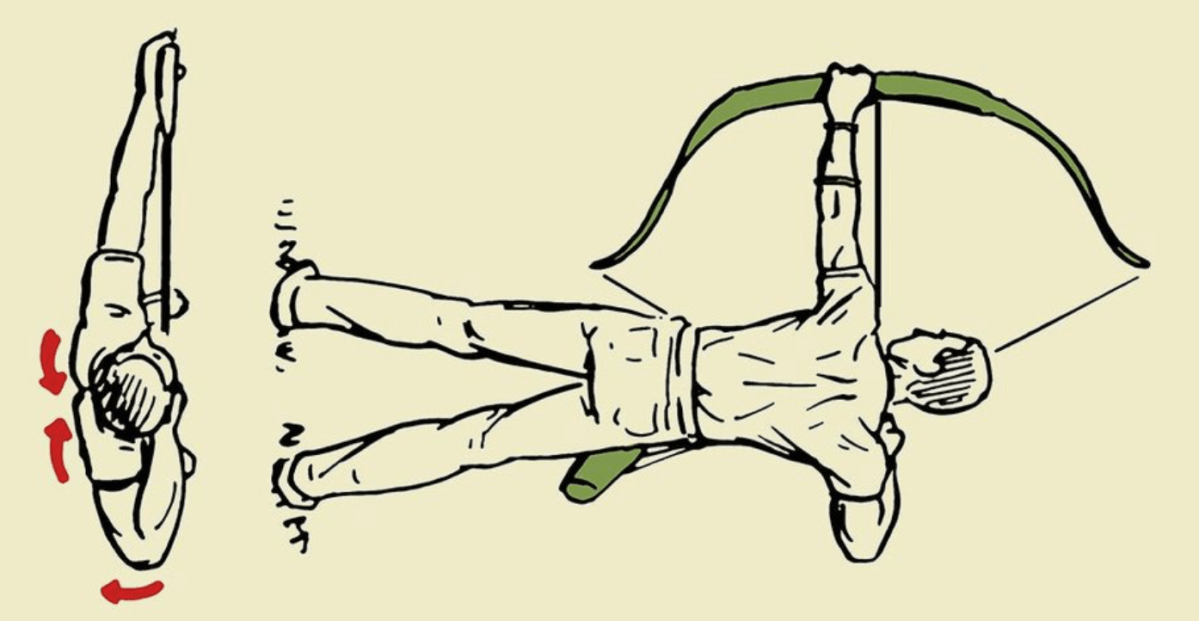
I was talking to my dad yesterday about a missions leader. My dad suggested that I could help him network and open some doors of relationship for him in the circles I frequent. Dad said, “You can’t be the bow and the arrow at the same time”. I thought that was a really good illustration about how we need someone else to promote us versus self promoting. I looked for the phrase online and couldn’t find anything, so maybe a John Dawson original? It wouldn’t be the first, my dad is quite a wordsmith always able to paint verbal pictures that encapsulate truths.

When I think about what has enabled me to still be in ministry after 27 years it really is the fact that I stand on the shoulders of those who went before me. So often people will remind me how blessed I am with the spiritual heritage I have, and I have to agree 100%. To this day doors open for me because of my family’s reputation whether I’m in South America, The U.S. or now in Europe. You’d think that this would give me a heart to advocate for those who are looking for open doors to serve the Lord. But unfortunately I have to admit that my selfishness often leads me to only worry about investing in opening doors for myself.

It takes an altruistic heart to be a man of peace, someone who opens doors for others when the urgent matters of your own life want priority. I can’t think of a single day in recent memory where my natural inclination wasn’t to think my own needs were sufficient to occupy 100% of my energy. I have no problem filling a day with my own pursuits.

A lot of times people think of mentoring as only the transmission of information, or a psychoanalytic approach focused on listening. But my mentors have been people who opened doors of opportunity in very practical ways – inviting me to meetings, introducing me to key people, lending me equipment and making financial donations.

Proverbs 27:2 says, “Let someone else praise you, and not your own mouth; an outsider, and not your own lips.” And so much more fruitfulness for Christ’s Kingdom will be produced if we develop mutual-promotion partnerships. Now it may sound like I’m suggestion turning altruism into selfishness, and perhaps that is a danger. But I don’t think it’s wrong to promote others knowing that sowing seeds of love tends to yield fruit for the sower, it’s a spiritual principle like giving and receiving.

My prayer is that the Lord give us more of His heart for each other each day, to seek to see my brothers’ and sisters’ dreams fulfilled. Hopefully as I mature in Christ categories of your dreams and my dreams will become less and less evident. And I will truly, “Rejoice with those who rejoice” (Rm. 12:15).

Você Não Pode Ser Arco e Flecha no Mesmo Tempo

Outro dia eu estive conversando com o meu pai sobre um líder missionário que conhecemos.  Meu pai sugeriu que eu podia ajudar aquele senhor apresentando ele para algumas pessoas que poderiam lhe ajudar.  Ele me disse, “Você não pode ser o arco e a flecha no mesmo tempo”.  

Certamente o que tem me mantido no ministério pelos últimos 27 anos é a família espiritual que o Senhor me deu.  As vezes por causa do meu orgulho eu não gosto de ouvir as pessoas me disserem o quanto que eu sou abençoado pela herança espiritual que eu tenho.  Mas a verdade é que até hoje, aos 44 anos de idade, portas continuam a serem abertas a mim por causa de quem são os meus pais, avós e tios.  

Seria lógico então que eu teria um coração generoso para com os outros neste sentido.  Pelo tanto que eu tenho beneficiado da influência benevolente dos outros eu deveria querer repassar a mesma àqueles em minha volta.  Porém infelizmente muitas vezes sou egoísta e perco oportunidades de promover os meus colegas de ministério que estão buscando realizar os chamados deles.  

É claro que todo dia a nossa tendência é de só pensar em nós mesmos.  Afinal todo dia tem projetos e necessidades nossos o suficiente para ocupar todo nosso tempo.  

Hoje em dia a grande indústria de agências de consultoria de coaching e mentoria se baseia na necessidade relacional das pessoas.  As pessoas não precisam de relacionamentos só de falar e ser ouvido.  Mentores são pessoas que podem abrir portas de oportunidade, emprestar equipamentos, fazer doações financeiros, etc.  

Provérbios 27:2 diz, “Que outros façam elogios a você, não a sua própria boca; outras pessoas, não os seus próprios lábios.”  Quanto mais fruto seria gerado por nós se investimos mais em promover uns aos outros.  Até nós mesmos seríamos beneficiados por este comportamento. Este princípio funciona como o dar e receber, que é uma lei do Reino de Cristo.  Funciona.  

A minha oração é que o Senhor nos dê um coração voltado para os sonhos dos nossos irmãos.  Que o sinal do nosso amadurecimento seja a crescente agilidade de “Nos regozijar com aqueles que se regozijem” (Rm. 12:15).