The Past is Always Present

I am on my second listen through of Yale professor Marci Shore’s series of lectures European Intellectual History Since Nietzsche (2026, https://youtu.be/fhIW-E9wZe8?is=cO7TYm7H1V-40djN). I found Shore’s lecture on French philosopher Henri Bergson fascinating for how a Christian like me understands time. I am PhD candidate doing qualitative research focused on exploring how people describe and understand their own experiences. So, I was intrigued about Bergson’s contribution to our understanding of quantitative versus qualitative knowledge. 

Along with Husserl, Bergson was part of a philosophical movement that rejected positivism, arguing that time cannot be divided. Bergson explored the dichotomy between the continuous and the discreet. Time is continuous in contrast to mathematical numbers which are discreet. Time is unmeasurable and therefore must be understood in qualitative terms. A flame can serve as a metaphor for this, which cannot be “cut”, or by materials that melt together. For example, the past lives on in the present in an interpenetrating way. As with so many philosophers since the Enlightenment, Berson was seeking to deal with the alienation sensed in the West after the intelligencia rejected God and revelation as sources of transcendent ethics, epistemology, and ontology (what we should do, how we can know anything, and what is?). 

Kant argued that we should act ethically because to not do so would be catastrophic. Hegel argued that our ethics should be based on an understanding that history is moving toward an ultimate telos which we are part of. But Bergson rejected the Hegelean notion of determinist arguing that there is space for human free will within time. Bergson injected free will into time against Hegelian determinism, human free will is always influencing the world. In this conception, time involves sequence without distinction – that is – there is movement but not fragmentation. To repeat, the past lives on in the present, an ever-present interpenetration. 

Bergson argued for a creative evolution contra Hegelean teleology (the world is moving towards a determined goal) and a mechanistic understanding of the world (everything in the world works like a machine than can be understood by disassembling and reassembling the parts). He draws upon the concept of élan vital (life force) describing it like a meteor that explodes fragmenting in particles. He uses duration or duré to describe the common human understanding of time. Bergson argued that we need both intellect and instinct / intuition to understand the world. Intellect, according to Bergson, is turned towards inert matter and the mechanistic. Intellect is insulated from what is animate and alive. Instinct or intuition, in contrast, is turned towards the animate world. Both Intellect and intuition are needed in human understanding, but Bergson argues that the Enlightenment had undermined the essential role of intuition to understand the world. 

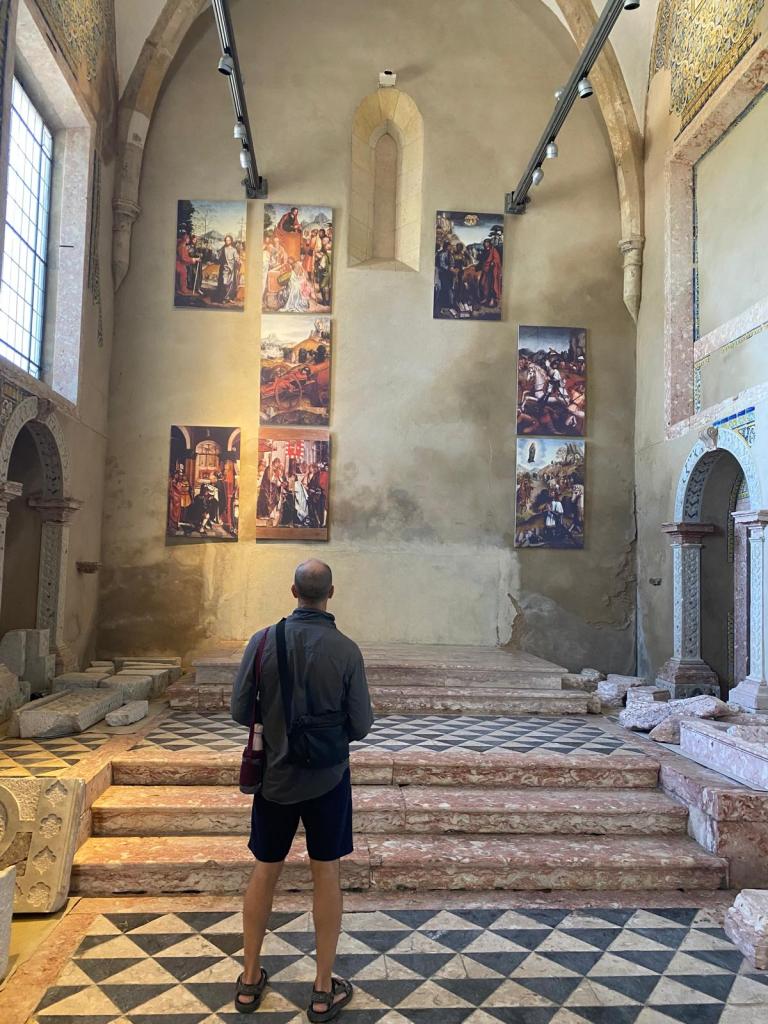
As I stated earlier, I am drawing this description of Bergson’s philosophy of time from Marci Shore’s lecture. What I find fascinating as a Christian is how much of Bergson’s thought aligns with a biblical worldview. Both the Jewish Tanak and the Christian New Testament propose rational and intuitive knowledge as essential to human understanding of the world. The Bible describes human intellect as being part of man’s being created in the image of God. Jesus uses rational argument in many of his teachings. Biblical narratives also describe men and women coming to understand subjective knowledge of love, beauty, and virtue with the help of the Spirit of God. Recently I heard a sermon where the speaker stated, “the past is gone”. I appreciate what the preacher intended to say regarding not letting the past act like a shadow or burden to a Christian’s present. However, I also recognize that the influence of the past in many good ways sustains me and encourages me as I attempt to follow Jesus and fulfill his purpose for my life. The voices and examples of the men and women of God who discipled me continues to follow and inspire me today. 

Philosophers since the Enlightenment have attempted to address human alienation since the “death of God” as described by Nietzsche. And the biblical narrative continues to inspire me to seek belonging in the Triune God. I do not find the Christian life or worldview a simple path without doubts and contradictions along the way. But in my fragility and inconsistency, I say like Peter that I have not found another source of life-giving truth than Jesus. Following Jesus does not require disengagement from philosophical exploration. Secure and held by our relationship to Jesus, we can bring hope to those around us who continue to ask the primordial questions of human life and understanding our world. 

References

Shore, Marci (2026). European Intellectual History Since Nietzsche, https://youtu.be/fhIW-E9wZe8?is=cO7TYm7H1V-40djN
European Christian Identity and Self-Secularization

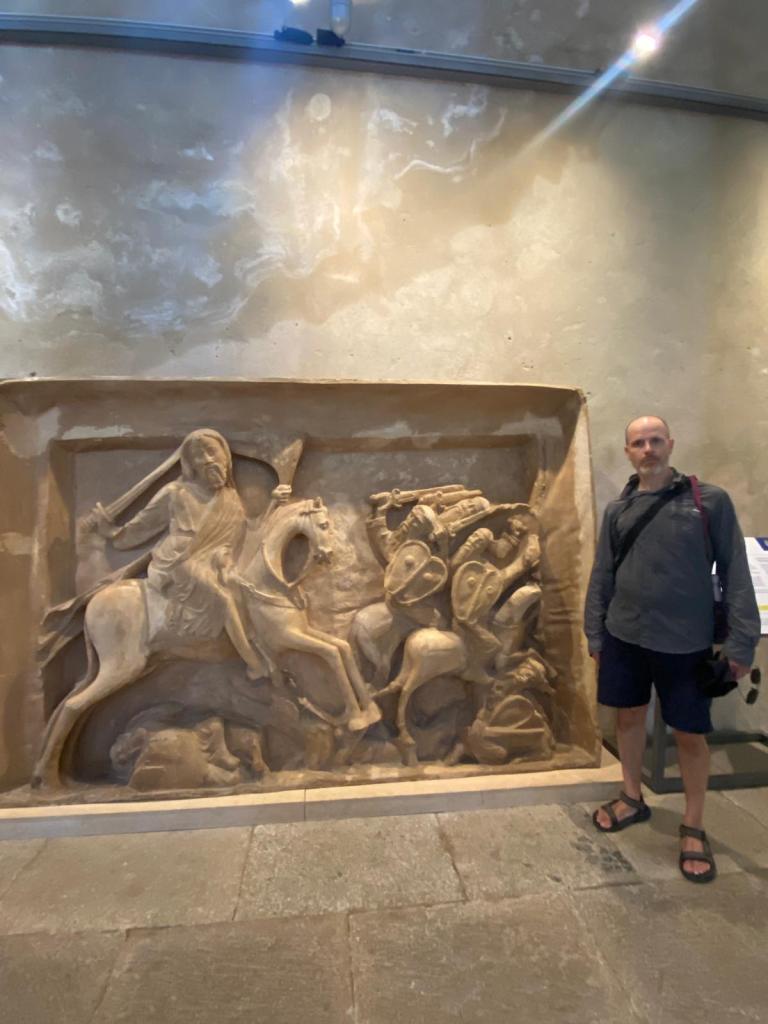
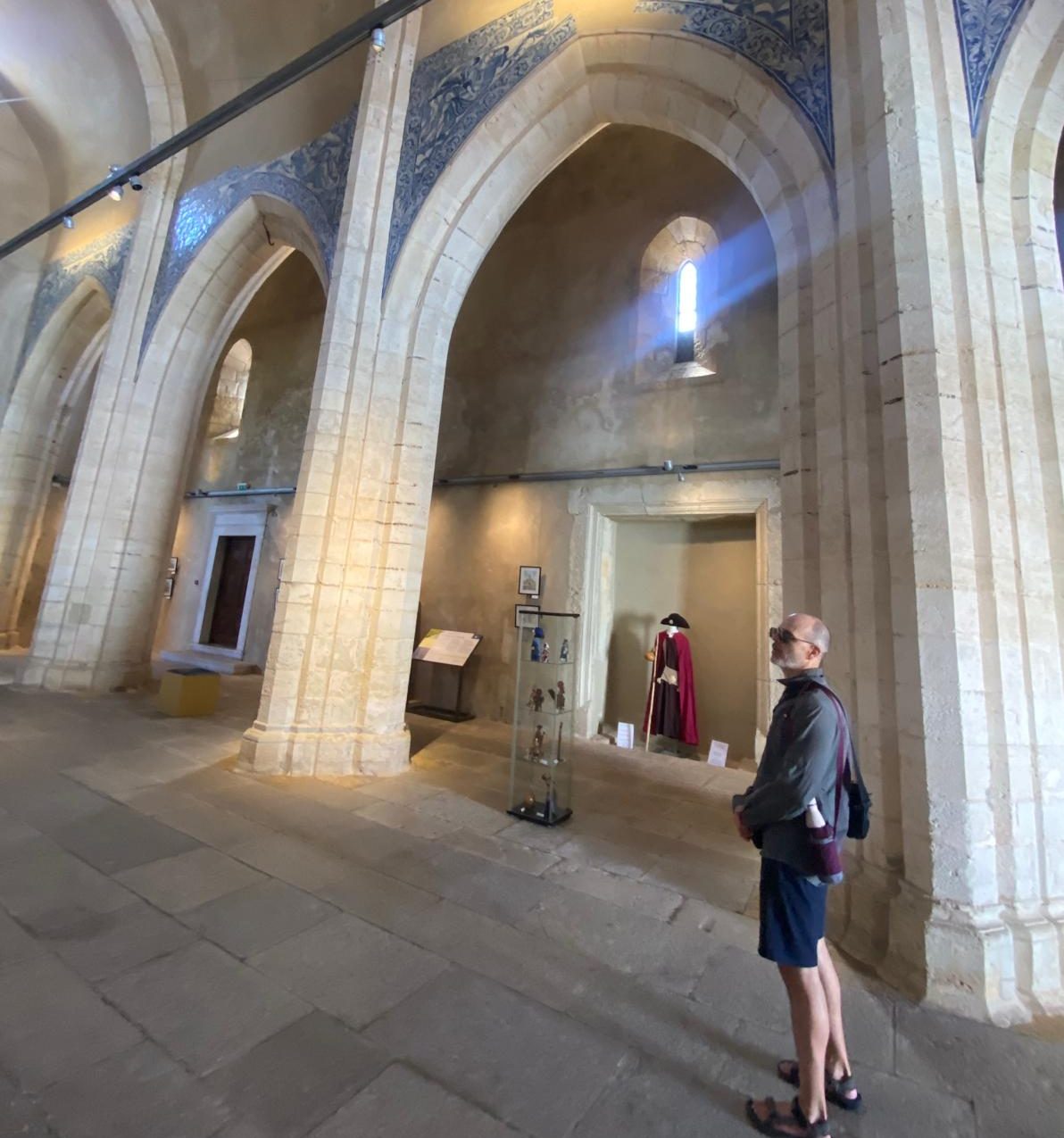
I believe that understanding the ancient history of Portuguese faith and culture is key to contributing to the work of the Spirit in this ancient land. Part of my field work for promoting reconciliation between Catholics and Protestants is to understant the history. My wife Kati and I recently visited the Castle of Palmela on the Peninsula of Setubal on the other side of the Tagus river. Dating from the 310 b.c., the Castle was built by the Romans and subsequently conquered by the Visigoths and the Moors. The site is a rich source of data on the conquest of the Moors and reconquest of Christian crusaders. The Moors built the original fort on the hilltop, which has been excavated and can be toured. A vast amount of Moorish arifacts are on display. The crusader spirit of the Spainish and Portuguese Christian armies would give rise to the crusades in the Holy Land. Islamic civilization dominated the Iberian peninsula lasted for 8 centuries, and is one of the reasons most Spanish and Portuguese see Catholic faith as patriotic and essential to their national identity. Kati was able to find the crest of her maternal family name Gonçalvez.

In a land so deeply rooted in Christianity, but also in religious wars, we pray that the ancient church of Christ can be continually renewed. The biblical vision for renewal and revival is not one of obliterating or ignoring the past, but of repentance and restoration, as the prophet Isaiah wrote “In repentance and rest is your salvation, in quietness and trust is your strength, but you would have none of it” (Is. 30:15). In so many nations the church seeks to vindicate itself against the accusations of those who focus only on the dark side of Christian history. But through repentance and loving witness the church can find new strength even in extremely secular Western Europe. 

Protestand and Catholic – who God used to bring the transforming values of Christ’s kingdom. But as the Muslim world often sees Christ as representing Western violence and enmity, we must pray for the restoration of the gospel message of peace, forgiveness, and reconciliation of all nations with the Heavenly Father. 

French Protestant sociologist Oliever Roy (2024, https://youtu.be/IAl6aOePZsQ?si=3XiCGBgQONS1NefK) argues that many Christian populists in Europe today are children of the 60s cultural revolution who don’t adhere to religious practice or belief but only use Christianity as an identity factor in juxtaposition to minorities such as Muslim immigrants. Roy argues that since the 1990s these populists blame groups like Muslim immigrants for de-Christianizing Europe. But Roy’s research indicates that the de-Christianizing of Europe resulted primarily from Enlightenment thinkers such as Descartes and Kant who tried to secularize Christian morals rather than coming up with new morals. Secularization of education was based on an idea of universal ethics that should not be questioned. Protestants we’re first to legally impose Christian ethics such as making homosexuality illegal. Both Protestants and Catholics banned abortion but this was only much later, lasting until the 1960s. Until the 1960s, the Christian identity of Europe wasn’t a concern because secularism preserved much of Christian ethics as the basis for law and education. The counterculture movement of the 60s was not an anti-religious. From the 60s to the 80s, the laws changed in Europe to accommodate the sexual / cultural “revolution” but there wasn’t any real political revolution. The Protestants self-secularized while the Catholics focused on resisting cultural changes on sexuality and family. Roy describes how populist politicians sinde the 1990s have said they represent Christian culture while supporting positions att odds with traditional Christian views on marriage, abortion, love of neighbor (immigration), etc.  

As the church in Europe is challenged with finding its role within secular nations, our prayer is that Christians will be both relevant as well as distinct from the systems of the world which are always a mixture of good and evil. Our prayer is that Christians seek the flourishing of the nations where they are citizens while understanding the Christ’s vision for the coming of the kingdom, distinct from the hegemony of any human institution.

Recently we also visited a popular festival in a rural village an hour north of Lisbon. This was a deep experience of rural Portuguese culture. A particularly insigtful moment was when the parish priest said a blessong over all the visiting family members who were working and living abroad. It helped us understand the deep connection the Portuguese maintain with their ancient agricultural communities while many work overseas. Many in the West feel that monetary gain and freedom from societal norms will ultimately prove the most powerful influences in modern society. But in Southern Europe, we have seen the enduring values of land, church, and ancestry. The less economically powerful countries on the perifery of Europe – sometimes prejoratively referred to as the PIGS (Portugal, Ireland, Greece, and Spain) have exported their young people for generations to work in richer nations. On a trip to Wengen, Switzerland years ago I read the names of workers who had died digging a passage way through the alps in the 1920s, all of them Italian, Spanish, and Portuguese. On our visit to a small Portuguese village, it was a privilege to witness how the traditions and affections of traditional Southern European life are preserved. 

https://oblist.com/products/vintage-1970s-drinking-glasses-set-of-6-smoky-grey-brown-glass-for-water-or-long-drinks-decorative-retro-barware-table-decor-gift-idea?srsltid=AfmBOooELnIT6Z0T2ZlKg9MuHQKEHpdK-EPLWj5ocv7Hy4deexZY74OZ

Filling the Void After Rejecting God

Replacing God with a Unified Spirit of Humanity

In her series on the development of European thought in modernity, Yale professor Marci Shore compares the attitudes of students in the 1970s to those of today (2026, https://youtu.be/EozQmkpHKUc?is=-jSOMgExZDzKgswG). Whereas in the 1970s students asked why idealized all-encompassing political systems such as communism didn’t work, today students ask how anyone could have believed in them in the first place. In the 19th century, Hegel’s philosophy replaced God with the Geist, a team spirit of humanity working together as history progressed forward. For Hegel, good was that which wins because the arc of history was always moving forward ebbing and flowing towards a predetermined end. Marx took Hegel’s dialectic and made it more material, seeing industrialization as the decisive factor in modernity. Agricultural workers embedded in communities had become alienated factory workers. It was at this time that nationalism arose in Europe, based on the idea that if individuals have the right to self-determination so do people groups, societies, and cultures. 

Replacing God with History

Writing 17 years after Hegel’s death, Marx’s Communist Manifesto  was a prescription and a prophecy that made no distinction between what should and what would happen. Workers would arise organically and spark an international global communist movement. This workers class was predestined to liberate humanity and usher in the final consummation of the communist ideal. According to Marx, it wasn’t that the communists were God’s favorites, but History’s favorites. The Soviet Union was the largest experiment in social engineering in human history. Whereas the fascist dictator acknowledged himself as the object of the multitude’s applause, the Marxist dictator saw themself as only the embodiment of History’s iron laws. It was History that both the Marxist dictator and the multitude humbly served (Shore, 2026, https://youtu.be/Rh2FjZu2pNc?si=LJgm5VYjb0xTCbpD). Born 13 years after Hegel’s death, Nietzsche was a very different type of philosopher and marked the beginning of a shift in Western thought. While Hegel tried to put everything into a comprehensive system, Nietzsche took everything apart and famously declared the death of God (Shore, 2026, https://youtu.be/MqbQ0loF3zM?is=5hUsTd_xSBpgawEo). 

Replacing God with Language

But the desire to find a universal paradigm to fill the void and alienation left by the death of God led 20th century thinkers like Levi-Strausse to develop structuralism (Shore, 2026, https://youtu.be/k0ZLNVIrdcU?is=LMwoy1AmVKQZLqKr). Rather than class struggle, structuralism posited that language was the key paradigm for understanding the world. Meaning is based on a structure that has developed over time in diverse communities. We never witness the invention of language but are surrounded by it from birth. Levi-Strausse endeavored to understand the underlying structures of cultures, arguing that all cultures drew from a universal linguistic substructure. In comparison to Marxism, structuralism was ahistorical and amoralizing, that is, it didn’t seek to define meaning through a historical process or primordial ethics. According to Levi-Strausse, language was a system of differences not substances, and therefore meaning is all about difference. The relationship between the word and the thing itself is not intrinsic – there is no essential reason the word “cat” refers to that animal in English-speaking societies. Nevertheless, language is stable, based upon a structure that has developed in communities. 

Seeing God in Language

Catholic philosopher René Girard followed the tradition of structuralism, having converted to Christianity as a French professor working in the U.S. after World War II (Gonzales, 2021, https://youtu.be/qFK_sw2KLkU?is=xvnwdp7ucbEEhJWg). Against the prevalent deconstruction introduced in the U.S. academy by the Frankfurt school of Neo Marxists after the war, Girard argued that history could be understood through a Judeo-Christian lens. Girard posited that cultures go into crisis when there is a lack of differentiation (Shore, 2026, https://youtu.be/PTz65ixvjjc?is=BT5A2ycwQp9Mk5-z). When established norms of difference in a society are challenged or undermined, it causes a crisis that generates foundational myths. These myths are the story of the murder of a scapegoat from the perspective of the murderers. That is, myths are generated from a people’s dealing with crisis of values. Girard also saw human desire as not originating in the object or the subject bur in the “model mediator”. Human beings imitate the desires of others, meaning that human desire does not come from within the individual but from without. Girard called this “memetic desire” which led to envy and violence (Shaw, 2026, https://youtu.be/PTz65ixvjjc?is=BT5A2ycwQp9Mk5-z). 

Filling the Void After Rejecting God

I have described some of the reflections of professor Marci Shore on the development of modern Western thought. As a Christian, I am encouraged that Western society has continued to search for meaning even after rejecting God. In large urban centers of North America and Europe we can see today the evidence of thriving communities of God-seekers. As someone who ascribes to the traditional Christian faith, I believe in the uniqueness of Jesus as the Lamb of God sent to bear the sins of humanity. But in the history of European thought, I also see many interesting points of dialogue with Scripture. The questions of Hegel, Marx, Nietzsche, Levi-Strausse, and Girard all contribute to dialogue with Scripture. These questions are the same that men and women grappled with in Scripture and the history of the church. Secular ideology encourages us to keep such conversations cloistered in the private sphere of our homes, or even within our minds. However, even in a grand capital of Europe such as Lisbon where I live, modern man still yearns for what I know as Father God. 

References

Gonzales, 2021, https://youtu.be/qFK_sw2KLkU?is=xvnwdp7ucbEEhJWg

Shore, 2026, https://youtu.be/EozQmkpHKUc?is=-jSOMgExZDzKgswG

Shore, 2026, https://youtu.be/Rh2FjZu2pNc?si=LJgm5VYjb0xTCbpD

Shore, 2026, https://youtu.be/MqbQ0loF3zM?is=5hUsTd_xSBpgawEo

Shore, 2026, https://youtu.be/k0ZLNVIrdcU?is=LMwoy1AmVKQZLqKr

Shore, 2026, https://youtu.be/PTz65ixvjjc?is=BT5A2ycwQp9Mk5-z

https://laycistercians.com/catholic-monks/

Do Anthropologists Think They can Learn Anything From Theologians?

A Place for Conservative Anthropology?

Perhaps current discussions in the field of sociology can speak to our topic. At a recent seminar of the Heterodox Academy, statistical evidence was presented that most applicants for sociology degrees are coming from an activist motivation, also known as action research (Heterodox Academy, 2026, https://youtu.be/fYCkOI6i7DE?si=DngoFqm9WzVq7kJz). According to the panel, inequality has become the dominant theme in sociological research. This situation is critiqued as producing research that merely denounces equality rather than seeking to contribute new data. In this way, equality has substituted all other paradigms of virtue. Against this predominant current, the Heterodox Academy seminar argued for the need for conservative sociology. For many conservatives, there is no place for their worldview in sociology because the field is completely dominated by activism targeting inequality. However, others have argued for a conservative sociology that prioritizes science over advocacy. 

Can Theology Teach Anthropologists How to Critique Culture?

Anthropologist Joel Robbins (2023, https://youtu.be/PtCGXLuIOAQ?si=FRfJMVWfCo_FNKLo) addressed how the issue of making judgements across cultures has become increasingly fraught among anthropologists. Robbins investigated what can be learned from religions about this. Cultural relativism (CR) is seen as the greatest contribution of anthropology to the academy and human thought in general; CR aims to suspend judgement to understand how people make sense of things, a form of asceticism that anthropologists increasingly don’t want to adopt. Robbins argued that whereas anthropologists used to look for the integrity of societies, now they look for what goes wrong in them. Anthropologists today often blame some source from outside or above that oppresses and exploits. 

Robbins posited that anthropologists could learn from theologians because they are trained in the opposite to CR: how to make judgements; (2018, https://youtu.be/EISLdAcnUgc?si=oXCA1dN4eT65IpCA). Robbins draws upon the work of Ortner (2006) who predicted a shift in anthropology from symbolic to practices in the 70s and 80s. In the 2010s, Ortner said that the focus of anthropology had become dealing with the neo-liberal world order. He described this as an “anthropology of darkness” focused on protest, activism, and liberation. In opposition to this trend, Ornter described the emergence of a counter movement which he described as the anthropology of the good. Drawing upon Ortner, Robbins proposed an anthropology of virtue which is better equipped to give us an approach to dealing with cultural differences. This approach is also more helpful for dealing with the problems of societies and cultures than an anthropology of darkness. Robbins describes cultural values as what is ethically desirable. Values are “the way things end up” – the societal norms that repeatedly manifest themselves in situations. In contrast to this, moral non-cognitivists say that values are simple people saying “yeah” or “boo” about things they arbitrarily approve or disapprove of. 

In this text, I have briefly addressed some discussions in anthropology and how theology can possibly contribute to them. Historically, anthropologists and missionaries were generally at odds with each other ideologically. However, the field of missions studies has increasingly recognized its situation in relation to the other social sciences (Kim et al., 2022). Missiologists increasingly study alongside sociologists and anthropologists in major universities. Coming decades will demonstrate whether such partnership and dialogue can bear fruit according to the perspectives of all parties involved. 

References

Heterodox Academy, 2026, https://youtu.be/fYCkOI6i7DE?si=DngoFqm9WzVq7kJz

Kim, K., Jørgensen, K., & Climenhaga, A. F. (Eds.). (2022). The Oxford handbook of mission studies. (First edition.). Oxford University Press. Biola Library Catalog (Upper Level BV2090 .O94 2022).

Ortner, S. B. (2006). Anthropology and social theory: Culture, power, and the acting subject / Sherry B. Ortner. Duke University Press. Biola Library ebooks (bio.on1097302820). https://research.ebsco.com/plink/832a8768-1e6c-3d6d-be47-b3080d7a5f5d

Robbins, Joel (2018, https://youtu.be/EISLdAcnUgc?si=oXCA1dN4eT65IpCA

Robbins, Joel (2023). https://youtu.be/PtCGXLuIOAQ?si=FRfJMVWfCo_FNKLo

http://southernbellecrochet.com/free-pattern-mini-prayer-cloth/

Challenging Common Notions Regarding Faith Today

Church is for the Disenfranchised of Society?

According to sociologist Nancy T. Ammerman (2015, https://youtu.be/xl9qYKcfWUo?si=d6H0-A1V_2-3KBO8), a key shift in the sociology of religion has been the blurring of boundaries that traditionally confined the field. Increasingly, sociologists are exploring how religion is manifest in diverse spheres of daily life. Some findings contradict common notions regarding religious affiliation and practice in the Western world. For example, religious vibrancy is often attributed to Evangelical Pentecostalism that attracts the poor and disenfranchised communities of large urban centers. However, Ammerman’s research indicates the opposite – that the poor and disenfranchised are the majority of those who don’t attend regular worship services in the U.S. On the contrary, most churchgoers tended to be upstanding enfranchised members of society.

Together with Spanish sociologist Jose Casanova, Ammerman’s research found that most Americans who leave their religious tradition do so because they don’t belong not because they don’t believe (Ammerman, 2022, https://youtu.be/RAgd4QmVWKA?si=6OjKExySg-hqFgTO). This reinforces the evidence that religious faith is often higher among the more educated because they feel they belong to society, including its religious expressions and institutions.

Spirituality Thrives without Community and Tradition?

Ammerman also researched religious “nones” in the U.S. (2016, https://youtu.be/W-uOims2A0A?si=RP3j4JaCeoldxvW0), the term referring to people who have religious beliefs and practices that are not expressed in the context of organized religion. Only a tiny percentage of these religious nones (RNs) are atheists. The biggest factors for the growth of the RNs since the 1980s was being raised by parents who were also RNs as well as the rise of the “moral majority” Evangelical political culture, which many credited with their decision to leave church. A common notion associated with the RNs is that vibrant individualized spiritual practice often thrives without association with any faith tradition or community. Ammerman found that doing so is very difficult and that community and tradition are extremely helpful for the development and maintenance of religious practice. Many RNs end up joining religious communities, and most of them are drawn by the experience of collective worship – the experience of connecting with God and community. Particularly attractive to RNs is the opportunity to converse with others in church about their faith. Ammernan also described a large category of marginal or “liminal” RNs that move in and out of religious communities and traditions in a cyclical pattern never developing roots. 

Spirituality Thrives Where there are Convincing Rational Arguments for Faith?

German Catholic sociologist Hans Joas (2020, https://youtu.be/BcuyrfhQ76Y?si=Eohb1T2UvT1GZGx0) argues that values develop from human experience, in contrast to the view that in modernity values develop from rational discourse. Joas cites the Holocaust, which came to be seen as evil not by rational discussion but historical experience. In contrast to the view that the modern era is disenchanted, Joas argues that universal human morals emerge through a process, concepts such as humanity as a common race across the earth with shared essential qualities. Joas sees a global genealogy of moral universalism, in which the individual’s moral values cannot be explained by the tradition they were raised in. Rather, individual’s values are shaped by paradigm-forming experiences. Joas argues that enchantment, which I would describe here as the consciousness of the spiritual, is a constant cyclical re-emerging human phenomena throughout human history and very much present today. In contrast to the secularism hypothesis, Ireland, Poland, Croatia, and southern Germany are examples of the pervasive relevance of religious faith and practice (Joas, 2002, https://youtu.be/N_f-MF19GSs?si=tL_xapiSi0AARfgS).

Implications for Faith in the Modern West

In this brief text, I have cited some interesting trends in the sociology of religion. As a Christian living in Southern Europe, I am encouraged to see such evidence of desire for God in the modern Western world. It has also been my experience that developing and maintaining the Christian life – a relationship with God and participation in His kingdom – is highly impeded by a lack of community. The body of Christ is where we experience the collective reality of Christ’s kingdom. Jewish philosopher Emmanuel Levinas held that ethics precludes ontology in philosophy (Zoloth, 2024, https://youtu.be/nCT_nS3z1aA?si=sCARFsRjXl-5VqUz). By this he meant that ethics can only be understood in the context of community. Enlightenment modern attempts at totality deny the particularity of the individual. Levinas argued that the encounter between the individual and God was the foundation of ethics, rooted in Torah. Levinas say this encounter as always involving three interlocutors: God, the individual, and the other. 

These trends in sociology of religion reveal the continued relevance of religious faith and practice. We don’t live in a time of increased irrelevance or marginality of faith and devotion. Even in the West, we are surrounded by a vast sea of individuals who seek the answers and experiences that we Christians have found in Jesus Christ and his church. 

References

Ammerman, 2015, https://youtu.be/xl9qYKcfWUo?si=d6H0-A1V_2-3KBO8

Ammerman, 2016, https://youtu.be/W-uOims2A0A?si=RP3j4JaCeoldxvW0

Joas, 2002, https://youtu.be/N_f-MF19GSs?si=tL_xapiSi0AARfgS

Joas, 2020, https://youtu.be/BcuyrfhQ76Y?si=Eohb1T2UvT1GZGx0

Zoloth, 2024, https://youtu.be/nCT_nS3z1aA?si=sCARFsRjXl-5VqUz