Do Traditional Cultures Still Exist?

Cliggett’s Intent and Purpose in Writing Grains from Grass

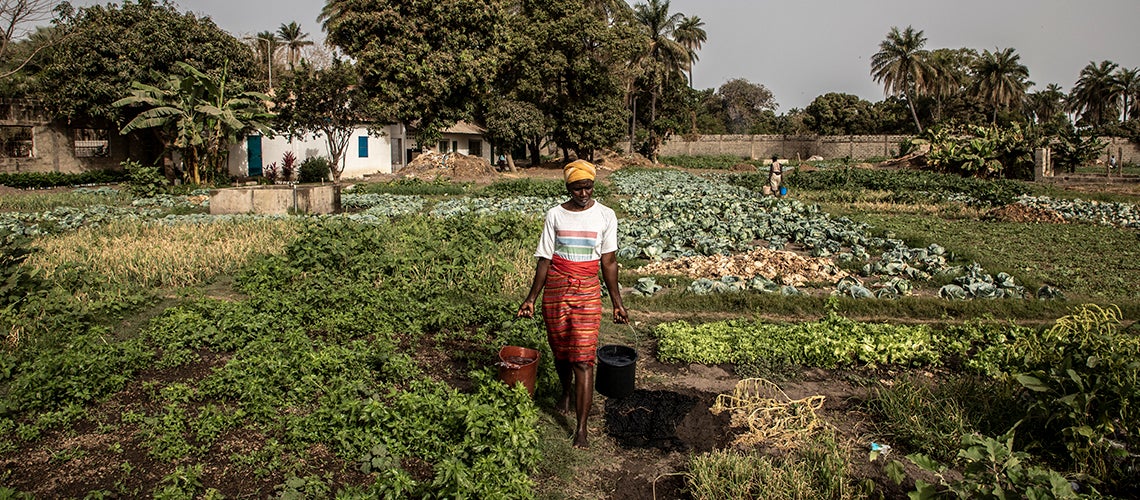
            Lisa Cliggett’s Grains from Grass (2005) studies the Tonga people of the Gwembe Valley in Southern Zambia. Her findings can speak to Western readers who are disillusioned with the individualism of their own societies. This disappointment motivates many Westerners to search for cultures that still honor the sacredness of the family (p. 1). But Cliggett disabuses Western readers of such a stereotype in her study of the Tonga people. In this community, diverse systems of collaboration, generosity, and charity exist based not primarily on “moral duty or altruistic sentiments” but on “necessity in the face of limited choices”. Of particular interest to this research is the relevance of gender-specific survival modes. Cliggett explores family dynamics related to survival in economically vulnerable communities. She discovers the significance of kinship networks for combating poverty and injustice. Cliggett’s understanding of vulnerability considers differences in access and control of resources among different members of Tonga society. Her findings correct simplistic notions regarding impoverished nations, let alone a continent such as Africa (Cliggett, 2005, p. 2-19). 

            Cliggett (2005) investigates the ways that older women and men in the Gwembe Valley interact with a relational world acutely affected by scarcity of resources (p. 22). And this research explores the ways family and community provide for or ignore the needs of elderly women and men in ways not obvious to an outside observer. The purpose of such analysis is to correct oversimplified visions of social problems in Africa on the one hand, as well as ingenuous ideas of the noble altruism of African families. It is argued that care for the elderly needy is not a natural phenomenon to any human society whether industrialized and modern or agricultural and traditional. A more nuanced vision of the multifaceted process of decision making in relation to helping needy family members is needed. This helps societies worldwide to be wiser about the connection between family relationships, poverty, and globalization. Thus, Cliggett addresses naïve Western notions of former times and other places where the support of family members simply flowed out of the goodness of human nature. Caring for the elderly is not a “natural” component of non-industrialized societies, which begs the question, “Where can we find positive examples of this behavior?” Cliggett’s aim to identify differences – “gender, class, generational or historical” – amidst generalizations about “poor and disaster prone” peoples, yields a more comprehensive view of our world’s complex reality. The result is a framework that ties together the agency of the individual, kinship economic models, and long-term analysis of at-risk populations. Cliggett (2005) hopes this will produce theoretical concepts which give “broader meaning” to the phenomena social science research observes in vulnerable communities (Cliggett, 2005, p. 22-75). 

The Resource Bases of Elderly Tonga Women and their Strategies to Access Them

            Cliggett (2005) gives a general description of Gewmbe villagers’ economic situation as consisting of resource ownership, small entrepreneurialism, government assistance, and wage employment (p. 80). In times of economic adversity all these factors are used by individuals in ways that reflect their gender, age, social networks, and the “capacity to negotiate relationships” for survival (p. 80). 

Cliggett (2005) found that women made the adjustment to old age with less disruption, and even with positive expectations regarding its potential benefits. Tonga society practices matrilineal kinship in which primary family identity is shared between women and their children (p. 20). Perhaps surprisingly, in this system widowhood or divorce can give women new freedom to work autonomously, or preferably to be supported from the households of their adult children. Thus, elderly women’s means of survival are connected to their maternal identity in relation to the children they spent their lives sacrificing for and serving. Matrilineal kinship strongly influences how the Tonga people strategize for obtaining resources. But this social system is not tidy, rather, individuals must make compromises and bargain creatively (Cliggett, 2005, p. 19-20). 

Women have been excluded from significant sources of sustenance and have therefore formed innovative means for self-perseveration in old age (Cliggett, 2015, p. 64). Women have less access than men to resources that can be used to generate income, but the former employ diverse types of “craft and service-oriented skills”. The primary way elderly Gwembe women provide for themselves is developing social networks from which they can receive food and other goods. As Gwembe women advance in age, they hope these strategically built relationships can help them procure food, housing, service, and general needs. The most precarious situation for an elderly woman is if she has no close adult male kin who can provide help (Cliggett, 2015, p. 83-108). 

The Resource Bases of Elderly Tonga Men and their Strategies to Access Them

            Tonga men tend to hold on to their position of social power as they age and cannot work the fields and care for themselves (Cliggett, 2015, p. 19). As stated earlier, matrilineal kinship means fathers do not share primary family identity with their children. In this family model, elderly men mitigate against disenfranchisement by exerting their right to adult son’s labor and through bride price, the amount paid for daughters. Despite men’s lack of shared clan identity with wives and children, they do have kinship roles giving them control over resources at the level of the nuclear family. Thus, men’s relationships with their offspring are largely based on formal rights. Women’s relationship with their adult children, on the other hand, depends on connection through kinship and the ties of the “mother-child experience”. By the time they become elderly, men have generally been able to accumulate an amount of wealth which can be used to support themselves. And in a polygamous society, an elderly man is likely to have at least one living wife residing in his home who can care for him (Cliggett, 2015, p. 20-38). 

Tonga men are more able than women to clear new bush fields and a man’s inheritance is traditionally passed on to male heirs. Therefore, predominant male ownership of land has been perpetuated over several generations (Cliggett, 2015, p. 65). Cash-producing activities that men have access to include selling agricultural tools they make, milk from cattle, and garden produce. Men can also offer their services in home construction, brickmaking, and other forms of manual labor. By the time a man is older, one reason his need for such forms of small income decreases is because of accumulated resources. A second reason is that a man’s dependents, such as daughters soon to marry and sons with incomes of their own, will provide additional resources. It is through residential arrangements with extended family members that most elderly men receive the bulk of their food and have their basic needs met (Cliggett, 2015, p. 83-97). 

The idea of a father receiving and “income” from his adult children seems strange to a Westerner like me who prizes independence and would see a parent being supported in such a way as a sign of failing to achieve independence. But from a Zambian perspective, such an arrangement can be seen as a form of retirement at the end of a life lived in significant part to supporting offspring.

How Such Strategies Relate to Elderly Men and Women’s Connections to the “Ritual World”

            In Africa, roughly a century of European slave trade followed by a century of industrialization and colonization have deeply affected “social, economic, and belief systems” (Cliggett, 2015, p. 53). In Zambia, differences in how global economic vulnerability has affected different regions produced richer and poorer regions. Seasonal fluctuation of food availability has led to agricultural migration, profoundly altering people’s connection to their land. This in turn has undermined the importance of ritual institutions and their leaders, elderly men (Cliggett, 2015, p. 56-62). 

            The funeral homestead is a “market of sorts” where people exchange and sell as well as singing funeral songs and developing relational networks, i.e. catching up on local gossip and current events (Cliggett, 2015, p. 82). Thus, a wide range of goods could be found by villagers and visitors at these recurring rural markets. Women’s participation in religious funeral rights is fundamental in the form of food preparation. The preparation of food is empowering to women, in fact the funeral period officially ends when the women finish clearing out the fire ovens (Cliggett, 2-15, p. 82-121). 

            Christianity has grown in the Gwembe valley, but the elderly population is not a significant presence in church life (Cliggett, 2015, p. 117). I wonder if elderly men and women do not see as much of the benefits of Christianity as a theology and community versus the younger more entrepreneurial population. The Pentecostal type of Christianity that has been so influential in Africa is highly individualistic, emphasizing God’s intervention in the life of the individual, the potential to receive his blessing on finances and health. Perhaps the elderly see this as not contributing to the traditional cultural and social institutions that benefit them, or worse, perhaps they see them as threatening. Ancestor worship is a traditional part of indigenous Tonga religious practice, and I am curious how different Christian denominations have interacted with this practice. 

            Men are seen as having agency regarding the spirit world in a direct way while women are beset upon by spirits, at times harmlessly but in some cases dangerously (Cliggett, 2015, p. 132). Women can use the cultural belief that they are vulnerable to possession by evil spirits as a means for requesting help (p. 140). A situation of spiritual attack makes an elderly woman victim a sympathetic plight for members of her kinship network. 

Some Effects of Migration on Traditional Kinship Support Paradigms

            Economic pressures and opportunities lead many of the Tonga people to migrate away from their home villages. But connections with family back home are generally maintained, not through remittances but sporadic gifts. Such contributions would not amount to a reliable or significant source of income (Cliggett, 2015, p. 148). And for those who migrate, making their new lives work is the main priority. The imposition of requests for help from visitors from a migrant’s home village makes greater distance helpful. The farther migrants move away, the more of a “buffer from such impositions” exists. The best way a visitor from back home can obtain a gift from a prosperous migrant relative is to make the request in person. Often the gift request is attended to, and sometimes at significant cost to the giver. But the gift is based on the nature of the interaction and is not a given, therefore the person requesting goes to great efforts to be gracious and diplomatic. Such gifts do not amount to a reliable source of income for villagers who remain back home. At best these contributions are a helpful part of a village’s economic system, but not a main source. If a migrant does not maintain ties with his or her home village, there is also a downside. This will result in being cut off from social ties to the home village and material, emotional, and spiritual benefits it can offer (Cliggett, 2015, p. 152-5).

Conclusion

            Cliggett (2005) makes a compelling argument that simplistic stereotypes of the drama and needs of the African people result in misguided endeavors to save victims and solve problems without tackling foundational causes (p. 48). The “framework of vulnerability” approach rightly advocates for multifaceted research on issues such as environmental crises, access to food, and kinship. This approach mitigates against tendencies in the social sciences to generalize about the circumstances of all members of a village, region, or nation (p. 49). I agree with the notion that at-risk populations’ foundational problem is relational. And each member of a family negotiates for resources within the kinship network with differing “desires, abilities, and power” (p. 50). 

I understand the need to find out who copes better or worse among vulnerable populations. First, those who cope poorly can learn from those who have innovated, negotiated, strategized, and succeeded. Second, I appreciate the importance of determining what unjust phenomena may be creating situations of inequality of coping. Thirdly, it is vital simply to determine who the poorest copers are to target them as those in greatest need. 

            Cliggett’s work demonstrates that support is channeled through “continually negotiated social networks” in different ways by elderly men and women (p, 158). With the participation of multiple family members in the chain of resources, a decision or failure to perform by any individual threatens the entire system. Cliggett (2004) demonstrates how individual’s in the Gwembe valley are able not only to survive but to prosper (p. 167). This account of individual human agency in poor communities emphasizes the endeavor to progress and flourish contra the caricature of acquiescence and acceptance of poverty. Cliggett’s work effectively counters the error of overly attributing worldview – how people think in sweeping generic national-ethnic terms – instead of observing reality of experience and agency on the ground (p. 167). I agree with the general position of this work as it posits that the most simple and foundational method of combatting the reductive tendency towards sociocultural analysis is the place the target community in “center stage” (p. 168), rather than giving too much credence to stereotypes and generalizations about vulnerable peoples such as the Tonga of the Gwembe valley. 

References

Cliggett, L. (2005). Grains from grass: Aging, gender, and famine in rural Africa. Cornell University Press.

The Forgotten History of the Asian Church

I have been aware that Christianity emerged through interaction with existing cultural and political systems. However, most of my study has been on the influence of Western culture and politics on Christianity. But looking at the development of the church from 1st to 7th centuries outside the West reveals other directions Christian doctrine and practice can take. East Syrian Christianity was dominant in Asia – though not tolerated by the church of the Roman Empire – and West Syrian Christians were dominant in Africa (Cooper, 2016, p. 13). These different branches of Christianity emphasized their differences rather than what they had in common. The most foundational point of contention was interpreting how Christ’s humanity and divinity related to each other (Cooper, 2016, p. 13). As we think of evangelism today, diverse forms of global Christianity should spend more energy seeking consensus that reasons to not collaborate. 

I was unaware of the interaction of Christianity with other religions outside the West. Christianity experienced intense challenges from other religions in Asia where it originated (Cooper, 2016, p. 15). By the fourth century, Christianity was thriving in several parts of the Middle East (p. 20). More theological diversity existed in Middle Eastern Christianity compared to Byzantine, Constantine’s chosen capital which became the core of church doctrine and practice (p. 17, 21). Christianity in Central and Eastern Asia was arguably “the most evangelistic of any tradition in the early and medieval church”. Unfortunately, the study of early Christianity in these regions is “still in its infancy” (p. 23). 

Although the legacy of the church’s political privilege in the West after Constantine is ambiguous, the consensus is that it helped Christianity’s survival in the region. In contrast, because Chinese Christianity was attached to the court of the Tang dynasty, it did not survive the transition to the Sung dynasty (Cooper, p. 25). Christianity spread to Africa by second half of first century, producing some of the most important Christian figures and writings (p. 28). Before 7th century Muslim invasion, several African kingdoms adopted Christianity as the official religion (p. 29,33). Bur the Ethiopian church was allowed a level of freedom by Islamic conquerors (Cooper, 2016, p. 34). The history of non-Western Christianity yields a richer resource for learning to share the gospel in our pluralistic world. These early brothers and sisters had to negotiate the expression of their faith in Christ often from the margins of society or as diplomatic emissaries. 

Because of unfamiliar terms such as Nestorian and Jacobite, we can perceive the Eastern and African churches as obscure sects of “alien religions” instead of vibrant streams of Christian faith (Jenkins, 2008, p. 20). It is well known that the spread of Christianity to the West was facilitated by Roman roads and defended sea routes as well as the widely spoken Greek and Latin languages. But the lands east and northeast of Jerusalem also had familiar trade routes, leading through Syria, Mesopotamia, to the far East (p. 21). Although the history of Christianity in Western Europe is more familiar to most, Jerusalem is closer to Central Asia than France (p. 22). The church-state alliance in Rome and Constantinople created persecution of Christians living under the rule of the rival Persian superpower (p. 23). But operating outside the purvey of Rome was beneficial for Christian sects condemned by the Catholic and Orthodox establishments. So other Christians living on the frontiers of the Empire had to flee to peripheral regions that became “fertile territory for religious innovation and interaction”. The Nestorians and Jacobites in Asia were two alternative churches that rivaled the Orthodoxy of Constantinople. The Persian Empire was happy to protect these “potential enemies to Roman power”, and. Nestorian missionaries had success in China and India (p. 23, 26-7). In the post-Christian West, the church can learn much from early non-Western Christianity on how to live out our faith from a place of humble witness. When cultural and political powers oppose the spread of Christianity, cultivating the art of religious diplomacy and dialogue can make survival, even flourishing, possible. 

Each Christian tradition that emerged offered their adherents experiences that appealed to the senses, with Monasticism as the highest form of spirituality (Jenkins, 2008, p. 29). Mystical practice, however, declined in the West as the institutional church grew in the Roman Empire (p. 29). The Eastern churches opposed dependence on mere human reason, although they were enthusiastic about learning (p. 30). Eastern Christian scholars admired and credited the contributions of other cultures, and they highly influenced emerging Islamic science and philosophy (p. 31). Whereas Roman and Byzantine Christianity adapted to mainstream culture distancing itself from Semitic roots, Eastern Christianity was “founded in a Semitic tradition” closer to the apostles (p. 32). The latter were keenly aware that Biblical events had occurred in the part of the world where they lived (p. 33). The Eastern churches had to engage with diverse cultures and religions which they accommodated in various ways and degrees. There Buddhist and Christian monasteries were often located next door to each other, and often collaborated. Contrary to popular conceptions, the written record of Eastern Christianity shows a conservative approach to Scripture and a “distinctively Christian message”, despite drawing upon interactions with Buddhism and Islam (p. 35). 

I believe that recuperating the diversity of Christian devotion and service is key to making our message more attractive to the world in the third millennium. After 2000 years of church history, many adherents of diverse Christian traditions are fatigued with the rote practice and doctrine they have grown to take for granted. As we discover the variety in the historical body of Christ, I believe we will be inspired to express the vision of his kingdom in innovative and compelling ways. 

References

Cooper, D. (2016). Introduction to World Christian History. IVP Academic.

Jenkins, Philip. (2008). The Lost History of Christianity: The Thousand-Year Golden Age of the Church in the Middle East, Africa, and Asia—And How It Died. Harper Collins.

How the Church Grew Without Evangelism and Missions?

The “Patient Ferment” of Early Christianity

After Constantine’s conversion in 312 CE, the growth of the church is easy to explain, but not before (Kreider, 2016, p. 9). Up to that decisive point, Christian writings focused on church order with the theme of evangelism practically nonexistent (p. 10). Leadership structure was elaborated but didn’t include apostles or evangelists, and worship services were not used to attract new adherents (p. 10-11). Kreider refers to the mysterious, decentralized, uncoordinated spread of Christianity during that time as “patient ferment” (p. 12). Cyprian, Justin, Origen, and Tertulian emphasized the effectiveness of Christian witness as depending on their lifestyle, how their patience intrigues and attracts people to faith (p. 14-29). 

The growth of Christianity was more accelerated, whose characteristic patience became degraded (p. 245, 251). Constantine “Christianized” the law, but without abandoning his “unreformed habitus” (p. 263.1-2). Ge governed according to the traditional Roman approach, favoring the church and suppressing dissidents (p. 267, 269). Constantine offered Christians control over missions endeavors (p. 274), power of state for conversion (p. 275) and suppression of dissidence (276). And the emperor was in a hurry to implement these changes to Christian practice (277). 

By the 4th century, “the papacy and the imperial court seemed wobbly” and Augustine (354-430) felt “out of control” (p. 281). Augustine failed to see the corrective in the Christian habitus of patience to Roman habitus of impatience (p. 290), Augustine shifted focus in his teaching emphasizing the inward Christian life rather than on praxis (p. 290). In the 5th century Augustine’s increased anxiety leads him to shift hears encouraging political powers to use “top-down methods for Christian ends” (p. 295). 

Rewiring the Convert’s “Habitus”

While after Constantine’s conversion Christianity offered social benefits, before this catechesis and worship were the two means Christian communities sought to rewire convert’s habitus (p. 41). This term refers to the deeper motivator linked to socioeconomic and psychological realities coined by Pierre Bourdieu, “corporeal knowledge” we carry in our bodies (39.2). 

The heroic witness of Christian victims of persecution before the reign of Constantine demonstrate that they had allegiances that didn’t fit the Roman structure (p. 45). The Christians were of different social classes (p. 46). They could not control their surrounding circumstances but “they could be themselves” (p. 47). Christians used public persecution as an opportunity to witness to crowds regarding impending judgement (p. 48). Thus, such heroic Christian habitus was transmitted through role models who embodied the message (p. 50). Habitus was transmitted in the repetition of powerful phrases for context of suffering (p. 50), and the kinesthetic effects of worship (p. 51). 

In the Roman world during the emergence of Christianity, private associations provided adherents with face-to-face relationships and sense of participation and responsibility (p. 52). These associations “sustained the life of local people” and “formed their habitus” (p. 56). Christianity offered an alternative association which offered some preferable conditions (p. 56). Contribution was voluntary and members saw themselves as a family which transcended gender and class boundaries (p. 59). However, Christian associations were secretive, leading to rumors of “cannibalism and sexual license” (p. 58). 

The growth of Christianity before Constantine happened despite a lack of planning and control (p. 74). They believed God’s sovereignty was involved, and thus didn’t seek to discern and record strategic insights. Christians prioritized developing Christian habitus over evangelism, and believed the main agents of change were marginal members of society – the humble and anonymous (p. 74). Even during this period, however, increased numbers led to a degradation of habitus which precipitated more vigorous preaching and catechization (p. 125). Evangelization shifted in some contexts from the witness of the community to that of individual piety of monks (p. 126). Inflated communities led to a greater presence of lukewarm members (p. 135), and full meals were replaced by symbolic liturgies (p. 136). 

Is Christian Habitus Attractive Today?

In my context of secular, nominally Roman Catholic Latin Europe – Portugal, Spain, and Italy – a focus on Christian practice versus doctrine has been an emphasis for some time now. The Catholic Church has taken strides to emphasize involvement in social justice and assistance of the poor. I have been impressed by the number of social projects that are present in the dioceses in the Lisbon metro area. 

At the same time, my informal inquiries inform me that the number of young Portuguese Catholics doing formal catechism is low. Much more popular are small group models like Alpha Course which has been used to introduce many nominal churchgoers to a deeper understanding of the faith. 

The pre-Constantine Christian emphasis on the habitus of the humble and anonymous as the primary evangelistic strategy can be restored as part of Catholic tradition. Within the Catholic Church the hierarchy’s influence is powerful and evident. But in the wider secular society, the witness of servant-hearted Christians who seek the common good is a welcome change. The predominant caricature of the church is an institution only concerned with defending the leverage of its doctrinal positions on issues such as abortion, same-sex marriage, and Christian religious supremacy. 

References

Kreider, Alan. (2016). The Patient Ferment of the Early Church: The Improbable Rise of Christianity in the Roman Empire. Baker Academic.

Do the Most Successful Immigrants Assimilate or Negotiate?

In Kinship and Continuity , Alison Shaw (2000) studies how Pakistani immigrants to Oxford, England preserve their culture while adapting in many creative ways to their new context. This work counters many of the troupes common in the West regarding immigrant communities. On the one hand, these groups are often seen as either immutably “stuck” in their traditional ways, causing lack of integration and development. The corollary to this perspective is that immigrants that assimilate most comprehensively bear the most benefits of the modern Western world. But Shaw’s (2000) work indicates a much more complex and nuanced reality, showing how cultural enclaves develop creative hybridity. 

Immigrant Communities in Portugal Today

The insights from Shaw’s (2000) study  indicate several possible applications  for the multicultural Lisbon metro area where I live. It is important to recognize  “general restlessness” and “desire for social advancement” generated by colonialism among immigrant communities (p. 25). A 2023 study showed the number of foreigners living in Portugal had doubled over the past decade, significantly impacting demographics (Foreign Population in Portugal Sees Dramatic Rise, n.d.). The jobless rate for foreigners is almost twice as much as the national average, and nearly a third of immigrants live in conditions of “poverty or social exclusion”. On the other hand, one third of all graduate students at the doctoral level are immigrants (Foreign Population in Portugal Sees Dramatic Rise, n.d.). 

A 2024 study indicates that in the Lisbon metropolitan area 43% of the population is from an immigrant background with 41% being first-generation residents (Monteiro, 2024). As a whole, the country has an exceptionally high percentage of repatriated immigrants, with 63% being ethnic Portuguese. These entered the country by way of family reunification or having come with their parents when they were children (Monteiro, 2024). Besides these, a 2021 study showed that the largest group of immigrants was Brazilians at 25.6% followed, by Portuguese speaking African countries at 9.2% (Imigração e emigração em Portugal | Eurocid – Informação europeia ao cidadão, n.d.). 

On the other hand, the flow of native Portuguese emigrants remains high, with other E.U. countries being the primary destinations (Vidigal & Pires, n.d.). And Portuguese moving overseas tend to be the empowered and upwardly mobile. 47.6% of  emigrants have higher education degrees, and 66% are men (Foreign Population in Portugal Sees Dramatic Rise, n.d.). 

What Cultural Hybridity Teaches us About Immigrant Communities

Shaw’s (2000) analysis demonstrates how Pakistanis coming to Oxford were neither mere pawns of international labor nor fully autonomous agents (p. 38). While these immigrants were subject to wider economic and political forces, they acted upon their own aspirations and principles (p. 38). For the families that grew up, socio-economic circumstances changed for the better. In part this depended on adapting traditional forms of family organization. Some women took up work outside the home while also fulfilling the role of maintaining community ties which they traditionally held (Shaw, 2000, p. 68, 227-8).

Shaw (2000) also describes the conversion of the Isai, known within Hinduism as untouchables (p. 79). This phenomena is relevant to the evangelization of immigrant communities in Lisbon by Evangelicals. The Isai were latrine cleaners in Pakistan but were considered equal to all brethren in a Christian worldview. However, evangelism targeting groups of marginal status must consider whether religious change is tied to material and social ambitions. This can  undermine the unity of  church community where doubts arise regarding its members motivation to convert. Evangelistic efforts that target the marginalized of society can be seen as exploitative, with new proselytes being the goal of the first party and new social status being the goal of the second party. On the other hand, liberation theology would argue that converting to Christianity that hopes for social and material betterment is not a contradiction of interests. 

The renegotiation of caste among Pakistani immigrants in Oxford is an example of intersectionality causing hybridity, rather than mere assimilation (Shaw, 2000, p. 113-115). Property ownership and business enterprise allowed some men of “low caste or middle-ranking landowning backgrounds” to exceed high caste men financially. But this does not amount to caste being “shrugged off as irrelevant” (p. 114). Rather, the rankings are renegotiated regarding “which caste fits each Brod category” related to occupation and wealth (p. 115). I believe that in this regard Pakistani immigrants in Oxford will increasingly assimilate to egalitarian Western views of individual status. The strength of Enlightenment notions of human freedom without reference to outside authorities may not eliminate caste but it will most likely alter it. This type of renegotiation of cultural concepts is helpful in majority Catholic Lisbon as young people intermarry with other religious traditions. The legacy of racism towards African immigrants in Portugal is an unfortunate legacy of colonialism. However, Africans who are devout Catholics experience an intersection of race and religion where the latter benefits them socially. Inversely, a significant percentage of Brazilian immigrants are Evangelical, which can hurt them socially. Even though many of these Brazilian Evangelicals share a close ethnic matrix with the Portuguese, their religious affiliation creates a cultural barrier. Recognizing these dynamics of intersectionality and being able to dialogue openly about them is helpful for interfaith relations and evangelism. 

Shaw (2000) emphasizes the constant change undergone by constellations of culture including “social structures, economic activities, religious beliefs, health beliefs, and so on” (p. 290). The sum of these phenomena can inadequately be referred to as “ethnic” attempting an “overall explanation of difference” which ignores constant internal change (p. 290). Shaw (2000) seeks to demonstrate that what characterizes and defines a group “may alter over time as circumstances change (p. 290). I feel this is adequately demonstrated by the Pakistani-Oxford immigration study. Several aspects of their cultural constellation are seen to be preservable and adaptable in ways that affect the immigrant, the host community, as well as the sending community. 

Shaw’s (2000) research shows how Pakistani immigrants weigh their interests in ways that permit changes within traditional social structures while adapting to new circumstances (p. 293). This is an alternative to assimilation to Western individualistic values, which I believe the Pakistanis can sustain in the future. On the other hand, the Pakistanis will have to accommodate to the limits of modern Britain’s doctrine of multiculturalism. As Shaw observes, “Protection of, and respect for, minority values and customs does not extend to ideas and practices that contradict civil rights (p. 295).

Lastly, I see potential in the tendency of Pakistani immigrants’ “turning to Islam as a more significant source of identity than ethnicity” for its universal appeal (Shaw, 2000, p. 300). In the process, however, they are challenging traditional Islamic practices in search of innovations that fit their own goals and values. Their creativity is impressively able to do so while articulating faithfulness to Islamic doctrine (p. 300). This approach can serve as a positive model for Evangelical immigrants to majority Catholic Portugal who want to maintain their faith tradition while seeking to be relevant. Traditionally, Evangelical missions in Portugal have yielded humble results, especially in terms of conversions among native Portuguese. Examples of immigrants who are able to adapt their religious practice to a new environment in search of greater compatibility and relevance are inspiring. Even more so when such innovation streams from a genuine sense of lessons leaned from the “host” culture, rather than simple a means to subversively manipulate it for individual gains. 

References

Foreign Population in Portugal Sees Dramatic Rise. (n.d.). Retrieved September 19, 2024, from https://etias.com/articles/portugal-foreign-population-growth-2023

Imigração e emigração em Portugal | Eurocid—Informação europeia ao cidadão. (n.d.). Retrieved September 19, 2024, from http://eurocid.mne.gov.pt/artigos/imigracao-e-emigracao-em-portugal

Monteiro, C. (2024, April 16). Migração: Factos e Números 2024. EAPN. https://www.eapn.pt/centro-de-documentacao/migracao-factos-e-numeros-2024/

Vidigal, I., & Pires, R. P. (n.d.). Portuguese emigration: Trends and forecasts.

What Ancient Societies Teach us about Giving?

Can Contemporary Societies Learn from Ancient Economic Systems

            The Gift is as an excerpt from Marcel Mauss’ (2000) studies of economic systems in primitive societies (p. 3). Among diverse social phenomenon, the book addresses the question “What rule of legality and self-interest, in societies of a backward or archaic type, compels the gift that has been received to be obligatorily reciprocated” (Mauss, 2000, p. 4). Mauss (2000) contends that the market is a human phenomenon common to all societies, but with differing systems (p. 5). Mauss seeks to explore how the market functioned before modern forms of contract and sale to shed light on how primordial forms of “morality and organization still function in our own societies”. It is hoped that this inquiry may yield helpful conclusions regarding contemporary challenges related to modern economic systems (Mauss, 2000, p. 5). By exploring “primitive” economic institutions still extant today, we can better understand how our modern societies developed (Mauss, 2000, p. 60). Indeed, Mauss (2000) intends to show how modern systems of law and economies emerged from archaic ones (p. 61). 

Examples of “Archaic” or “Primitive” Societies and Activities

            In ancient Germanic societies, a system of exchange was “clearly defined and well developed” by which clans, tribes, and kings made and maintained alliances (p. 77-8). The obligation to reciprocate was known as the angebinde, and the term gaben refers to gifts given on special occasions that the whole village participated (p. 78). Transactions resulted in each part possessing something of the other, creating a bond by virtue of the inherent power of the object (p. 79). The significance of this obligation is expressed in the fact that diverse Germanic languages have a term for gift that also implies poison (p. 81). A ubiquitous theme in Germanic folklore is the “fatal gift, the present or item of property that is changed into poison” (p. 81). 

In classical Hindu societies, the danadharma – “law of the gift” – determined the duty of giving among the elite Brahmin class (Mauss, 2000, p. 70). A gift generates an equivalent reward for the giver in this life and an increased reward in the next life (Mauss, 2000, p. 72). Gifts are personified as “living creatures with whom one enters into a dialogue”, who desire to be given away and with whom an agreement is established (Mauss, 2000, p. 72). A Brahmin’s property is identified with himself, which can visit harm upon a transgressor (Mauss, 2000, p. 73). Many sanctions exist related to gift giving, such as being directed to another member of the Brahmin caste (p. 73). Brahmins take care to avoid residual benefits from receiving a gift because this makes him dependent on the donor, which would be demeaning (p. 75-6). Thus, “all kinds of archaic precautions are taken” so that “no error is committed” in the gift giving (p. 77). 

            In traditional Chinese law, an unalterable link exists between a think and its original owner (p. 81). Therefore, even after an item has been passed on, a contracted alliance puts the giver or seller and receiver or buyer in “perpetual dependence towards one another” (p. 82). 

Promising Paradigms from Antiquity for Modern Economic Systems

            Mauss sees as “fortunate” the fact that the “atmosphere of the gift” still exists in modern societies, so that everything is not defined in terms of “buying and selling” (p. 83). By analyzing ancient societies, Mauss seeks to demonstrate that charity is still “wounding for him who has accepted it”, “we must give back more than we have received”, and “things sold still have soul” (p. 83-4). The Gift argues that the “old principles react against the rigor, abstraction, and inhumanity” of modern legal codes (p. 85), and contemporary social security schemes represent attempts to return to a “group morality” (p. 87). Mauss promotes such a new morality as consisting of a “moderate blend of reality and the ideal”, amounting to a return to elements of archaic society (p. 88). Listed among the benefits of such a proposal are joy in public giving, generous sponsorship of the arts, hospitality, and private and public celebrations (p. 89). 

            Mauss advocates for a return to a time when man was not a calculating, utilitarian machine (p. 98). The most beneficial economy is not to be found in the “calculation of individual needs” which ends up harming the peace of all, ultimately rebounding upon the individual themself (p. 98). Only by considering society as an integral entity can we perceive what is essential (p. 102). The progress of societies has depended on their success in “stabilizing relationships, giving, receiving, and finally, giving in return” (p. 105). This positive development has occurred as far as societies, subgroups, and individuals succeeded in “stabilizing relationships, giving, receiving, and finally, giving in return” (p. 105). 

            Ancient economic systems teach us that societies built of clans, tribes, and elites can learn to “oppose and to give to one another without sacrificing themselves to one another” (p. 106). The principles of wisdom and solidarity found in the ancient societies Mauss’ studied represent a primordial morality for economic systems (p. 106). Mauss sees the possibility of recovering a balance of both individual and common endeavor as well as the accumulation and redistribution of wealth. Such harmony is possible only through a society-wide education program that encourages “mutual respect and reciprocating generosity” (p. 106). Mauss’ defends the value of researching “civics”, i.e., the “aesthetic, moral, religious, and economic motivations”, and “diverse material and demographic factors” which form the shared life of a society (p. 107). 

References

Mauss, M. (2000). The Gift: The Form and Reason for Exchange in Archaic Societies. Routledge Classics.

Why Giving Causes Tension Among Friends?

Christians consider generosity to be a virtue, meaning something that is freely given and voluntary. But as someone who has served in ministry for the past 3 decades, I’ve seen how tensions between giver and receiver are common. Marcel Mauss’ (2000) The Gift explores cases of lack of gratitude as based on the error of thinking free gifts can exist. For example, a donor should not intend to be exempt from return gifts coming from the receiver. Refusing reciprocation places gift giving outside the possibility of mutual connection. In this text I comment briefly on how Mauss’ work can be applied to missionary service. 

Mauss’ (2000) anthropological research on gift giving in archaic societies and its relevance to contemporary economic systems has interesting applications to my work as a missionary. Specifically, I find Mauss’ work relevant to the challenge missionaries face today in light of postcolonialism. Willie Jennings (2010) descries the arrogant and egotistical approach to giving and receiving of Western missions during colonialism: 

Adaptability, fluidity, formation, and reformation of being were heavily weighted on the side of indigenes as their requirement for survival. As Christianity developed both in the old world of Europe and in the new worlds of the

Americas, Asia, and Africa, it was no longer able to feel this tragic imbalance. Indeed, it is as though Christianity, wherever it went in the modern colonies, inverted its sense of hospitality. It claimed to be the host, the owner of the spaces it entered, and demanded native peoples enter its cultural logics, its ways of being in the world, and its conceptualities. (p. 8)

The legacy of Western missions is ambiguous, the negative aspects of which I am unavoidably connected. In relation to Mauss’ work, one such liability lies in the church’s posture as host and owner even as it invaded the homelands of ancient peoples. I do not subscribe to a notion of a noble savage or pristine indigenous societies that were not connected to their own histories of ethnic competition, conquest, displacement, and genocide. However, I do believe part of missionaries’ task of addressing our colonial past is re-articulating a Christian vision of economic systems. In this endeavor, Mauss’ (2000) work is helpful. 

According to Greene (2024), gift giving is an essential aspect of social relations, involving three types of reciprocity: generalized (based on assumption that immediate return isn’t expected), balanced (explicit expectation of equivalent return near future), and negative (intentionally getting something for nothing such as gabling or cheating). 

Mauss (2000) describes some of the archaic economic systems he studied as existing prior to the emergence of societies where man was turned into a calculating, utilitarian machine (p. 98). In these ancient societies consisting of various groups, alliances were established and maintained through systems of exchange. Through transactions both parties accepted mutual obligation because of the inherent power resident in specific objects. According to Mauss, these primitive economies reflect a vision of society as an integral entity. In such a society, success depends on stabilizing relationships rather than each individual pursuing their own ends (p. 78,78, 98). However, Mauss’ may be critiqued for selecting societies to prove his theory and for portraying them in a naive, idyllic manner (Greene, 2024). 

Mauss (2000) envisions a return to ancient economic systems where both individual and group objectives are balanced and where accumulated wealth is redistributed (p. 106). I promote interfaith dialogue and partnership as a central aspect of postsupersessionist missions. Therefore, Mauss’ work on gift giving yields helpful principles related to intergroup partnership. Postsupersessionist missions involves identifying ourselves as pilgrims and witnesses rather than the exclusive people of God. This exclusivity was a central part of supersessionism’s Gentile appropriation of biblical promises and callings uniquely attributed to the Jews. It is not incorrect for the church to affirm its identity as the people of God. But Christianity’s association with Western imperialism and colonialism creates a need for language that repudiates the sordid legacy of these political and religious phenomena. I suggest the use of terms such as pilgrims, witnesses, and disciples to describe Christian groups. The concept of divine election should be treated as a mystery to be reflected upon within the church rather than a badge visible to outsiders. I believe the election of the Jewish people and the church of Christ is a biblical doctrine that should not be rejected. However, the concept of election is not meant to give groups ideas of superiority and inspire practices of exclusion. 

Mauss’ (2000) vision of society-wide education that fosters reciprocal respect and generosity can inform Christian endeavors to promote the role of interfaith dialogue in missions practice. Missiologists do well to study civics, which Mauss describes as a society’s “aesthetic, moral, religious, and economic motivations”, as well as “diverse material and demographic factors”. Surely such anthropological and sociological research can help the church become part of a shared project of societal development (Mauss, 2000, p. 107).  

References

Greene, Katrina (2024). Introductory Videos: Fall 2024: Social Anthropology ISAN751-01. (n.d.). Retrieved September 12, 2024, from https://biola.instructure.com/courses/58516/pages/introductory-videos?module_item_id=1167199

Jennings, W. J. (2010). The Christian imagination: Theology and the origins of race. Yale University Press; 

Mauss, M. (2000). The Gift: The Form and Reason for Exchange in Archaic Societies. Routledge Classics.

How Symbols and Elites make Cultural Reform Acceptable 

Abstract

In this article I provide an analysis and critique of Nicolai Petro’s A Tale of Two Regions: Novgorod and Pskov as Models of Symbolic Development. I integrate insights from other developmental studies and attempt some implications for my own ministry and context. I also attempt to articulate some biblical insights gained through the study. 

Symbolic Shortcuts as a Means for Public Acceptance of Reform and the Role of Local Elites in its Propagation

The Role of Elites, Cultural Symbols, and Cultural Myths in Novgorod and Pskov

Nicolai Petro states that the intent of his study of the Russian cities of Pskov and Novgorod is to demonstrate that “the cultural symbols and myths adopted by regional elites can be a powerful force in shaping local development strategies” (Petro 2006, p. 370). This study contrasts the growth of Novgorod versus the stagnation of Pskov. In Novgorod, the influence of pragmatic individual political leaders has lead to development. While in Pskov, the influence of bureaucratic and unstable political parties led to stagnation (Petro 2006, p. 370). In Novgorod, a strategy for development prioritized growing the shared resources rather than simply extracting the maximum in the short term – a focus on future benefits (Petro 2006, p. 371). By contrast, in the other three pilot regions the focus tended to be limited to distribution of their existing resources (Petro 2006, p. 371). 

Petro offers a compelling description of myths that proved relevant to the positive developments in Novgorod. The positively useful myth in Novgorod was its cultural heritage as a center of commerce. In comparison, the study shows that the cultural self-conception of Pskov as a bulwark against outside influence proved to have a negative influence regarding development. In his book To Change the World (2010) J. Davidson Hunter describe such phenomenon as myths that are pre-reflective frameworks of meaning, understandings of the world “so taken for granted that is seems utterly obvious” (2010, p. 32). 

We must ask ourselves what sociological lens was used by the researchers cited in Petro’s study. Some of the research used focused on “the impact of Western funds on democratic development” (Petro 2006, p. 372). Petro also explores Western attitudes towards cultural development drawn from conferences organized by the World Bank in Washington D.C. and Harvard University’s Academy for International and Area Studies (Petro 2006, p. 378,379). I detect a level of Western bias in Petro’s study, even as he endeavored to encourage the value of local culture. In the end, the idea that helpful goods from the West could benefit the Russian context was a general pretext. Personally, I have no problem with the notion that one culture can benefit another if it accepts the mutuality of this proposition. 

Petro’s study demonstrates how elites in Novgorod were able to find a voice in their cultural context and influence key points of leverage productively for the community. I’m impressed by the Novgorod example as it represents the power of a society finding its voice in a way conducive to positive change. Elites in Novgorod shaped a narrative by giving space for people to narrate their own story. In other words, the elites understood the strategic value of giving their community symbols by which innovation would most likely be appropriated. 

Looking at the phenomenon that led to the differences in these two Russian cities, we can use Hunter’s two lenses of cultural change. Applying the common view, the cultures of these cities are understood as rooted in individuals’ hearts and minds in the form of values (Hunter 2010, p. 6). According to this lens, the cultures of Novgorod and Pskov are the sum of the majority population’s values and behavior (Hunter 2010, p. 6). By this account, the positive change in Novgorod resulted from courageous individuals whose values and worldview were productive. When enough people had adopted these values, culture is changed (Hunter 2010, p. 15). 

Inversely, if we employ Hunter’s alternative view, the positive changes in the culture of Novgorod were not generated by the truthfulness of ideas, but by their rootedness in powerful institutions, networks, and symbols (2010, p. 44). The opinion leaders in Novgorod were the society elites such as individual political leaders. But Petro’s study also showed the influence of existing institutions such as the local university as well as new institutions such as the NGOs (Petro 2006, p. 376). 

The quote from Novgorod’s Governor Prusak that there is “no need to invent artificial ideas, no need to mechanically transfer the American dream onto Russian soil” (Prusak 2006, p. 376) exemplifies the sensitivity to dynamics of local receptivity to outside ideas. Prusak affirms that Novgorod’s history reveals a city combining “democracy, free market relations, and other accomplishments of civilization, with national traditions (2006, p. 376). This type of discourse exemplifies Hunter’s thesis that culture changes through patrons sponsoring intellectuals who propagate alternatives (2010, p. 77). Demonstrating Hunter’s hypothesis, elites in Novgorod symbolized, narrated, and popularized new cultural visions (Hunter 2010, p. 78). In Novgorod’s case these elites were political leaders, university professors, religious leaders, and NGO workers. Prusak can contextualize democracy as something belonging to the Novgorod myth as opposed to a uniquely Western concept. Prusak was speaking to a wounded and demoralized people in post-Soviet Russia. As US-Americans, we often think of democracy as unique product and possession of our culture. Democracy was arriving as a dominant paradigm in Russia, and finding the right narrative to embrace it was key (Petro 2006, p. 369). From this study, it is evident that local Russian leaders had much influence. This contradicts the common Western perception that Putin is all powerful, an example of how our own cultural narratives distort notions of change and development. 

Conversely, in Pskov the direction of culture was also determined by elites, but in a different direction and with differing results. The elites of both Novgorod and Pskov made choices based on distinct self-images of their regions – regional myths that shaped social expectations (Petro 2006, p. 374). In Pskov the influence of political parties was greater than that of charismatic individual political leaders. Priority was given to existing institutions over more recent ones, and the establishment of new institutions was not prioritized (Petro 2006, p. 373). The openness to new institutions in Novgorod was demonstrated in partnerships with NGOs encouraged by local elites who were able to find common ground with the social agenda of their community (Petro 2006, p. 372). Openness to foreign investment was a distinct source of jobs with employment of factory workers by international companies reaching 25% (Petro 2006, p. 373). 69% percent of the NGO leaders in Novgorod said they “trusted in government officials”, in contrast to only 27% in Pskov (Petro 2006, p. 377).

Comparison of Cultural Adjustment and Cultural Congruence Approaches to Development

The comparison between advocates of cultural adjustment versus cultural congruence seems to favor the latter considering the Novgorod phenomenon (Petro 2006, p. 378). The idea that traditional culture is the primary impediment to development contradicts the evidence that positive narratives were developed based on Novgorod’s past (Petro 2006, p. 378). In contrast, the cultural congruence model that sees the task of development analysts as connecting transformation to traditional cultural values receives much evidence from Petro’s case study (Petro 2006, p. 378). The Harvard conference Petro refers to concluded that “traditional cultural patterns are the source of poverty, and the central task of development should be to remove them” (2006, p. 379). I find this perspective to be a clear example of Western bias. 

It is significant that Petro cites Western development practitioners rather than scholars as arguing that “only developmental practices congruent with strongly held local norms, beliefs, and practices could succeed” (2006, p. 380). According to these practitioners, just as one needs to ask a farmer to know the type of soil, culture must be considered before planting (Petro 2006, p. 380). This approach encourages analysts to “identify components of their culture that can be built upon to have greater synergy in the workplace as a result of working with, rather than against, widely held cultural norms” (Petro 2006, p. 380). Petro’s argument is compelling that when this happens the members of a culture become the executors of change (Petro 2006, p. 380). 

In his book Diffusion of Innovations, E.M. Rogers describes early adopters as integrated into the social system, having highest level of influence in most systems, and breaking down majority reticence towards innovation (2003, p. 219). This concurs with Petro’s affirmation that “what determines the success of reform efforts is not the actual historical antecedents, but their interpretation by the current elite “(2006, p. 375). 

Perhaps the starkest and impacting statement in Petro’s study for me was the following: 

“The fatal flaw of cultural adjustment is that the aspects of culture it seeks to transform are very often the same ones that people cling to in times of change: the comfort and stability of traditional values. As a strategy for economic and social development, therefore, cultural adjustment is doomed to a hostile reception, making implementation a never-ending struggle. So long as development efforts continue to emphasize the need to adjust people’s attitudes to suit develop- mental models, rather than the other way around, this struggle will continue” (2006, p. 380)

This is a stark contrast to the US-American mentality just working harder, trying harder and you’ll win…you’ll get there. Petro argues that cultural adjustment lashes out at traditional social agreement and sabotages the material politicians depend on to gain authenticity (2006, p. 381). However, the cultural congruence approach is also imperfect because it offers no clear metrics to gage change (Petro 2006, p. 381). Petro suggests the solution of engaging traditional culture as a means for transformation. This approach fosters support from locals while simultaneously seeking out means for outside researchers to evaluate the administration of this approach (Petro 2006, p. 381). 

Applying the Cultural Congruence Approach to my Context

How can the cultural congruence approach could be applied to my ecumenical and reconciliation work in Europe – in particular Latin Europe where I live. In secular, nominally Catholic nations such as Italy, Spain, and my home Portugal, how can someone from a minority Christian tradition such as me engage traditional culture as a means for transformation? The danger of colonizing and paternalistic presuppositions is inherent in questions from an outsider attempting to bring transformation to a local context. Acknowledging the fact of my own researcher bias, I ask what cultural components in my context could be engaged? And what potential do these cultural components have for synthesis and partnership with productive innovations from abroad? The ambiguity of whether these innovations are in fact foreign or merely perceived as such should be considered as well. 

A prior question is what are the innovations I as an outsider would prioritize for the Latin European context? Related to my work, I would choose the vision of the one new man (Eph. 2:14-18) as expressed by the Towards Jerusalem II movement. TJCII claims that the divided Gentile churches find common identity in relation to the novel Messianic Jewish movement that emerged in the 1960s (Hocken & Schönborn 2016, 133). A second tenet of TJCII is that the reconciliation of Jewish and Gentile Jesus-believers is the key to healing of all subsequent divisions in the church (Hocken & Schönborn 2016, 134). The reasoning proceeds that this key has been ignored during the past two-thousand years of church history and is the explanation for the failure of ecumenical attempts at comprehensive restoration of Christian unity. This is a lofty claim which I do not affirm personally, preferring to claim that this is a missing piece in Christian ecumenism, not necessarily the missing piece. A third claim of the TJCII movement is that the original one new humanity vision entailed a Gentile majority that would have honored a Jewish minority scattered from their land. This type of Jewish-Gentile ekklesia would have mitigated against the triumphalism that characterized subsequent de facto Christian history (Hocken & Schönborn 2016, 140). This triumphalism has been expressed in a self-serving church who sees its mission as subjecting the other to itself (Hocken 2009, p. 106). 

Returning to the question of what cultural components could be engaged that could work together with the innovations I promote, I offer some suggestions. First is the existence of public repentance initiatives such as the National Memorial Day for Victims of the Portuguese Inquisition, March 31st. The departments of religious science in Portuguese universities are a place where these matters are researched in depth but perhaps not in connection with ecumenical possibilities. I have been developing relationships with academics in the area and pretend to continue these efforts. Also, the Catholic pilgrimages of Nossa Senhora de Fátima and Santiago de Campostella represent, in my opinion, the most vibrant source of religious life in the Iberian Peninsula. These pilgrimages have historically attracted individuals based on supplication and gratefulness, but also repentance and penitence. The latter phenomenon could be linked to a desire for healing of the historic wounds against the Jewish people during the Inquisition, as well as the healing of the land according to theologies of priestly cleansing and identificational repentance (Hocken 2004, 1). I have been partnering with ecumenical ministries to the pilgrims in Southern Spain and am inspired by Petro’s research to develop inroads to the pilgrimage phenomenon in Portugal. 

Conclusion

Petro claims that the Novgorod model indicates that significant cultural symbols may have a vital place in encouraging the undertaking of social change by the general public (2006, p. 382). The study of these two Russian cities gives evidence that when confronted by external sources of innovation, people look for familiar symbols that provide an alternative route which best fits their cultural self-image (Petro 2006, p. 382). Symbolic shortcuts that best fit the cultural identity are received while those considered too exotic are resisted (Petro 2006, p. 382). The study of these Russian cities resulted in the following analysis: 

“Public acceptance of the interpretations of key symbols proposed by the elite conferred an aura of legitimacy on the reformist policy agenda that accompanied them. This aura created a reservoir of social support that political leaders could tap into to implement their agenda more rapidly and effectively” (Petro 2006, p. 383)

Considering the compelling evidence given in Petro’s case study, I am motivated to focus not only on the organic development of relationships with the Catholic Portuguese neighbors on my street. As daunting as the task can feel for an Evangelical missionary in a majority Catholic context, I am convinced of the strategic urgence of identifying key elites in my context and engaging with them. The development of relationship in this context will undoubtedly require time and dedication which conflicts with the expectations of Western missionary sending churches and agencies. However, the long-term fruit related to the innovations I came to encourage in Latin Europe require an understanding of how change occurs. Part of my job will inevitably be not only to apply the principles of the cultural congruence approach myself, but to educate my Western backers. Only this way will the type of work I am doing make sense to my predominantly North American partners. More importantly, I’m convinced that only this way will my work produce positive development. 

References

Hocken, P., & Schönborn, C. (2016). Azusa, Rome, and Zion: Pentecostal Faith, Catholic Reform, and Jewish Roots. Wipf and Stock Publishers; Biola Library ebooks. https://search.ebscohost.com/login.aspx?direct=true&AuthType=sso&db=cat08936a&AN=bio.ocn957436514&site=eds-live&scope=site&custid=s6133893 Links to an external site.

Hocken, Peter (2004). Repenting for the Sins of the Past to Heal the Wounds of History. The European Catholic Charismatic Renewal Info-Letter (Euccril), January 20th, Issue 25

Hocken, P. (2009). The challenges of the Pentecostal, Charismatic and Messianic Jewish movements: The tensions of the spirit. Ashgate; Biola Library ebooks. https://search.ebscohost.com/login.aspx?direct=true&AuthType=sso&db=cat08936a&AN=bio.ocn432995805&site=eds-live&scope=site&custid=s6133893

Hunter, J. Davidson (2010). To Change the World: the Irony, Tragedy, and Possibility of Christianity in the Late Modern World. Oxford Unity Press. 

Rogers, E. M. (n.d.). (2003) Diffusion of Innovations, 5th Edition. Retrieved from https://platform.virdocs.com/read/1882033/7/#/4/64/2,/1:0,/1:0

Petro, N. N. (2006). A tale of two regions:Novgorod and Pskov as models of symbolic development. In L. E. Harrison & P. L. Berger (Eds.), Developing Cultures: Case Studies. Routledge; Developing Cultures Case Studies.pdf. https://epdf.pub/developing-cultures-case-studies.html