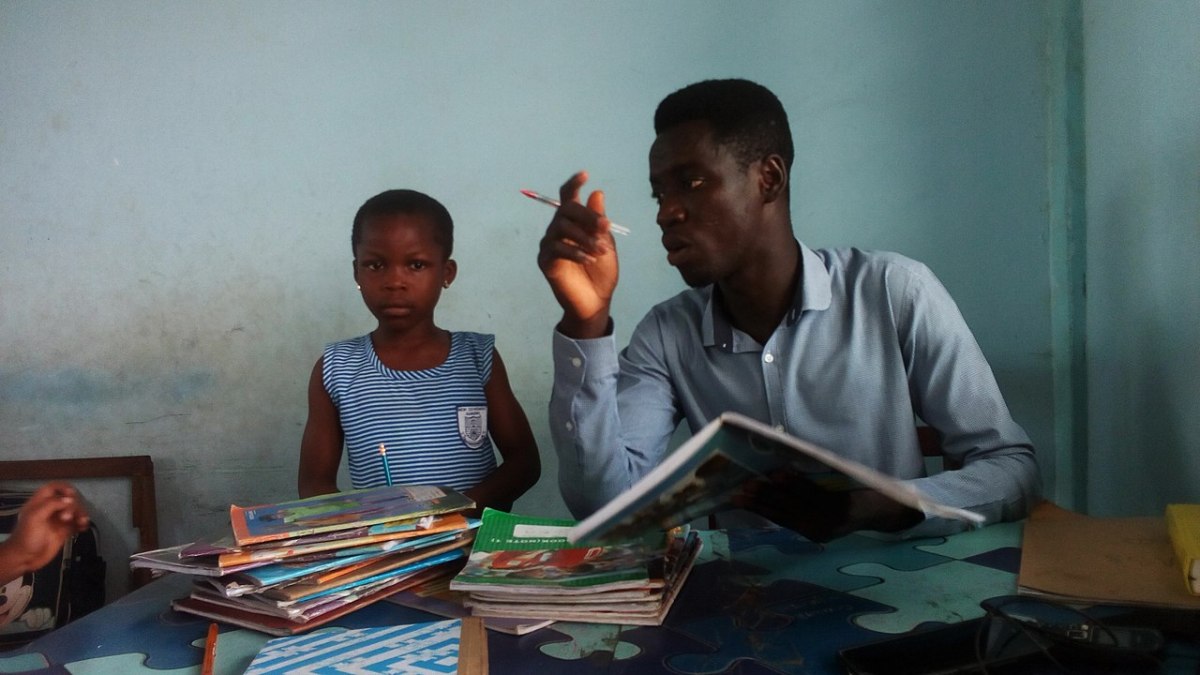
Culturally Responsive Teaching

Challenges and Recommendations for Teaching Online

A large portion of my students are Brazilians who I teach mostly online. One positive aspect of teaching Brazilians is that large amounts of theological and missiological literature is available in Portuguese. There are excellent online social science research sources such as the Brazilian Institute of Geography and Statistics (IBGE) and the Brazilian Institute of Research and Data Analysis (IBPAD). When some subjects are more difficult for students to source, experts recommend providing electronic files through a platform such as Moodle or Canvas (Ott, 2021, p. 235). Research indicates that many Majority World contexts primarily emphasize learning by memorization versus critical thought (Ott, 2021, p. 236). Therefore, a Western teacher like me must take care not to take for granted that students will engage texts critically. 

One of the most prevalent cognitive concepts is field articulation in which field-dependent learners perceive holistically and field-independent learners tend to isolate items from context (Ott, 2021, p. 115). Majority World learners tend to be more holistic/(FD), and Westerners more analytic/(FI) (Ott, 2021, p. 122). Research indicates that online learning favors (FI) learners, so it is helpful to provide (FD) learners clear lecture outlines and instructions on note taking (Ott, 2021, p. 238-9). Consequently, as a US-American I need to be sensitive while teaching online courses to my Brazilian students. 

No matter what the demographic of my students, certain limitations of online learning must be faced. These include the lack of empathy and human touch that today’s “cyber youth” experience. Thus, teachers face the challenge of providing what experts call “high-touch learning environments” (Goodwin, 2016, p. 81-83). Though the purpose of the internet is to connect people across the globe, it often perpetuates prejudice and superficial cultural caricatures (Levmore and Nussbaum, 2010). Analysts describe contemporary learners as “lonely but fearful of intimacy” whose digital connections offer “the illusion of companionship without the demands of friendship” (Turkle, 2011, pp. xiv, 1, 3). As an online teacher, I face the task of finding texts that “deal with more authentic and substantial human experiences and contextualize specific subject-matter skills” in multiculturally meaningful ways (Gay, 2018, p. 152). 

Lessons from Western Professors in Saudi Arabia

I have lived outside my native US-American culture for most of the past 30 years. Often, I notice my fellow US-Americans overseas illustrating points with irrelevant cultural references. Sports examples are the most blatant, for example when US-Americans refer to baseball or football, aka gridiron elsewhere. For all nationalities, there is an art to teaching with a translator, which entails avoiding plays on words, culturally unique expressions, and many jokes. 

Western university teachers who sought to apply culturally relevant pedagogy (CRP) in Saudia Arabia found it difficult to link students’ motivation to learn with personal ambition. Students didn’t feel that a college education would significantly impact dreams linked to profession, therefore Western teachers had to engage different aspirations (Alghamdi, 2014, p. 212-213). 

Western teachers were able to capitalize on Saudi culture’s respect for teachers. Students showed genuine excitement to learn from teachers who them esteemed as sources of valuable knowledge (Alghamdi, 2014, p. 214). One challenge, however, was the fact that over 5 years of higher education Saudi students became “disengaged from their environment”, “disconnected from the traditions of their elders”, and “adrift in uncertainty” (Alghamdi, 2014, p. 214). The primary reason Western teachers have been sought out by Saudi universities is to prepare students to engage in a knowledge-based economy. Therefore, I would recommend that Western teachers work to identify Saudi mentors who have successfully engaged in knowledge-based work locally and globally. These mentors may be few but invaluable as a resource to build upon as examples for Saudi students. 

Western teachers faced the challenge that the modernist view of knowledge contrasts with the Saudi “traditional absolutist view of knowledge” (Alghamdi, 2014, p. 216). The focus on memorization in Islamic culture conflicted with the Western curriculum aiming to teach students to view knowledge “critically and not passively” (Alghamdi, 2014, p. 216). Saudi students believed that the aim of a university degree is to “graduate and obtain jobs regardless of their knowledge content and changes in ways of thinking” (Alghamdi, 2014, p. 216). 

I agree with the position that (CRP) should aim to develop people who fully participate in their native societies producing life-enhancing knowledge and technology (Alghamdi, 2014, p. 220). I agree with the assessment that Western teachers in Majority World setting should be “exploring the communities in which their students live, connecting learning to students’ everyday lives, participating in community events, and collaborating with community members on projects both within and outside the school” (Alghamdi, 2014, p. 220). 

Culturally Relevant Teaching – Biblical Basis and Challenges

Christian advocates of culturally relevant teaching (CRT) describe the approach as a: “Pedagogy of opposition that is committed to collective empowerment” grounded on students’ academic success, cultural competence, and critical consciousness of the social order (Ladson-Billings, 1995, p. 159-165). James 2:1-7 on favoritism is cited as a biblical basis for opposing a pedagogy that extends favor to individuals or groups for self-serving aims (Stulac, 2003, para. 5). Christian educators rightly apply (CRT) to factors such as “race, ethnicity, gender, and sexual orientation” (Swenson, 2016, p. 2). These teachers also give the Good Samaritan parable as convincing evidence that Christian educators should show love and mercy as they relate to students and design curriculum (Swenson, 2016, p. 3). The prophetic themes against injustice are also argued to be relevant to Christians’ call to live in contrast to “worldly standards” and “confront the injustices in their institutions” (Gilliard, 2013).

One of the weaknesses of (CRT) is the possibility of buckling under the weight of the project of collecting materials that present “diverse perspectives based on factors such as race, culture, socioeconomic status, gender, age, and profession” (Swenson, 2016, p. 6). If imagining the diverse subjects of academia, one confronts the significant additional pressure (CRT) places on Christian teachers. Then there is the question of evaluation regarding (CRT)’s goal of creating “cultural competence” in students (Swenson, 2016, p. 6). This includes the goal of leading students to recognize the liabilities of their cultural backgrounds, such as white privilege and historical injustices committed between ethnic groups present in modern nation-states (Swenson, 2016, p. 6). These are controversial issues that touch on the idea of identity and guilt, which must be treated delicately. Perhaps a dialogical approach is preferable to a didactive, prescriptive one to free teachers from the liability of imposing their perspectives on students. 

Micah 6 is cited as biblical basis for teaching students “critical consciousness of societal injustices” and calling students to be agents of change (Ladson-Billings, 1995). Visible Thinking Routines (Ritchhart et al., 2011) using various media to engage students in discussion is an excellent strategy, but one that can lead to destructive controversy if nor conducted with sensitivity. A helpful suggestion is that students interact with discussion points regarding social justice in online chat rooms prior to class (Swenson, 2016, p. 8). Also, if (CRT) only generates discussion without practical impact this is unfortunate. The suggestion that students use (CRT) to work on a “specific classroom management issue” has the potential to provide an empirical experience of what it is like to engage social justice issues in real life (Swenson, 2016). 

Helpful Insights from (CRT) for my Context

Research indicates the effectiveness of song, drama, and role playing, which is something that I feel I could employ more in my teaching (Ott, 2021, p. 248). Role-playing is something that I would like to employ more, including “improvisation around a real-life situation” or giving students a “situation (case) that they must act out” (Ott, 2021, p. 253). 

Massive open online courses (MOOCs) have been praised as “means of democratizing education, overcoming the elitism of higher education, and making it more universally accessible and affordable”, but dropout rates are 90 to 94 percent and nearly 80 percent are from affluent countries (Reich and Ruipérez-Valiente, 2019). In teaching Majority World students, I have observed the value placed on courses that can count toward a degree. Therefore, I would prioritize teaching MOOC courses for credit. Findings show that “students from all cultures preferred asynchronous elements over synchronous ones” (Ott, 2021, p. 276), given factors such as time zone, internet quality, and language difficulties. This runs counter to my presumption regarding Majority World learners such as Brazilians, who I would have thought preferred live online classes. But universally relevant factors leading to the asynchronous preference include “technical difficulties, low audio quality, necessity to be online at certain times, lack of opportunities to interact in live meetings, and their language abilities” (Wang, 2007, 302–3). 

Most of my teaching involves mission studies, for which establishing performance standards of culturally diverse students is a challenge. Experts suggest one way of leveling the playing field is to have students read texts from diverse cultures. I’m inspired by the method of asking students to decipher “culturally encoded messages, and convert them from one expressive form to another, such as from poetry to explanatory essays, and from narrative autobiography to conversational dialogue” (Gay, 2018, p. 158). The prospect of finding teaching materials, techniques, and assessment criteria that are responsive to the “cultural heritages and personal experiences” of students (Gay, 2018, p. 160) is an inspiring challenge for me. 

A significant discovery for me was the coping strategy described as code shifting – “altering expectations, ways of thinking, outward appearances, speech, and behaviors to accommodate situations and audiences” dominated by privileged European Americans in the U.S. (Jones and Shorter-Gooden, 2003). I was inspired by the example of teachers who “translated cues” derived from a culture’s “values, communication and social interaction patterns, and performance styles” (Gay, 2018, p. 215). In these cues, teachers found instructional methods that improved their students writing skills. I want to follow the example of teachers who used these methods to expand their students horizons with code shifting, elaborated as follows:

to learn the writing and speaking conventions of mainstream society and schools; connecting their oral creative strengths to the demands of academic reading and writing; and using their skills in storytelling, oral interpretation, role-playing, improvisation, script-reading, and call–response to improve performance in school-based reading and writing (Gay, 2018, p. 216). 

The paradigm of cooperative learning is also relevant to teaching missions studies to culturally diverse students. I often teach Latin-Americans, who research finds benefit from “working collaboratively with one another in small groups” and from feeling like they belong to a “classroom community” (Gay, 2018, p. 217). I’m encouraged by findings regarding the social benefits of cooperative learning: “improved understanding of diversity, and better helping, caring, and supportive relationships with peers” (Gay, 2018, p. 219). Studies indicating the value of “social scaffolding” that is a “network of personal supports” (Mehan et al., 1996) motivates me to encourage students to find ways of connecting their learning to their families, local communities, and faith traditions. 

References

Alghamdi, Amani K.H. (2014). “The Road to Culturally Relevant Pedagogy: Expatriate teachers’ pedagogical practices in the cultural context of Saudi Arabian higher education”. McGill Journal of Education / Revue des sciences de l’éducation de McGill, vol. 49, n° 1

Gay, G. (2018). Culturally responsive teaching: Theory, research, and practice. (Lower Level LC1099.3 .G393 2018; Third edition.). Teachers College Press; Biola Library Catalog. https://search.ebscohost.com/login.aspx?direct=true&AuthType=sso&db=cat09700a&AN=blc.oai.edge.biola.folio.ebsco.com.fs00001149.5fa32307.b7c3.5027.b081.5fe7ee113c2a&site=eds-live&scope=site&custid=s6133893

Gilliard, D. (2013, March 23). What does Micah 6:8 really mean? [Web log post]. Retrieved from http://www.redletterchrisians.org/what-does-micah-68-really-mean/

Goodwin, B. (2016). “High touch” is crucial for “high tech” students. Educational Leadership, 74(1), 81–83.

Jones, C., & Shorter-Gooden, K. (2003). Shifting: The double lives of Black women in America. New York, NY: HarperCollins.

Ladson‐Billings, G. (1995). But that’s just good teaching! The case for culturally relevant pedagogy. Theory into Practice, 34(3), 159‐165.

Levmore, S., & Nussbaum, M. (Eds.). (2010). Offensive Internet: Speech, privacy, and reputation. Cambridge, MA: Harvard University Press.

Mehan, H., Hubbard, L., Villanueva, I., & Lintz, A. (1996). Constructing school success: The consequences of untracking low-achieving students. New York, NY: Cambridge University Press.

Ott, C. (2021). Teaching and learning across cultures: A guide to theory and practice. (Lower Level LC1099 .O83 2021). Baker Academic, a division of Baker Publishing Group; Biola Library Catalog. https://search.ebscohost.com/login.aspx?direct=true&AuthType=sso&db=cat09700a&AN=blc.oai.edge.biola.folio.ebsco.com.fs00001149.eca6bcdd.ba4a.5f1a.a161.26d8b7e3511a&site=eds-live&scope=site&custid=s6133893

Reich, Justin, and José A. Ruipérez-Valiente. 2019. “The MOOC Pivot.” Science 363 (6423): 130–31.

Ritchhart, R., Church, M., & Morrison, K. (2011). Making thinking visible: How to promote engagement, understanding, and independence for all learners. San Francisco, CA: Josey Bass.

Stulac, George M. (2003). IVP New Testament Commentary Series (Vol. 16). Leicester, England: IVP Academic. 

Swensen, Danny R. (2016). A Faith­Based Context for Culturally­Relevant Instruction. The ICCTE Journal. Vol. 11 (il). 

Turkle, S. (2011). Alone together: Why we expect more from technology and less from each other. New York, NY: Oxford University Press.

Wang, Minjuan. 2007. “Designing Online Courses That Effectively Engage Learners from Diverse Cultural Backgrounds.” British Journal of Educational Technology 38 (2).

Culture, Power and Kingdom: Always Reimagining

Mission Studies and World Christianity

The church has always been challenged to fulfill its calling to be a local community and to proclaim the gospel to all nations (Robert, 2022, p. 384). The cultural diversity that existed at the church’s inception was a key reason they sought “organizational and theological unity” (Robert, 2022, p. 384). Classic texts by saints Augustine, saint Patrick, Gregory the Great, and John Chrisostom were “missiological reflections” on the relationship of churches with the universal scope of the faith (Robert, 2022, p. 384). It was during the Era of Exploration that followed the Protestant Reformation that Catholic mission first developed. Then with the rise of mercantile capitalism in the 1700s, Evangelical Protestants who believed religion was an individual choice began to seriously engage a world that was more connected than ever (Robert, 2022, p. 385). Thus, at its core mission studies is Christian reflection on how the gospel becomes incarnate in the diverse cultures. 

Unfortunately, the church’s relationship with political power has distorted understanding of Christian mission within and outside the church. Voices critical of Christian mission’s connection to Western colonialism soon arose. Voices of Spanish Catholic missionaries began to be heard in the 16th century rebuking the barbaric treatment of Indigenous peoples (Robert, 2022, p. 385). Eventually voices in Protestantism also began to denounce racism and to recognize that the West was not Christian. The church came to be seen as a universal fraternal network that transcended political entities (Robert, 2022, p. 387). And in the postcolonial era that followed World War II “anti-colonial movements, nationalism, and the Cold War challenged the westernizing foundations of the missionary enterprise” (Robert, 2022, p. 388). These dissonant Catholic and Protestant voices show that missions studies must address the relationship between Christ’s kingdom and political power. 

Thankfully, Christianity would be freed from Western captivity. A new era of massive Christian growth began in what would become known as the Global South (Robert, 2022, p. 389). Catholic and Protestant scholars foresaw the emergence of a largely non-Western Christianity. Thus, a vision of the church as a “worldwide community that would transcend denominational divisions” gained influence (Robert, 2022, p. 390). The globalization of the church resulted in missions scholars stepping into a role as “the brokers of broader discussions” regarding the worldwide growth of Christianity (Roberts, 2022, p. 391). Towards the end of the 20th century, missions were reimagined as “the starting point of indigenous Christianity and social transformation” (Robert, 2022, p. 391). This new perspective contradicted the reductive critique of missions as handmaiden to Western imperialism. And so, the concept of world Christianity came into its own (Robert, 2022, p. 391), engaging the secular academic fields of “religious studies, area studies, social sciences, and history” (Robert, 2022, p. 391,4). This integration with social concern allows missions studies to be seen as advocating for the fulfillment of a biblical vision of human dignity (Robert, 2022, p. 396). 

Women in Mission

The prevalence of mission studies on the lack of gender perspective (Cruz, 2022, p. 652) is a positive sign that the underrepresentation of women is being addressed. But more awareness is needed of the historic contribution of women in Christian mission. One compelling account is that of indigenous bible women in the 19th century who became “cultural, linguistic, and social ‘brokers’ of evangelism” (Cruz, 2022, p. 654). Another significant phenomenon was the holiness movement in the 20th century whose female missionaries set out on their own founding and leading migrant communities (Cruz, 2022, p. 655). The most dominant category of women’s work in mission is social service, with education and health being primary (Cruz, 2022, p. 655). Missions studies should raise awareness that despite paternalism, women missionaries made women-related social issues central (Cruz, 2022, p. 656). Women missionaries have contributed significantly to research and study on “gender sensitivity, inclusivity, and female leadership” (Cruz, 2022, p. 656-7). This example of successful advocacy for change from subjugated groups should serve as a model for others who seek change “from below”. Women have slowly but surely made their way into higher levels of leadership across many denominations, although ordination in the Catholic Church remains prohibited (Cruz, 2022, p. 657). Opinions vary across denominations and cultures regarding these subjects, and missions studies will be challenged to address both progressive and conservative streams with humility and comprehension.

For better or worse, women’s experience of mission has been connected to cultural concepts of gender. In the 19th century, women missionaries were generally expected to do “women’s work”, consisting mainly of evangelizing women. The underlying thinking was that “non-Christian religions degraded women while Christianity provided social liberation” (Cruz, 2022, p. 658). Feminist studies of mission emerged in the 20th century highlighting women’s missionary work. This approach identified women’s missions as characterized by “strong roots in the community, bold ideas, and bold action, (…) the ability to connect across lines that divide”, and “relationality” (Cruz, 2022, p. 663). Some have declared World Christianity to be “a women’s movement”, estimating that “around two-thirds of Christians worldwide were female” at the turn of the millennium (Robert, 2006, p. 180-8).

Some feminists attribute the subordination of women in society to “the traditional Christian image of God as male” (Wong, 2022, p. 39). Second-wave feminists affirm that “If God is male, then the male is God” (Daly, 1973, p. 19). Unfortunately for the image of Christian mission, these arguments can be persuasive. In the West, women’s issues in the church center on moral teachings related to abortion and inclusive ordination, while in the Global South Christian women suffer even greater gender inequalities (Wong, 2022, p. 39). One point of potential conflict related to women’s missions work exists with Christian ecumenical organizations and NGOs on one side. On the other side are Pentecostals and Charismatics who make up most of the African church. Here, male leadership is promoted in the congregation and in the home (Wong, 2022, p. 40). Missions studies must be aware that Christianity is not generally seen in the world as offering an egalitarian, individualistic vision to a modern audience (Martin, 2001, p. 55). Rather, the Christian witness is abundant in “dualities of subordination and liberation, equality and difference, sacrifice and virtue, creation and redemption” (Green, 2010, p. 313-317)

World Christianity and Religions  

Missions studies must address the fact that although we live in an increasingly religious and religiously diverse world, most Christians have too little contact with people of other faiths (Zurlo et al., 2022, p. 71). Of key importance is “improving global and local Christian-Muslim relations” as both faiths growth towards a projected 63% of world population by 2050 (Zurlo et al., 2022, p. 72). Asia has historically had the most religious diversity but some of the most intense growth in religious diversity from 1900 to 2022 has been in Germany and the United States (Zurlo et al., 2022, p. 73). Some level of religious diversity is present almost everywhere on the planet, but some the experience of some Christians and churches will be as majority, others minority, and some as one among equals. Missions studies must adjust their research and prescriptions according to these social power dynamics. 

The problem of inadequate contact between Christians and people of other religions is most acute in Asia, contributing to the fact that 87% of Buddhists, Hindus, and Muslims don’t know a Christian (Zurlo et al. 2022, p. 73). Singapore is an exceptional example of harmony in the most religiously diverse country on the planet, where research found that 90% believed it was “unacceptable or very unacceptable for religious leaders to hinder religious harmony” (Zurlo et al., 2022, p. 74). The fact that Christians are isolated from the religious other can be attributed to ignorance and fear which leads to a “ghettoization of religious and ethnic communities” (Zurlo et al., 2022, p. 74). To remedy this situation, Christians must grow in ecumenical and interfaith relations, as well as learning to prioritize the common good of “our global human family” (Zurlo et al., 2022, p. 74). The type of solidarity the church must embrace does not require renunciation of the gospel, but an approach to others that demonstrates “love, respect, friendship, and hospitality” (Zurlo et al, 2022, p. 74). 

References

Cruz, Gemma T. (2022). Women in Mission. In Cruz, Gemma T. (Ed.), The Oxford Handbook of Mission Studies. OUP Oxford.

Daly, Mary. (1973). Beyond God the Father: Toward a Philosophy of Women’s Liberation. Beacon.

Martin, Bernice. (2001). “The Pentecostal Gender Paradox: A Cautionary Tale for the Sociology of Religion,” in The Blackwell Companion to Sociology of Religion, ed. Richard K. Fenn. Blackwell, 2001). 

Dana L. Robert, “World Christianity as a Women’s Movement,” International Bulletin of Missionary Research30, no. 4 (2006): 180–88.

Green, M. Christian. (2010). “Christianity and the Rights of Women,” in Christianity and Human Rights: An Introduction, ed. John Witte and Frank S. Alexander. Cambridge University Press, 2010).

Robert, Dana L. (2022). Mission Studies and World Christianity. In Robert, Dana L. (Ed.), The Oxford Handbook of Mission Studies. OUP Oxford.

Wong, Wai-Yin C. (2022). Women Worldwide: Interplay between Church and Society and the Gender Paradox. International Bulletin of Mission Research, Vol. 46

Zurlo, et al. (2022). World Christianity and Religions 2022: A Complicated Relationship. International Bulletin of Mission Research, Vol. 46

Cultures of Learning: Stereotypes and Insights

In their chapter Communication for Learning Across Cultures, Martin Cortazzi and Lixian Jin (1997) engage how presuppositions about culture influence communication and learning. Their research elaborates upon academic cultures, cultures of communication, and cultures of learning. Students not only bring cultural practice and theory into the classroom, they use their system to interpret the practice and theory of others . Teachers and students must be conscious of how these differences affect how we interpret each other. They promote cultural synergy, “the mutual effort of both teachers and students to understand” each other (Cortazzi and Jin, 1997).

The concept of cultural synergy can be explored in analysis of the ministry of Jesus and the apostle Paul. Jesus adjusted his approach to teaching as he encountered individuals and groups of differing social profiles. When speaking to Nicodemus the pharisee, Jesus provoked his religious sensitivities by giving a scandalous proposal (Jn. 3:3). When speaking to fishermen, Jesus challenged their paradigms by asking them to go against the conventional wisdom of their vocational (Lk. 5:1-11). Paul appealed to the philosophical-religious culture of debate in Athens when he addressed the Areopagus (Act. 17:16-34). In Jerusalem, Paul spoke in Aramaic and referred to his Pharisaical belief in the ressurrection (Act. 22:1-21). 

Cortazzi and Jin (1997) identify academic cultures such as “Saxonic, Teutonic, Gallic, and Nipponic”. British academic culture is oriented towards the individual in comparison to Chinese emphasis on relationships, collective consciousness, and hierarchy (Cortazzi and Jin, 1997, p. 78). According to Cortazzi and Jin, differences in cultures of communications frequently contribute to faulty assessments of the cultural other. Some cultures express solidarity by continuous dialogue without pause while other cultures pause as a sign of respect. The British deductive approach introduces the idea first, followed by contextual and auxiliary information, while the Chinese inductive approach does just the opposite. Culture of learning consists of the “norms, values, and expectations of teachers and learners relative to classroom activity” (Cortazzi and Jin, 1997, p. 79, 80, 81, 83). 

Missiologist Craig Ott (2021) elaborates five dimensions of culture’s influence on teaching and learning: the cognitive, worldview dimension, social, media, and environmental. Whereas British teachers expect students to be proactive in seeking help if needed, Chinese students expect teachers to ack like caring parents, being attentive to students needs without being asked (Ott, 2021). I have experienced the importance of Ott’s environmental dimension: “the physical, institutional, and sociopolitical context of teaching in another culture” (Ott, 2021). For example, in the 1990s I was involved in after school programs in downtown Los Angeles. I witnessed the chaotic physical environment that many students were expected to learn in. On the other hand, during my time in Brazil I was surprised to perceive that what I considered a chaotic leaning environment – with lots of distractions, interruptions, and talking over each other – was though of as dynamic and collaborative by many Brazilians (albeit not all). 

According to Ott (2021), decontextualizing is the primary difference between Western thinking versus contextualized 

non-Western thinking. Decontextualization is the primary thought form produced by literacy, which creates a barrier in relation to oral cultures. The primary differentiating factor in the use of reason is the relationship to context, some cultures emphasize theory and others experience (Ott, 2021). 

My ecumenical work in Europe involves wooing church leaders from diverse Christian traditions towards models for reconciliation and partnership. Abstract thinking is fundamental for technical aspects of biblical studies, hermeneutics, and contextualization, but oral and concrete approaches are increasingly becoming recognized “increasingly recognized”. If the art of verbal storytelling has declined in the West, I must take inventory of my own deficiency in this essential form of communication. I fear that the description of non-narrative teaching as “cool, disembodied, rational arguments (…) rhetorical” may describe my primary form of teaching (Ott, 2021, p. 87, 91, 93). 

Understanding analytic and holistic cognitive styles helps me appreciate my wife, who perceives and processes information “more as an integrated whole” versus my preference for “clear-cut conceptual groupings” (Ott, 2021, p. 111). It makes perfect sense to me that the tendency to “frame everything in either-or terms and airtight categories” results in the loss of “the integrated whole” (Ott, 2021, p. 132). 

If biblical interpretation will require a more intuitive, holistic approach versus solely relying upon grammatical, 

historical analysis (Ott, 2021), then this will require a slower pace and a reduced scope of engagement. In my own ecumenical work, I will need to be realistic regarding how many individuals, groups, and contexts I can meaningfully interact with. Geneva Gay’s (2018) contrast between “caring about” and “caring for” as the difference between “emotionality without intentionality” and “deliberate and purposeful action plus emotionality” helps inform my teaching approach. 

The idea that teachers must seek the “insider perspective” of those they are teaching, to understand “what they are striving to be” (Gay, 2018) is a challenge. Besides being Western in a general sense, my family upbringing highly emphasized putting off gratification in the present to build towards future goals. It has been a challenge for me at times to relate to students who have little long-term focus. If caring for consist in helping a student be better “in who and what they currently are” (Gay, 2018), then I need to grow in accepting students and overcoming my negative biases. But as Gay (2018) states, really caring for students is to “hold them in high esteem” and “expect high performance from them”. To a degree I recognize myself as a “cultural hegemonist” – consciously or not – expecting all students to behave according to my cultural standards of normality”. The distinction between aesthetic and authentic caring (Gay, 2018) is a disturbing one in my self-analysis. A key to my ecumenical work is championing some Christian groups who occupy marginal status or whose theology and practice is considered obscure. But I must ask myself whether my caring for the inclusion of marginal groups is authentic or merely aesthetic. Unity in the body of Christ is, unfortunately, a beautiful vision that can be used to justify one’s own participation, turning into a form of self-glorification. 

My teaching would be most effective using a learning strategy that engages effectively in the social relations aspect of Ott’s (2021) five dimensions. I have content and the tools to build content for the rest of my life, but I need to discern the open doors of relationship with individuals and groups the Spirit wants me to enter. And to these people I must have the courage and dedication to commit myself. For only as Ruth covenanted with Naomi would the Lord’s plan for their lives come about. 

References

Cortazzi, M., & Jin, L. (1997). Communication for Learning Across Cultures. In R. Harris, D. McNamara, & P. D. McNamara (Eds.), Overseas Students in Higher Education: Issues in Teaching and Learning (pp. 76-90). London; New York: Routledge. 

Gay, G. (2018). Culturally responsive teaching: Theory, research, and practice. (Lower Level LC1099.3 .G393 2018; Third edition.). Teachers College Press; Biola Library Catalog. https://search.ebscohost.com/login.aspx?direct=true&AuthType=sso&db=cat09700a&AN=blc.oai.edge.biola.folio.ebsco.com.fs00001149.5fa32307.b7c3.5027.b081.5fe7ee113c2a&site=eds-live&scope=site&custid=s6133893

Ott, C. (2021). Teaching and learning across cultures: A guide to theory and practice. (Lower Level LC1099 .O83 2021). Baker Academic, a division of Baker Publishing Group; Biola Library Catalog. https://search.ebscohost.com/login.aspx?direct=true&AuthType=sso&db=cat09700a&AN=blc.oai.edge.biola.folio.ebsco.com.fs00001149.eca6bcdd.ba4a.5f1a.a161.26d8b7e3511a&site=eds-live&scope=site&custid=s6133893

Teaching Cross-culturally: Challenges and Responses

Challenges to teaching across cultures in contemporary analysis that I identify with

Missiologist Craig Ott (2021) states that initial excitement and curiosity on the part of students towards foreign teachers fades quickly but “the sojourner who perseveres” will develop deep relationships and cultural understanding (p. 7,11). One problem as I see it is that cross-cultural teachers are often required to do this kind of work almost purely on a sacrificial basis. In other words, idealistic and highly-motivated young teachers accept the call to cross-cultural vocation but end up disappointed. The teacher can stay overseas long-term with the prospect of marriage and family in a cultural and vocational no-man’s land. The missionary support base in the sending country becomes more relationally distant and the vocational culture on the field makes he or she a perpetual alien. If the teacher decides to return home, often the prestige and gratefulness of the Christian education culture is not what they expected. The teaching profession is very competitive for all candidates and a returning missionary may feel more outdated and outstripped by the “competition” versus feeling honored as a veteran cross-cultural practitioner. 

I have had much success with the constructivist pedagogy, but I recognize the liabilities of “self-realization” being prioritized over “community responsibility” (Ott, 2021, p. 12). I have seen this both in my own pursuit of developing a career in Christian education as well as in my students. This predominant Western approach can be described as “privileging the individual learner over the collective, and promoting autonomy and independence of thought and action” (Merriam, 2007, p. 1). It seems that so many of us – I speak as a Gen-x 47 year-old – have been hindered by the lack of institutional loyalty we learned from the constructive approach. Perhaps I am drawing a connection here that is unwarranted. I refer to how the focus on the individual learner translates into a focus on independent development with expendable mentor and peer relationships. Indian educators have challenged the effectiveness of such modes of learning in their context (Seth, 2007). It is definitely problematic when Western modes of learning are proposed as axiomatic and universal, such as the ideal of the self-guided student preparing to become a self-made man or woman. 

Most difficult and easiest aspects of adaptions for me if going into cross-cultural teaching situation and why 

Ott (2021) lists several aspects of adaptations for teaching in a cross-cultural setting. At present, if I to teach in an unknown cultural context, the most difficult aspect of adaptations for me would probably be social adaptation (Ott, 2021, p. 59). I base this on the experience of teaching in environments where there was a high expectation for relational interaction outside the classroom. Take for example an invitation to teach for a week as a guest professor at a leadership training program, seminary, or conference. I can generally manage if I am expected to teach for 4-6 hours a day, and share meals with students/participants. However, if I am also expected to be available for individual meetings with throughout the week this can become overwhelming. When I was teaching in YWAM and Bible Colleges in Brazil, for example, I had to be prepared for a considerable amount of one-on-one meetings. As an introvert, I sometimes struggled – and still do – to maintain realistic boundaries so that I could be effective. I find it comical to compare this experience with similar teaching invitations I receive in Europe. When teaching in Germany and Holland I can generally expect to have considerable time to myself. I even plan to visit some sites, eat some local foods, and do some shopping because it’s likely I’ll have enough free-time.  

I struggle to think of one of Ott’s (2021) aspects of adaptations that I would categorize as “easy”, because I see challenges in all four. However, over the years I have become more efficient at didactic adaptation and content adaptation (p. 59). The main reason for this, perhaps, is that as a missionary I have usually been teaching without a salary, or for a very small teacher stipend. For this reason, I have generally felt free regarding the improvisation of didactic method and instructional content. I hope this doesn’t reveal a lack of motivation on my part, although I’m open to that critique. What I refer to is that generally the only pressure to communicate a specific amount of content in a particular way was self-inflicted. When I was younger, I was excited to develop my understanding of content and come to a level of comfort in the teaching activity. Over the years of teaching, I have increasingly become more relaxed regarding covering all the content in the syllabus or module I am teaching. 

Geneva Gay and Craig Ott in Dialogue

Professor Geneva Gay of the University of Washington developed the model of Culturally Responsive Teaching. Gay (2018) suggests that the “content and styles of learning” of a particular ethnic group in a society should be “consistently incorporated” in the classroom instruction and testing (p. 6). Gay seeks to correct the phenomena of teachers and students connecting “academic difficulties to their personal worth” (Gay, 2018, p. 8. Perhaps Ott’s (2021) approach could be described as seeing didactic, social, structural, and content models of education as a toolbox to draw from. Gay (2018) emphasized the “European and middle-class origins (deeply ingrained in the structures, ethos, programs and etiquette of schools” (p. 9). Eisenhart and Cutts-Dougherty (1991) describe this educational environment as “socially situated and culturally constructed”, creating “social barriers or cultural norms” that “define and limit the types and the amount of information” involved in teaching (p. 28). 

Shade, Kelly and Oberg (1997) argue that “core cultural characteristics” are shared by members of an ethnic group, indeed, “enthicity and culture” constitute the underpinnings of behavior in general, which Gay (2018) picks up in her model of mitigating variables and expressive behaviors (p. 10). We can compare this with Ott’s (2021) assessment that novelty in intercultural teaching contexts often wears out fast and true fruit comes from deep long-term commitment (p. 7,11).

Gay’s argues that conventional teaching paradigms fail because they concentrate on what students from certain ethnicities and cultures don’t have and can’t do (p. 13). Ott’s suggestion that didactic, social, structural, and content aspects of teaching can and should be adapted contextually is not at odds with Gay’s (2018) proposal (p. 59) . Gay’s (2018) assessment that Western individualistic approaches to contextual adaptation fail (p. 14) is in agreement with Ott’s (2021) indictment of collectivist pedagogies that prioritize self-realization over community responsibility (p. 12). 

Gay’s (2018) observes educational assumptions that capability or lack thereof in students is indicative of a general deficiency that will manifest other areas (p. 16-17). I can relate this to Ott’s (2018) observations regarding the emphasis of Western modes of education on individual learning, autonomy and independence (p. 12). The individualistic approach to education demonstrates the tendency towards specialization in the Academy. The ever evolving subdivision of academic disciplines and multiplication of new areas of study fragment the learning environment. The student is encouraged to specialize, and even in popular self-help publications the predominant emphasis ois on the discovery and maximization of individual strengths and abilities.

Finally, Gay’s (2018) comments on the limitations of standardized tests and grades in relation to cultural differences presents the paradoxical situation of immigrant students (p. 18). Immigrant students from Majority World nations are often taken out of the community dynamic that would normally provide them with a better learning situation. The linguistic, cultural, and educational adjustment is something I say my own children go through in immigrating from Brazil to the U.S. and then to Portugal. Ott cites criticism from Majority World educators regarding the deficiencies of Western approaches (Seth, 2007). However, it is still the case that immigrants coming to the West desire to thrive and be a part of that cultural context. I’m aware of the criticism in Europe, for example, that many immigrants only come to seek a better life for themselves whether or not that means becoming a productive contributor to the majority culture. However, research shows that the majority of immigrants to Portugal where I live sincerely seek to work and assimilate into the majority society (Já Poderemos Falar de Segurança e de Imigração?, n.d.). 

References

Eisenhart, M., & Cutts-Dougherty, K. (1991). Social and cultural constraints on students’ access to school knowledge. In E. Hiebert (Ed.), Literacy for a diverse society: Perspectives, programs, and policies (pp. 28–43). New York, NY: Teachers College Press.

Gay, G. (2018). Culturally responsive teaching: Theory, research, and practice. (Lower Level LC1099.3 .G393 2018; Third edition.). Teachers College Press; Biola Library Catalog. https://search.ebscohost.com/login.aspx?direct=true&AuthType=sso&db=cat09700a&AN=blc.oai.edge.biola.folio.ebsco.com.fs00001149.5fa32307.b7c3.5027.b081.5fe7ee113c2a&site=eds-live&scope=site&custid=s6133893

Já poderemos falar de segurança e de imigração? – Contra-Corrente. (n.d.). Retrieved May 9, 2024, from https://omny.fm/shows/contra-corrente/j-poderemos-falar-de-seguran-a-e-de-imigra-o

Merriam, Sharan B. 2007. “An Introduction to Non-Western Perspectives on Learning and Knowing.” In Non-Western Perspectives on Learning and Knowing, edited by Sharan A. Merriam and Associates, 1–20. Malabar, FL: Krieger.

Ott, C. (2021). Teaching and learning across cultures: A guide to theory and practice. (Lower Level LC1099 .O83 2021). Baker Academic, a division of Baker Publishing Group; Biola Library Catalog. https://search.ebscohost.com/login.aspx?direct=true&AuthType=sso&db=cat09700a&AN=blc.oai.edge.biola.folio.ebsco.com.fs00001149.eca6bcdd.ba4a.5f1a.a161.26d8b7e3511a&site=eds-live&scope=site&custid=s6133893

Seth, Sanjay. 2007. Subject Lessons: The Western Education of Colonial India. Durham, NC: Duke University Press.

Shade, B. J., Kelly, C., & Oberg, M. (1997). Creating culturally responsive classrooms. Washington, DC: American Psychological Association.

God’s Desire: a Beauty of Diversity Rooted in Distinction

The knowledge that biblical prophecy indicates an intensification of persecution before the end can have varying effects on the church’s attitude towards its participation in the mission of God. Dispensationalism which emerged in Britain with John Nelson Darby (Sweetnam, 2009, p. 569) in the late 19th century has been expressed in diverse ways. This theology is, however, generally characterized by onlookers as emphasizing soteriological matters over transformation of society. In contrast, the American Social Gospel movement includes those who believe that the church is currently living in the millennial reign promised in Revelation 20 (Edwards, 2015, p. 203). I appreciate missiologist Arthur Glasser’s (2003) balanced approach: 

Revelation was written for Christians in every age to assure them that God is working both in their day and particularly when the tempo of persecution intensifies just before the end. God will not turn back from his goal of consummating his purpose in his time and in his way (p. 360) 

The New Testament’s exhortation regarding the essential nature of the unity of the body of Christ to the mission of God must be of prime consideration for the church. Glasser (2003) describes this as “Christ’s abiding concern”, for only by avoiding division can the church avoid the failure exemplified by Israel in its call to illuminate the world lost in darkness (p. 362). I would caution that Gentile Christians should be careful when describing the errors and guilt of the Jewish people, since this has historically been the source of much antisemitism.

In Revelation 14 a message of hope is given to the faithful in a moment when the kingdom of darkness seems to realize complete victory over the earth. However, the saints are encouraged that in spite of this the Lamb is still on the throne and “the consummation of history is seen as firmly in his hands” (Glasser, 2003, p. 365). This should serve as a warning to all forms of Christian triumphalism. This may take the form of a Fundamentalist celebration that the spoils of victory await in another time and world. Or it may manifest in a “Liberal” belief that the church has the capacity to bring the kingdom and needs to get on with it as soon as possible, seeing a recognition of God’s sovereignty as a hindering notion. 

The amillenial view holds that the church is already living in the period of the reign of Christ on earth, a spiritual reign that will last until the return of Christ when the New Heaven and Earth are established. This view perhaps offers less hope than what the Bible expresses. According to Glasser (2003) the amillennial flaw is not awakening hope in the glorious reign of Christ on earth: 

Although it claims that the earth and the nations will enjoy their jubilee, it provides no assurance that this will ever take place. Imagine the violence of the twentieth century having been part of the millennium (p. 368). 

The desire of God for worshippers from every people group is something that I sense a deep need to understand more profoundly. John Piper (2020) describes cultural diversity among God’s worshipers in the eschaton as “greater than the beauty that would come to him if the chorus of the redeemed were culturally uniform or limited” (p. 264). Piper (2020) believes there is something about our call to cross-cultural mission that humbles us and helps us experience God’s grace (p. 265). I believe this is rooted in the promise of Ephesians 2 regarding the one new humanity in Christ, formed from Jew and Gentile, two groups formerly separated by mutual enmity. One may contest that it was God that inspired the aversion of Jews towards Gentiles in the Mosaic Law and covenants of the Old Testament. On the other hand, the Jewish understanding of separation (even superiority?) over other nations can be attributed to a Jewish misinterpretation. However, the truth seems to lie in the middle, in that God separated a people unto Himself and called them to be a dynamic lesson on the world stage regarding human reconciliation. What reconciliation would be needed, or how deep would it be, if it only consisted of superficial religious or philosophical matters? Instead, God created a motif of reconciliation between groups that could never imagine a deep communion of equality and mutual embrace. 

God desired a beauty of diversity rooted in distinction: a cultural diversity that would not be melted into a uniform whole, but would maintain the distinction of people groups. The story of Israel reveals the value God places on a people with a proper name, whose identity will last forever. Indeed, our Savior Jesus is and always will be both a universal Messiah for all peoples, and a Jewish Messiah for Israel.

References

Edwards, W. J. D. (2015). The social gospel as a grassroots movement. Church History, 84(1), 203–206. Atla Religion Database with AtlaSerials. https://doi.org/10.1017/S0009640715000050

Glasser, et al. (2003). Announcing the Kingdom. Baker Publishing Group. Kindle Edition.  

Piper, John (2020). Let the Nations Be Glad!: The Supremacy of God in Missions. Baker Publishing Group. Kindle Edition.

Sweetnam, M. S., & Gribben, C. (2009). J.N. Darby and the Irish origins of dispensationalism. Journal of the Evangelical Theological Society, 52(3), 569–577. Atla Religion Database with AtlaSerials.

Asking A Culture To Give Up It’s Greatest Treasure

Clique aqui para português

There are a lot of really cool free classes you can listen to on Apple’s iTunes U app. Over the past year I’ve been listening to several Church History Classes from Gordon Conwell Seminary, Reformed Theological Seminary, and others. These resources are really great and I highly recommend them. Particularly the history of the Protestant Reformation and Roman Catholic Counter Reformation have caused me to appreciate this rift in the Christian Church.

For the first 150 years of the Protestant Reformation the leadership of this movement was mostly occupied with organising and governing itself in Europe. Meanwhile the Catholic Counter Reformation launched worldwide missions coinciding with the era of exploration that would take Christianity to the farthest reaches of the Americas, Africa and Asia. When Protestant missionaries finally came to Far East frontiers such as China and Japan they found Portuguese churches over 100 years old.

Of course as Protestants we can discount such Catholic missions as imperialistic and oppressive towards indigenous peoples, but the same accusations can be attributed to Protestant missions as well. What has impressed me over the past month as been the fact that the history of colonialism is one of the Portuguese people’s most precious treasures. Everywhere I go here in Lisbon I see monuments to great explorers such as Vasco da Gama, Pedro Alvares Cabral and Ferdinand Magellan. And behind the explorers these monuments often depict the Franciscan, Dominican and Jesuit missionaries accompanying them. As Protestants we can judge the ideas, methods and fruits of the great wave of Catholic missions that begun in the 15th century. However I would challenge any of us to doubt their zeal, which I believe for the most part points to predominantly sincere motivation as well. I believe that even these who exploited indigenous peoples and imposed Western religion upon them by force truly believed in the virtue of their mission.

So what vision should someone called to help build the Kingdom of Christ 21st century Southern Europe have? After the 30 years war (1618-1648) Europeans were sick of disputes in the Church over doctrine, and at the end of the war nothing was accomplished. The principalities that were Roman Catholic for the most part remained as well as those who had joined the Protestants. With an estimated 8 million casualties, this conflict is still foundational to the European psyche regarding Christianity and religion in general.

It’s an exciting adventure for our family to get to know the people of the oldest country in Europe, in the second oldest city in Europe (Athens is the oldest). And I find that Portuguese people like to talk about spirituality. Most conversations I’ve had over the past month that touched on spiritual subjects weren’t initiated by me. My impression is that most Portuguese people want to believe in divine providence in the midst of the current pandemic. We are now the country with the highest infection and death rate per capita in the world.

I believe there is a way to build the Kingdom of Christ in Southern Europe in a way that honours the history of its peoples. A church with 2000 years of history inevitably has more liabilities to own than the type of flash in the pan independent California hipster church that I’m used to. Kati and I don’t have a thesis yet as we begin our European journey. Our prayer is that Jesus will teach us how to be a blessing and we have a hunch that His ways will be way different than ours.

É Necessário Pedir para uma Cultura Abrir Mão de Seu Maior Tesouro?

Existem bastante cursos interessantes disponíveis no iTunes U do iPhone.  Faz um ano que tenho escutado várias aulas de história da igreja de seminários como Gordon Conwell, Reformed Theological Seminary, e outros.  Estes recursos são muito valiosos e eu os recomendo.  Em particular, eu tenho sido impactado pela história da Reforma Protestante e a Contra Reforma Católica…. as raízes do cismo que perdura até hoje na igreja cristã. 

Pelos primeiros 150 anos da Reforma Protestante os seus líderes estavam preocupados com a consolidação do movimento na Europa.  Enquanto isso a Contra-Reforma Católica foi lançada um missões mundiais que coincidiram com a era de exploração.  Como resultado destas missões a fé cristã seria levada para as regiões mais distantes das Américas, a África e a Ásia.  Quando missionários protestantes finalmente chegara, às fronteiras da China e o Japão eles encontraram igrejas portuguesas fundadas mais de 100 anos atrás.  

Nós protestantes podemos rejeitar estas missões católicas como mero imperialismo e opressivas aos povos indígenas.  Porém, as mesmas acusações não podem ser feitas contra as missões protestantes?  A história do colonialismo é um dos maiores tesouros para o povo português.  Todo lugar que eu ando aqui eu vejo monumentos aos grandes exploradores como Vasco da Gama, Pedro Álvares Cabral e Ferdinand Magellan.  E atrás das estátuas dos conquistadores muitas vezes vejo os missionários franciscanos, dominicanos e jesuítas que os acompanharam.  Nós protestantes podemos julgar as idéias, métodos e frutos das missões católicas que iniciaram no século 15.  Mas é muito difícil duvidar do zelo destes, o qual aponta na minha opinião para uma sincera motivação.  Ou seja, eles realmente acreditavam na virtude de sua missão evangelistica. 

É uma aventura para a nossa família conhecer o povo do país mais antigo e da segunda cidade mais antiga da Europa (a Lisboa só perde para Aténas).  E vejo que os portugueses gostam de falar sobre questões espirituais.  Num momento de tantas mortes pela pandêmica atual as pessoas aqui querem crer na ajuda do Deus que ouve oração. 

Eu creio que há uma forma de um casal protestante como eu e a Kati construir o Reino de Deus num contexto como este honrando a história do povo.  A Igreja Católica tem que responder por 2000 anos de história.  Isso é muito diferente às igrejas da minha cultura que dividem entre si com cada divergência de doutrina.  Eu oro que o Senhor ensina a mim e a Kati a ser uma bênção para este povo.  A Palavra de Deus diz que os Seus caminhos não são os nossos, e estou curioso para descobrir o que Ele tem preparado para nós.