Supersessionism and Indigenization in Iberian Christendom, pt 6

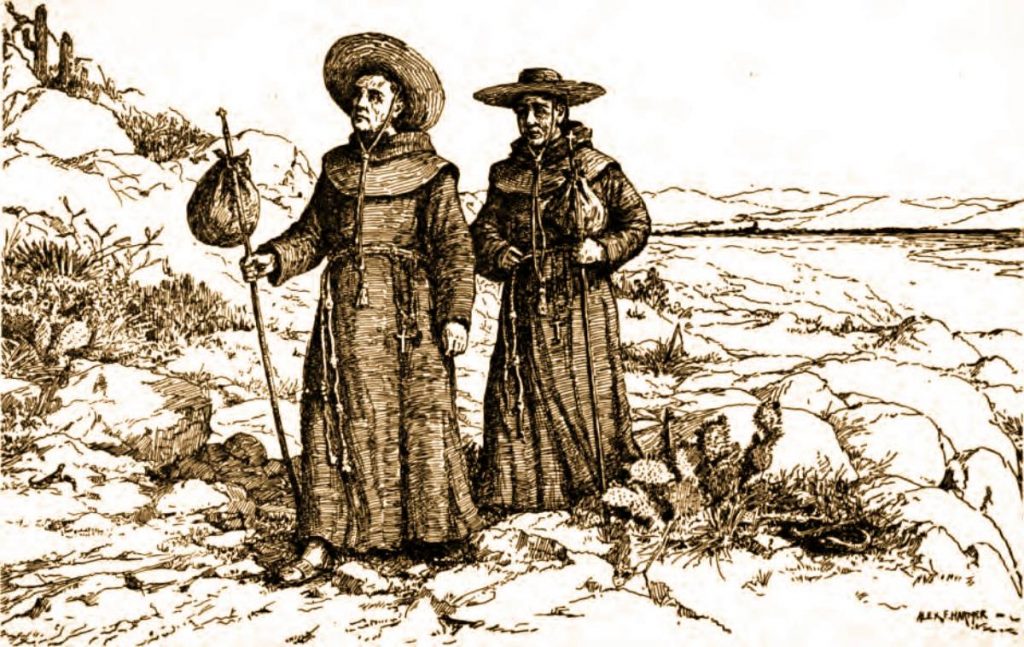
We have seen some of the key factors in the growth of Iberian Catholicism in the American colonies. The evangelistic methods used and the strategies for ecclesiastical structures were effective to sustain growth over time. I have argued that promoting mission as intercultural reconciliation among the Iberian diaspora requires a reckoning with its Christian foundations, renouncing supersessionism and building upon indigenization. Supersessionism was crucial during the early modern phase of Iberian missions and contributed to the cultures that form the Iberian diaspora today. This is true even for those who do not profess Catholic faith because the church’s influence on the Iberian cultures is unavoidable. But I contend that Iberian Catholic legacy should not be rejected but built upon. I have emphasized the value of the indigenization that occurred in the early phase of Catholic missions in the Americas. This indigenization emerged from the openness of some missionaries and some indigenous peoples to a new form of Christianity. Perhaps most of the missionaries saw native cultures as contributing nothing of value to Christian faith and practice. It is likely that most of the indigenous communities of the American colonies would describe their experience as being dispossessed, forcibly converted, and reinvented by colonial masters. 

I believe the primary impetus for the darkest elements of Iberian Catholic missions in the Americas was supersessionism. White Europeans appropriated the ancient messianic hope of the Jewish people, a dispossessed people powerless to oppose this offense. While it is true that Jesus fulfilled the promise that Israel would bless all nations, he never intended to start a new religion. Supersessionism presents Christianity as a universal message of salvation through faith in Jesus’ sacrifice for the sins of humanity. Iberian missionaries were correct in communicating the gift of salvation in Christ, but they erred in embodying the vision of the one new man. The message of reconciliation required the role of Israel as God’s chosen people so that no other nation could claim supremacy in the Kingdom of Christ. It was the exclusion of the special identity of Israel in salvation history that laid the grounds for Christian white supremacy. And this toxic vision fueled and justified the terrorizing colonial project. 

I believe that the heirs of Iberian Catholicism and the institutional forms that still exist should not be rejected but built upon. The indigenizing phenomenon is a wonderful part of Iberian Catholicism and should be celebrated. Mission as intercultural reconciliation is a vision that can honor the legacy of Iberian Catholicism. My hope is that the one new man vision can attract a new generation from the Iberian diaspora to the Spirit’s work today. By honoring Israel as the elder brother, the churches of every Gentile culture can find their place as part of the fulfillment of the one new man. This is the mystery Paul referred to: 

In reading this, then, you will be able to understand my insight into the mystery of Christ, which was not made known to people in other generations as it has now been revealed by the Spirit to God’s holy apostles and prophets. This mystery is that through the gospel the Gentiles are heirs together with Israel, members together of one body, and sharers together in the promise in Christ Jesus. (New International Version, 2011, Eph. 3:4-6) 

Supersessionism and Indigenization in Iberian Christendom, pt 5

As explained earlier in this research, my focus is to promote mission as intercultural reconciliation (MIR). In this series of texts, we have seen how the Catholic Church and the Iberian states mutually established each other’s legitimacy in the colonizing project. And this legitimacy stemmed from the spiritual prestige attributed to both. More than in any other European states, the occupation of high ecclesiastical positions validated the ruling elites of Spain and Portugal. The early colonial era was a time of Spanish and Portuguese exceptionalism (Yun-Casalilla, 2019). The Spanish nobility became the center of European Catholic nobility and its marital market. The Iberian colonizers were exceptionally good at reproducing political structures wedded to Catholicism in the American colonies. And aspects of the ecclesiastical structures that emerged in these colonies both inhibited and promoted the indigenization of Latin-American Catholicism (Yun-Casalilla, 2019). 

Although the Protestant lands also adhered to supersessionism, the fragmentation into several churches meant that they could not represent the “people of God” like Spain and Portugal did. Therefore, proponents of mission as intercultural reconciliation in the Iberian diaspora today face a specific type of supersessionist legacy. The Anglo-Saxon and Continental European Protestantism developed a supersessionism expressed primarily in doctrine. Protestants hammered out supersessionist ideology in centuries of polemics against the Jewish foil. But the Iberian supersessionism didn’t depend primarily on theological argument, but on the prestige and authority of the Catholic Church.

The fact that this prestige had been wounded during the Protestant Reformation gave a particular stridency to Iberian Catholicism’s supersessionism. And the culmination of the Reconquista against the Moors in 1492 strengthened the Iberian Catholic kingdom’s claim to primordial representation of the people of God. The European castles of the Medieval era – most of which were Catholic – have been considered the greatest artistic accomplishment in human history (Hoje Falamos de Notre-Dame, Não Do Nosso Senhor – Contra-Corrente, n.d.). Therefore, proponents of MIR must recognize the prestige of Catholicism in the collective imagination of the Iberian diaspora. This problematizes confronting the cultural appropriation by the West of an ancient Semitic folk religion. The ancient messianic hope of the Jewish people was seized, universalized, and institutionalized by what became European Christendom. Although the message was universal, i.e., for all peoples, white Western Europeans were the idealized heirs called to catechize the nations into Catholic culture. 

But despite supersessionism, there is much evidence that the Spirit of God was at work in the Iberian Catholic missions in the Americas. Natives were groomed for clerical functions and the task of evangelism (Hsia, 2017). And perhaps by targeting elites in these efforts, indigenous agency in the development of theology and worship was fostered. At the top of the Catholic hierarchy the theological premises of supersessionism validated the supremacy of the white European colonizer. But at the grassroots level, the experience of most indigenous members of the missions the experience of Catholicism was predominantly native not Spanish or Portuguese. The translation of Scripture into native languages using the printing press was intended to regulate the communication of the Catholic message. However, what ended up happening was the production of native Christian texts with variant versions of biblical motifs and narratives (Hsia, 2017). 

Proponents of MIR in the Iberian diaspora can draw from the history of indigenous agency in the Americas. Unconventional teachings and practices should not be seen as resulting from an inability to understand Christian doctrine, or a desire to distort it. Rather, we should honor the helpful ways the natives reinterpreted biblical content to suit their needs. The fact that many natives found refuge from Iberian conquistadores should also be considered (Sarreal, 2014). The missions were built through a collaboration of various religious orders and native agency. By the 18th century the missions consisted of multi-generational residents steeped in this way of life. Promoting MIR among Latin American Catholics today requires understanding the two sources of the mission culture that develop. Both the missionaries and the indigenous peoples made biological, technological, organizational, and theological contributions (Sarreal, 2014). It can be argued that without the missions indigenous language and customs would have been eradicated by Iberian colonization (Sarreal, 2014). 

I have discussed the disastrous effects of disease and the imposition of social norms that violated indigenous cultures, particularly among nomadic indigenous communities (Jackson, 2015). This testimony should inform proponents of MIR regarding the damage a supersessionsist evangelistic supremacy can cause. In some contexts, the reconciliation of cultures faces a shorter “gap”, perhaps illustrated by the more fruitful reception of the gospel among the sedentary indigenous communities. But MIR practitioners must recognize when the space between cultures requires relatively greater time, patience, and Spirit-led ingenuity. 

We have also seen how indigenous resistance to evangelization fueled the passions of missionary efforts in mostly negative ways (Rivett, 2014). Opposition to the gospel was interpreted as evidence of demonic influence instead of resistance to incarceration in reducciones (Rivett, 2014). MIR offers a vision of Christian witness that seeks to see the operation of the Spirit in other cultures, even in other religions, according to the promise of the witness of the Spirit throughout the earth (John 16:8-11). 

We have seen research indicating the depth and vibrancy of scientific, technological, geographical, and anthropological work being done on the Iberian Catholic missions in the Americas (Rivett, 2014). This has been posited as contradicting the center-periphery dichotomy between European urban metropolis and primitive rural colonies (Rivett, 2014). MIR appreciates this motif in the history of missions as it engages the reversal of roles in world Christianity. MIR advocates should avoid the center-periphery perspective that has categorized much analysis of colonial missions. This caricature has omitted the agency and contributions of the majority indigenous membership of the missions. There was much oppression and subjugation by missionaries towards indigenous peoples. But the missionaries also arrived during a time of liminal turmoil among the indigenous cultures of the Americas.

Again, we must ask ourselves what the fate of these communities would have been if Iberian colonizers were not accompanied by Catholic missionaries? The point here is that MIR proposes a view of the global work of God that breaks forth across the globe. The Spirit’s work has consistently upended the status quo of Christian predominance and leadership on the world stage. MIR is flexible regarding national loyalties and is primarily concerned with identifying where the Spirit is at work and collaborating with it. When the center of the Spirit’s most vibrant activity shifts from the metropolis to the “periphery”, MIR is ready to learn from new cultural loci of Christian leadership. 

Lastly, the effectiveness of the missions’ organization of space, surveillance, and communication can be seen as either oppressive (Foucault, 1986) or cultivating. MIR recognizes that Christian doctrine has been denounced as a means for governing the soul through the rite confession and a consciousness of the all-seeing eye of God (Foucault, 2003). MIR rejects all forms of Christian surveillance and management which characterizes “ministry” that seeks to exploit and dispossess the cultural other and occupy their land (Zavala-Pelayo, 2020). On the other hand, we see in the story of Iberian missions in the Americas the careful planning of communities that had a sort of beauty. Can we say that the reducciónes were beautiful? We have seen accounts of the carefully planned streets and blocks, each house with its own orchard and garden, the house of the priest, the farmlands, and livestock spaces (Zavala-Pelayo, 2020). We have seen the vast networks of communication, map making, and land administration the missionaries promoted. MIR does not consider all forms of organization and structure in evangelistic efforts as oppressive. God can call members of his church to cross national and continental frontiers to bless other peoples in His name. This cross-cultural witness and service can include administrative and governmental work, if it defers to local authority. MIR seeks to act as a guest enjoying the hospitality of the host people of the land, which does not preclude helping build institutions of governance.

References

Foucault, Michel (1986). Of Other Spaces. Diacritics. 

Foucault, Michel (20030. Abnormal. Lectures and the College de France 1974-1975. London: Verso.

Religious transformations in the early modern Americas / edited by Stephanie Kirk and Sarah Rivett. (2014).

Sarreal, Julia J. S. (2014). The Guaraní and Their Missions: A Socioeconomic History. Stanford University Press

Yun-Casalilla, Bartolomé (2019). Iberian World Empires and the Globalization of Europe 1415–1668. Palgrave Macmillan

Zavala-Pelayo, E. (2020). Religion and space in colonial South America: A technology of geo-political rule and terrestrial-spatial subjectivity in the Jesuit missions of the Banda Oriental. Religion50(4)

Supersessionism and Indigenization in Iberian Christendom, pt 4

The Vision of Human Flourishing and the Agency of the Colonies

The science of geography emerged in the early modern period during the emerging new European empires. The field of chorography developed in which the inhabitants, climate, and vegetation of a specific geographical location are studied. Such research provided the level of detailed knowledge necessary to “support imperial power over a distant territory, varied and extensive” (Rivett, 2014). The science of geography was also essential to Spain’s American colonies, intimately connected to the catechization and subjugation of native peoples. Maps and descriptions of the Amazon Basin composed by Jesuits demonstrate the inseparable connection between Catholic missions and imperial conquest (Rivett, 2014). 

The relationship between the Iberian Crowns and emergent colonial governments is often depicted through a center-periphery dichotomy, between metropolis and colonies (Rivett, 2014). This view of a fixed opposition portrays “asymmetrical power relations between complex political and economic structures in the core, and weak or nonexisting states in the margins”. Recent scholarship has portrayed the situation of Spanish and Portuguese colonies in the Americas differently, identifying multiple domestic centers of power with networks connecting to peripheries. With this has come the recognition of “internal regional differentiation” and the development of “local agencies” (Rivett, 2014). 

The example of Quito is exemplary, which was depicted in writings of Spanish and Creole evangelists as “a new Rome, spreading civility to the margins and leading the spiritual conquest of its own periphery” (Rivett, 2014). Up to the late 17th century, many of the evangelizers were Creoles or Spaniards who had spent most of their lives in the American colonies. Many of these were also involved in scientific work in the areas of “botany, cartography, chorography, and geography, setting the stage for future scientific developments”. The ethnographic and geographic literature they produced prepared the way for a “renewed missionary enterprise”, going “Beyond the scientific and political interest in territorial definition and recognition, these texts spoke of the possibility of spiritual conquest and redemption”. Thus, we can see that part of the impetus for the spread of Iberian Catholicism was a vision of flourishing that coupled spiritual growth with political and scientific progress (Rivett, 2014).

Recent research also indicates that the American missions of the early modern era were initially imagined as “transitional way stations to ‘civilization’, not as enduring settlements” (Bamji, 2013). The missions generally developed in the maelstrom of uprooted communities in flight caused by colonialism. Thus, Christianity in the Americas emerged in a provisional state, becoming identified principally with unsettling, upsetting, and disordering. If the indigenous peoples being dispossessed were moving towards a mission town this was interpreted as “acceptance of the Christian acculturation project”. And if these communities moved away towards the hinterlands, this was seen as a rejection of the gospel (Bamji, 2013). 

            The traditional historical depiction of the missions has been one of invasion where peaceful native environments were disrupted. But recent scholarship argues that the missions were established at a time and place of convulsion and uprooting of indigenous communities caused by colonialism. This perspective is problematic in that it separates state colonialism from religious evangelization. But it stands to reason that      the missions were established during a liminal period of turmoil and the extraordinary movements of communities. Formerly historians primarily described missions as building stark boundaries between cultures. But today some argue that missions built or extended “cultural bridges” (Bamji, 2013This line of reasoning does not make light of the violence that occurred during this meeting of cultures. But an attempt is made to “look beyond forceful imposition” to discern other means by which the American missions operated. Some have posited that the missions “pulled together overlapping networks of spiritual practitioners”, and advanced “shared intangibles such as music, language, heroic ideas, dreams, and even iconoclasm” (Bamji, 2013). Thus, these religious communities emerged as an amalgam of colonial and indigenous contributions. 

The Effectiveness of Organization of Space, Surveillance, and Communication

Michel Foucault (1986) referred to Iberian Catholic missions in the Americas as “heterotopias” that represented a “contestation of the space” in which the indigenous peoples lived. He described the missions as “absolutely regulated” sites “in which human perfection was effectively achieved”. Foucault (2003) described this “Christian pastoralism” as a means for governing the soul which developed into a model of government from above and self-government from within. The friars were obligated to know the actions of their sheep via confession, which in turn taught the sheep to govern their actions since they would become known (Foucault, 2003). And above both shepherd and sheep watched the all-knowing eye of God. 

Zavala-Pelayo (2020) describes the “hard and soft geo-political techniques” used by Jesuit missions in the Americas to promote the “universalist logic of a European Christianity that assumed as its primary task, literally, the making of a Christian orbis terrarum” (“lands of the world”). The soft geo-political techniques included the “management, control, and surveillance” of the territories, their exploration, protection, and grand-scale occupation. Much financial investment was made, for example, in protecting Spanish colonies in Argentina and Paraguay from renegade armies in the neighbor Portuguese colony of Brazil. The Jesuit occupation of vast territories was achieved through the systematic “reorganization of the local indigenous socio-politics, the restructuration of local spaces, and the creation of community spaces” (Zavala-Pelayo, 2020).

 The restructuration of space went beyond the establishment of the mission to the redistribution of spaces within the community, and donation of land to other missions (Zavala-Pelayo, 2020). The Jesuits said of the natives, “they keep their town very well organized, clean and tidy, and their homes in the same way”. The reducciónes were meant to be established near water with access to fishing, good lands with no risk of flooding and no mosquitos. These carefully planned sites were deliberately constructed in streets and blocks – one per every four Indians. Each house would have its own orchard and garden. And provision was made for the house of the priest, as well as farms for growing cotton, fruit trees and vegetables, and space for raising pigs, chickens and doves (Zavala-Pelayo, 2020).

The soft geo-political techniques the Jesuits used included the production and registry of socio-geographic knowledge, geographical counselling, and networked management (Zavala-Pelayo, 2020). The Jesuits helped settle frequent disputes regarding land borders and helped orient new settlements according to vast geographical records. A system of furlough existed so that the friars would return to mission headquarters after stipulated time periods on the field. There were very effective lines of communications between Jesuit missionaries regarding their needs, challenges, and help was able to be relatively quickly mobilized to their avail (Zavala-Pelayo, 2020). 

References

Bamji, A., Janssen, G. H., & Laven, M. (2013). The Ashgate Research Companion to the Counter-Reformation. Taylor & Francis Group. 

Foucault, Michel (1986). Of Other Spaces. Diacritics. 

Foucault, Michel (20030. Abnormal. Lectures and the College de France 1974-1975. London: Verso.

Religious transformations in the early modern Americas / edited by Stephanie Kirk and Sarah Rivett. (2014).

Zavala-Pelayo, E. (2020). Religion and space in colonial South America: A technology of geo-political rule and terrestrial-spatial subjectivity in the Jesuit missions of the Banda Oriental. Religion50(4)