Challenges to an African Christianity Today

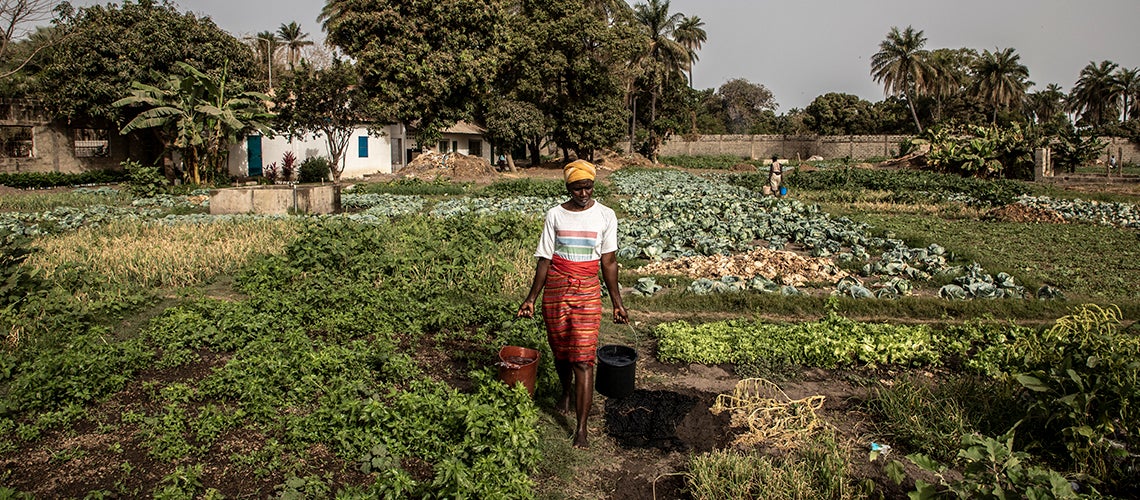
Caleb Oladipo (2016) describes Africa as a “continent of contrast” where a high percentage of the population is poor even as the continent abounds with natural resources. Africans suffer from socioeconomic inequality, ineffective governments, and armed conflicts. One of the historic challenges of African Christianity has been to resist Western notions of the faith that emphasize “acceptance of the knowledge of God, rather than a meaningful experience of God” (Oladipo, p. 86). 

African “bureaucratic monotheism” proposes that God “empowers other beings to work in collaboration”, associating some providence and evil with lesser deities (Osalador, 1985, p. 25). The benevolent of these deities carry out their responsibilities through ancestors known as the “living-dead” (Oladipo, 2016, p. 90). Jesu Kristi is an understanding of Christ as a radical critic of the version of the gospel presented by Western missionaries (p. 91). Whereas the Western conception of Christianity centered on intellectual knowledge, Jesu Kristi is the “epiphany of God in the Spirit” who embodies the “fluidity between the spiritual and the physical worlds”. The Jesu Kristi teaching also recognizes the action of ancestors who guide their living relatives through visions and dreams serving as intermediaries between the empirical and spiritual worlds. The Scriptures are seen a book of reference but of “power to order human lives”, seen as rekindling the love of God already present in traditional African religion. These and many other phenomena of African Christianity represent sources of fruitful theology and practice as well as potential pitfalls of error. Just with every other area of the global church, the African church is challenged to effectively share and receive counsel in relation to the rest of the body of Christ (Oladipo, 2016, p. 91-93).

In the African revivalist churches which emerged at the end of the 19th century, the dynamism of African Christianity is manifest as well as some questionable developments. On the positive side, many of these churches strive for “institutional and doctrinal independence” from the form of Christianity imported by Western missionaries (Ngalula, 2017, p. 231). This has led to the creation of thriving theology schools, organizations and confederations (p. 231). On the negative side, the “divination of the founding prophets” has been a phenomenon which presents these men as “‘incarnations’ of God” (Ngalula, 2017, p. 231). 

How these Current Challenges Relate to the History of Christianity in Africa

When the Christian faith arrived in Africa through Western missionaries, the converts “Africanized and crafted” the faith into “indigenous idioms” leading to its explosive growth across the sub-Saharan nations (Oladipo, 2016, p. 86). An unintended consequence of the spread of Christianity in Africa was a “recovery of their existing religious heritage” where the values of the new religion were “complementary, if not congruent” with African religions life (p. 87). 

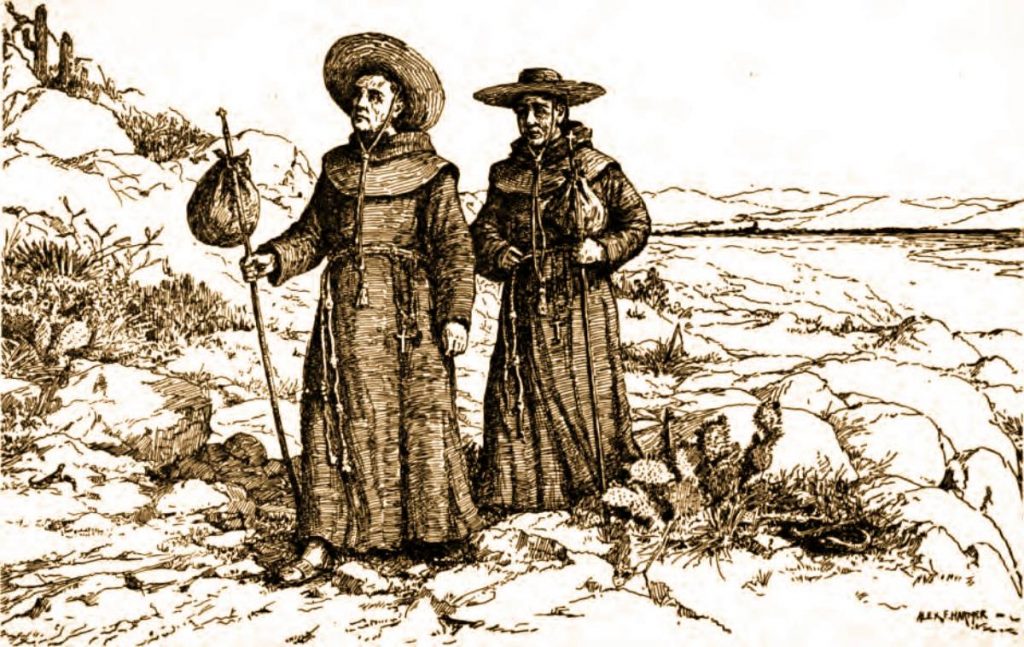
The missionaries left a positive legacy by “imbuing African Christians with dignity by educating them” despite their desire to “undermine indigenous traditions” (Oladipo, 2016, p. 89). The churches in Africa today that were born from Western missions include Catholics, Orthodox, and Mainline Protestants (Ngaulula, 2017, p. 229). Although these churches are predominantly Africanized in membership, leadership, and methodology they continue to be in communion with Western mother churches. The Pentecostal churches descend from US-American missions at the end of the 19th century, maintaining close links with mother churches in doctrine, methodology, as well as funding (Ngalula, 2017, p. 229). 

The denominational fragmentation of African Christianity through the indigenous revivalist churches has created a “religious market” which is detrimental to ecumenism (Ngalula, 2017, p. 239). The response of multitudes of Africans to the gospel can be seen as ambiguous, being born of a “deep desire for God” as well as “extreme poverty” that makes unscrupulous prosperity preaching attractive (Ngalula, 2017, p. 235). 

The Western missionaries who brought Christianity to Africa sought “immediate and total change rather than a process of transformation that would take a long time” (Ayanga, 2017, p. 301). The women of the emerging churches were the exception, showing mor interest in “discipling and in the gradual but more in-depth transformation” that embodied the Christian vision. As had been in most of the world, African churches were slow to invest in theological training of women. Since the crises in Africa of disease, war, and violence tend to hit women hardest, the churches should recognize that women should be promoted in “finding and formulating appropriate theological responses” to this suffering (Ayanga, 2017, p. 299-301). 

Some possible ways forward

The African church rightly resisted replicating the “Quasi-Scientific worldview” of the Western missionaries by continuing to embrace the “primordial world” of spiritual interventions both good and evil, that of possession, prophecy, healing, and miraculous provision (Oladipo, 2016, p. 88). This intuitive response to and incorporation of Christianity by Africans should be sustained into the future. Oladipo (2016) recommends that missionaries and Africans develop partnerships today of mutual openness that reaffirm each other “in the spiritual world of the primordial universe” (p. 89). The African church can share with Global Christianity the needed reaffirmation of the fact that God is at the center of existence which is manifest in the sphere of mundane life, in addition to the rational and transcendent.

As the African church has come into its own, several areas of fruitful contribution to global Christianity are present. The African church’s strong sense of community expressed in the sentiment that “I am because we are” is helpful in an age that needs greater human interdependency (Oladipo, 2016, p. 95). The view that nature is sacred to the worship of God and connection to the infinite has much to teach a Western world that created the current environmental course of destruction. And the African posture of openness towards other faith traditions can help put the divisive and dogmatic tendencies of Western rationalistic religion in perspective as the global church recognizes the need for interfaith dialogue and partnership for the common good (Oladipo, 2016, p. 96-97). 

Ngalula (2017) argues that the condition of being Christian or a church in the Global South will increasingly affect the church worldwide (p. 229). As African Christians go overseas as students, refugees, or missionaries they bring the dynamism of the African churches to the new countries they meet. Many young Westerners have come to faith in Christ for the first time in churches established by African missionaries in Europe and North America. But the African church risks becoming isolated in its perspective due to the lack of missionary presence since the end of colonialism (Ngala, 2017, p. 237-8, 296). 

References

Ayanga, Hazel O. (2017). Contextual Challenges to African Women in Mission. International Review of Mission, Vol. 106(2)

Osadolor, Imasogie (1985) African Traditional Religion. University Press.

Ngalula, Josée (2017). Some Current Trends of Christianity in Africa. International Review of Mission, Vol. 106(2)

Oladipo, Caleb O. (2016). African Christianity: Its scope in global context. Review and Expositor, Vol. 113(1)

How Protestant Missions Contributed to Democracy and Education in Africa 

A constructive response to critiques of Colonial Era Missions

Missiologist Robert Woodberry (2004) lists the emergence of religious pluralism, democratic theory, civil society, mass education, the public sphere, economic development, and reduction of corruption as mechanisms that explain Protestantism’s tendency to promote democracy over time (p. 48). These phenomena derive from the foundations in Luther that Protestants are independent from the episcopal ecclesiastical structures of the Catholic and Orthodox churches, the doctrine that a believer receives saving faith through individual appropriation of Scripture, and a tendency towards independence from political authorities (Woodberry, 2004, p. 48). The lack of a method for resolving doctrinal divergencies in Protestantism resulted in a pluralism that fostered the mutual independence of church and state which is essential to democracy (p. 50). Since there can only be one state church, Protestant denominations without political privilege had to struggle to obtain and preserve their rights and encourage voluntarism and giving among the congregants (p. 52). Education flourished under Protestant missions because all believers needed to read the Bible in their native languages (p. 53).

This is still reflected in the educational development of non-Western nations that received Protestant missions (p. 54). In comparison to Catholic missions that were connected to colonial powers, Protestants could more effectively fight for social justice, even if specifically motivated primarily for creating openness to evangelism (p. 56). Newer Protestant groups today are lay supported that tend to “develop and promote organizations, skills, and resources among non-elite citizens” which promotes civil society and leads to “stable democratic government” (p. 59).

Woodberry (2006) also argues politically independent missionaries moderated the harmful effects of colonialism. And positively, their work in the 19th and early-20th centuries still bears positive fruit in “levels of educational enrollment, infant mortality, and political democracy in societies” (p. 3). Although missionaries of the 18th and 19th century reflected to pervasive attitude of Western civilizational superiority, their critique of other societies was “cultural, not racial” (p. 4). They believed that the cultures they went to could be transformed the same way pre-Christian barbarian peoples were (p. 4). In education, missionaries “wrote and translated books, built buildings, and trained teachers, which made future educational expansions easier” having long-term effects (p. 6). Evangelical missionaries fought for religious liberty which ended up being extend to anti-missionary groups who developed “identifiable leaders, newspapers, extensive memberships, and cross-regional networks” which led to indigenous nationalism (p. 6).

It was not Enlightenment intellectuals that reformed colonialism, but field missionaries who had personal knowledge, vested interest, and a broad non-state power base (p. 10). It can effectively be argued that the negative effects of colonialism would have been much greater without the presence and activity of non-state missionaries (p. 11).

Comparisons of British and French colonies in Africa show that the former provided a basis for stable democracies while the latter’s legacy was authoritarian governments and internal strife (Palplant, 2014, p. 36). Extensive statistical analysis has demonstrated that missionaries were central to the development of key aspects of democracy such as inclusive education, printing, and grassroots nationalist mobilization (p. 38). A key indicator of a missionary legacy in postcolonial African nations is the level of involvement in nongovernmental organizations, which is much higher where Protestant missionary activity occurred (p. 39). The Protestant doctrine of the priesthood of all believers motivated literacy projects that brought old hierarchies down and fostered democracy (p. 41). Most of the early African independence movement leaders had been educated in Protestant mission schools (p. 41).

Impact of current research postcolonial critique of Christian Missions

Church history scholar Derek Cooper (2016) analyses the development of the church in Asia and Africa before Western colonialism. Cooper’s research motivates me to spread awareness of Christianity’s Eastern roots. At the same time, the demise of the churches of the East is a cautionary tale against the subtle dangers of political affiliation and the overt dangers of severe persecution. The Western church’s centuries of political privilege over a vast empire caused it to focus on catechization and hierarchy. The Orthodox churches of Europe and the East also affiliated with political powers but eventually in an extremely fragmented way.

Philip Jenkins (2008) effectively argues against a history of Christianity focused on Europe and the Mediterranean, recommending a return to the medieval maps of a Christian world as “three continents as lobes joined together in Jerusalem (…) the center of the world, the natural site for Christ’s act of self-sacrifice and redemption” (p. 13). And … sadly describes the degradation of Christian habitus which was not adopted by Constantine at his conversion. We can only imagine what Western Christianity could have been if he had done so (p. 266).

These observations make me open to new conceptions of Christian mission that display the glory and the shame of its legacy. However, I still believe in the missionary nature of the Christian faith and am hopeful that a motif of intercultural reconciliation can provide a more attractive vision in the 21st century.

References

Cooper, D. (2016). Introduction to World Christian History. IVP Academic.

Jenkins, Philip. (2008). The Lost History of Christianity: The Thousand-Year Golden Age of the Church in the Middle East, Africa, and Asia—And How It Died. Harper Collins.

Palplant D., Andrea (2014). The World the Missionaries Made. Christianity Today.

Woodberry & Shaw (2004). Christianity and Democracy: The Pioneering Protestants. Journal of Democracy, Volume 15, Number 2

Woodberry, Robert D. (2006) RECLAIMING THE M-WORD: THE LEGACY OF MISSIONS IN NONWESTERN SOCIETIES, The Review of Faith & International Affairs, 4:1, 3-12, DOI: 10.1080/15570274.2006.9523232

Generalizations About the Poor Overshadow Innovation and Agency

Lisa Cliggett’s Grains From Grass (2005) studies the Gwembe Tonga people of Zambia. This research reveals diverse socioeconomic strategies developed to deal with the complexity of globalization (p. 3). We see development among the Tonga as happening through labor migration, negotiating kinship paradigms of assistance, and religious practice. These forms of finding sustenance can be studied statistically looking at groups but are employed and altered by individuals. Indeed, the individualism demonstrated in various forms of socioeconomic self-preservation counter romantic Western notions of such societies being inherently collectivist and altruistic (p. 2). 

It may seem like a stretch, but this situation made me reflect on my own socioeconomic experience as a missionary from the West. I have spent most of my life outside Southern California where I was born, in two countries – Brazil and Portugal – where supporting myself and my family are much easier with my vocation than back home. Although I come from a Pentecostal tradition that emphasizes divine guidance and prophecy, I believe that my wife and my choice of location has been affected by economic realities. After 16 years in Brazil, my wife and I moved back to Southern California for 3 years but eventually moved on to Portugal. The cost of living in that part of the U.S. was a very real part of our decision to move. We could have stayed in the U.S. but our vocation as missionaries meant this would likely result in a loss of financial support. 

For most missionaries, donations are the main source of income, but increasingly other forms of financial sustainability are sought. This should be done with supporters’ knowledge to preserve accountability and not undermine the validity of a missionary’s appeal for donations. Again, I realize the great different in the Gwembe Tonga experience and my own, but the reality of individual agency versus oversimplified generalizations is shared. I feel that long-term missionaries today are not helped by being given only a few legitimate options for financially supporting their work. 

Cliggett (2005) promotes using a “framework of vulnerability that highlights difference in terms of a group’s resources and its ability to control those resources” that “forces us to develop a more complex vision” of such societies (p. 16). Again, I blush at trying to connect the economic situation of the Gwembe Tonga to my context in Portugal, but I do see some relevance. The Portuguese media constantly discuss the exodus of young people to other parts of Europe looking for better wages (Portugal at a risk of poverty below the EU average, n.d.). A tradesperson, for example, can make 3 or 4 times more in a country like France or Germany. However, diverse groups of immigrants to Portugal are thriving as they compare its economic opportunities to those of former Portuguese colonial nations which they come from (Monteiro, 2024). More recently, increased amounts of immigrants to Portugal are coming from South Asia, who find the country an easier port of entry than other European nations. 

At the same time, Portuguese economists constantly criticize the culture of nepotism and “amigismo” (closing economic circles among friends) as the prime source of its relative poverty and underperformance in Western Europe (Pimentel, 2021). There is no other nation I know in Europe that has an economy like Portugal’s in comparison to its powerful neighbors. As I think of my children’s economic future here in Portugal, I am forced to think of where there are thriving sources of innovation and opportunity. As I look around the metro area of Lisbon where we live, it is obvious that economic prosperity exists here. This is like my experience living in large cities of Brazil. The Brazilian media constantly spoke of the lack of economic opportunities in the nation in comparison to other countries. However, in these huge, teeming metropolises I was aware of millions of people who were finding a way to survive and often thrive. Cliggett’s work encourages me to look beyond the media portrayal of national economics which always makes money off bad news. As a missionary, I believe Cliggett’s work provides encouragement towards a rejection of negative economic stereotypes of the nations we serve. 

Now I will proceed gears to the second discussion prompt regarding gendered land ownership and accusations of witchcraft. I believe it is possible that Gwembe Tonga women may be accused as bulozi(witches) because of increased access to land inheritance from husbands. Elderly men are believed to engage in sorcery to “manipulate the supernatural world for human goals” (Cliggett, 2005, p. 131). Sorcery is believed to be the cause of sickness and death to their relatives (p. 134), and land inheritance disputes are common to so many cultures. Elderly men’s use of mystical powers sometimes backfires, resulting in witch hunts aiming to cleanse the community of evil and unfair practices (p. 136). Therefore, I think it is reasonable to assume that elderly women’s empowerment related to land makes them vulnerable to accusations of witchcraft like elderly men. 

References

Cliggett, L. (2005). Grains from grass: Aging, gender, and famine in rural Africa. Cornell University Press.

Pimentel, A. H., Marina. (2021, December 23). Maria José Morgado: “Cultura de impunidade, nepotismo e amiguismo tem feito de Portugal um país pobre e atrasado.” PÚBLICO. 

Portugal at a risk of poverty below the EU average. (n.d.). Retrieved October 9, 2024, from https://www.portugal.gov.pt/en/gc23/communication/news-item?i=portugal-at-a-risk-of-poverty-below-the-eu-average

Monteiro, C. (2024, April 16). Migração: Factos e Números 2024. EAPN. https://www.eapn.pt/centro-de-documentacao/migracao-factos-e-numeros-2024/

Do Traditional Cultures Still Exist?

Cliggett’s Intent and Purpose in Writing Grains from Grass

            Lisa Cliggett’s Grains from Grass (2005) studies the Tonga people of the Gwembe Valley in Southern Zambia. Her findings can speak to Western readers who are disillusioned with the individualism of their own societies. This disappointment motivates many Westerners to search for cultures that still honor the sacredness of the family (p. 1). But Cliggett disabuses Western readers of such a stereotype in her study of the Tonga people. In this community, diverse systems of collaboration, generosity, and charity exist based not primarily on “moral duty or altruistic sentiments” but on “necessity in the face of limited choices”. Of particular interest to this research is the relevance of gender-specific survival modes. Cliggett explores family dynamics related to survival in economically vulnerable communities. She discovers the significance of kinship networks for combating poverty and injustice. Cliggett’s understanding of vulnerability considers differences in access and control of resources among different members of Tonga society. Her findings correct simplistic notions regarding impoverished nations, let alone a continent such as Africa (Cliggett, 2005, p. 2-19). 

            Cliggett (2005) investigates the ways that older women and men in the Gwembe Valley interact with a relational world acutely affected by scarcity of resources (p. 22). And this research explores the ways family and community provide for or ignore the needs of elderly women and men in ways not obvious to an outside observer. The purpose of such analysis is to correct oversimplified visions of social problems in Africa on the one hand, as well as ingenuous ideas of the noble altruism of African families. It is argued that care for the elderly needy is not a natural phenomenon to any human society whether industrialized and modern or agricultural and traditional. A more nuanced vision of the multifaceted process of decision making in relation to helping needy family members is needed. This helps societies worldwide to be wiser about the connection between family relationships, poverty, and globalization. Thus, Cliggett addresses naïve Western notions of former times and other places where the support of family members simply flowed out of the goodness of human nature. Caring for the elderly is not a “natural” component of non-industrialized societies, which begs the question, “Where can we find positive examples of this behavior?” Cliggett’s aim to identify differences – “gender, class, generational or historical” – amidst generalizations about “poor and disaster prone” peoples, yields a more comprehensive view of our world’s complex reality. The result is a framework that ties together the agency of the individual, kinship economic models, and long-term analysis of at-risk populations. Cliggett (2005) hopes this will produce theoretical concepts which give “broader meaning” to the phenomena social science research observes in vulnerable communities (Cliggett, 2005, p. 22-75). 

The Resource Bases of Elderly Tonga Women and their Strategies to Access Them

            Cliggett (2005) gives a general description of Gewmbe villagers’ economic situation as consisting of resource ownership, small entrepreneurialism, government assistance, and wage employment (p. 80). In times of economic adversity all these factors are used by individuals in ways that reflect their gender, age, social networks, and the “capacity to negotiate relationships” for survival (p. 80). 

Cliggett (2005) found that women made the adjustment to old age with less disruption, and even with positive expectations regarding its potential benefits. Tonga society practices matrilineal kinship in which primary family identity is shared between women and their children (p. 20). Perhaps surprisingly, in this system widowhood or divorce can give women new freedom to work autonomously, or preferably to be supported from the households of their adult children. Thus, elderly women’s means of survival are connected to their maternal identity in relation to the children they spent their lives sacrificing for and serving. Matrilineal kinship strongly influences how the Tonga people strategize for obtaining resources. But this social system is not tidy, rather, individuals must make compromises and bargain creatively (Cliggett, 2005, p. 19-20). 

Women have been excluded from significant sources of sustenance and have therefore formed innovative means for self-perseveration in old age (Cliggett, 2015, p. 64). Women have less access than men to resources that can be used to generate income, but the former employ diverse types of “craft and service-oriented skills”. The primary way elderly Gwembe women provide for themselves is developing social networks from which they can receive food and other goods. As Gwembe women advance in age, they hope these strategically built relationships can help them procure food, housing, service, and general needs. The most precarious situation for an elderly woman is if she has no close adult male kin who can provide help (Cliggett, 2015, p. 83-108). 

The Resource Bases of Elderly Tonga Men and their Strategies to Access Them

            Tonga men tend to hold on to their position of social power as they age and cannot work the fields and care for themselves (Cliggett, 2015, p. 19). As stated earlier, matrilineal kinship means fathers do not share primary family identity with their children. In this family model, elderly men mitigate against disenfranchisement by exerting their right to adult son’s labor and through bride price, the amount paid for daughters. Despite men’s lack of shared clan identity with wives and children, they do have kinship roles giving them control over resources at the level of the nuclear family. Thus, men’s relationships with their offspring are largely based on formal rights. Women’s relationship with their adult children, on the other hand, depends on connection through kinship and the ties of the “mother-child experience”. By the time they become elderly, men have generally been able to accumulate an amount of wealth which can be used to support themselves. And in a polygamous society, an elderly man is likely to have at least one living wife residing in his home who can care for him (Cliggett, 2015, p. 20-38). 

Tonga men are more able than women to clear new bush fields and a man’s inheritance is traditionally passed on to male heirs. Therefore, predominant male ownership of land has been perpetuated over several generations (Cliggett, 2015, p. 65). Cash-producing activities that men have access to include selling agricultural tools they make, milk from cattle, and garden produce. Men can also offer their services in home construction, brickmaking, and other forms of manual labor. By the time a man is older, one reason his need for such forms of small income decreases is because of accumulated resources. A second reason is that a man’s dependents, such as daughters soon to marry and sons with incomes of their own, will provide additional resources. It is through residential arrangements with extended family members that most elderly men receive the bulk of their food and have their basic needs met (Cliggett, 2015, p. 83-97). 

The idea of a father receiving and “income” from his adult children seems strange to a Westerner like me who prizes independence and would see a parent being supported in such a way as a sign of failing to achieve independence. But from a Zambian perspective, such an arrangement can be seen as a form of retirement at the end of a life lived in significant part to supporting offspring.

How Such Strategies Relate to Elderly Men and Women’s Connections to the “Ritual World”

            In Africa, roughly a century of European slave trade followed by a century of industrialization and colonization have deeply affected “social, economic, and belief systems” (Cliggett, 2015, p. 53). In Zambia, differences in how global economic vulnerability has affected different regions produced richer and poorer regions. Seasonal fluctuation of food availability has led to agricultural migration, profoundly altering people’s connection to their land. This in turn has undermined the importance of ritual institutions and their leaders, elderly men (Cliggett, 2015, p. 56-62). 

            The funeral homestead is a “market of sorts” where people exchange and sell as well as singing funeral songs and developing relational networks, i.e. catching up on local gossip and current events (Cliggett, 2015, p. 82). Thus, a wide range of goods could be found by villagers and visitors at these recurring rural markets. Women’s participation in religious funeral rights is fundamental in the form of food preparation. The preparation of food is empowering to women, in fact the funeral period officially ends when the women finish clearing out the fire ovens (Cliggett, 2-15, p. 82-121). 

            Christianity has grown in the Gwembe valley, but the elderly population is not a significant presence in church life (Cliggett, 2015, p. 117). I wonder if elderly men and women do not see as much of the benefits of Christianity as a theology and community versus the younger more entrepreneurial population. The Pentecostal type of Christianity that has been so influential in Africa is highly individualistic, emphasizing God’s intervention in the life of the individual, the potential to receive his blessing on finances and health. Perhaps the elderly see this as not contributing to the traditional cultural and social institutions that benefit them, or worse, perhaps they see them as threatening. Ancestor worship is a traditional part of indigenous Tonga religious practice, and I am curious how different Christian denominations have interacted with this practice. 

            Men are seen as having agency regarding the spirit world in a direct way while women are beset upon by spirits, at times harmlessly but in some cases dangerously (Cliggett, 2015, p. 132). Women can use the cultural belief that they are vulnerable to possession by evil spirits as a means for requesting help (p. 140). A situation of spiritual attack makes an elderly woman victim a sympathetic plight for members of her kinship network. 

Some Effects of Migration on Traditional Kinship Support Paradigms

            Economic pressures and opportunities lead many of the Tonga people to migrate away from their home villages. But connections with family back home are generally maintained, not through remittances but sporadic gifts. Such contributions would not amount to a reliable or significant source of income (Cliggett, 2015, p. 148). And for those who migrate, making their new lives work is the main priority. The imposition of requests for help from visitors from a migrant’s home village makes greater distance helpful. The farther migrants move away, the more of a “buffer from such impositions” exists. The best way a visitor from back home can obtain a gift from a prosperous migrant relative is to make the request in person. Often the gift request is attended to, and sometimes at significant cost to the giver. But the gift is based on the nature of the interaction and is not a given, therefore the person requesting goes to great efforts to be gracious and diplomatic. Such gifts do not amount to a reliable source of income for villagers who remain back home. At best these contributions are a helpful part of a village’s economic system, but not a main source. If a migrant does not maintain ties with his or her home village, there is also a downside. This will result in being cut off from social ties to the home village and material, emotional, and spiritual benefits it can offer (Cliggett, 2015, p. 152-5).

Conclusion

            Cliggett (2005) makes a compelling argument that simplistic stereotypes of the drama and needs of the African people result in misguided endeavors to save victims and solve problems without tackling foundational causes (p. 48). The “framework of vulnerability” approach rightly advocates for multifaceted research on issues such as environmental crises, access to food, and kinship. This approach mitigates against tendencies in the social sciences to generalize about the circumstances of all members of a village, region, or nation (p. 49). I agree with the notion that at-risk populations’ foundational problem is relational. And each member of a family negotiates for resources within the kinship network with differing “desires, abilities, and power” (p. 50). 

I understand the need to find out who copes better or worse among vulnerable populations. First, those who cope poorly can learn from those who have innovated, negotiated, strategized, and succeeded. Second, I appreciate the importance of determining what unjust phenomena may be creating situations of inequality of coping. Thirdly, it is vital simply to determine who the poorest copers are to target them as those in greatest need. 

            Cliggett’s work demonstrates that support is channeled through “continually negotiated social networks” in different ways by elderly men and women (p, 158). With the participation of multiple family members in the chain of resources, a decision or failure to perform by any individual threatens the entire system. Cliggett (2004) demonstrates how individual’s in the Gwembe valley are able not only to survive but to prosper (p. 167). This account of individual human agency in poor communities emphasizes the endeavor to progress and flourish contra the caricature of acquiescence and acceptance of poverty. Cliggett’s work effectively counters the error of overly attributing worldview – how people think in sweeping generic national-ethnic terms – instead of observing reality of experience and agency on the ground (p. 167). I agree with the general position of this work as it posits that the most simple and foundational method of combatting the reductive tendency towards sociocultural analysis is the place the target community in “center stage” (p. 168), rather than giving too much credence to stereotypes and generalizations about vulnerable peoples such as the Tonga of the Gwembe valley. 

References

Cliggett, L. (2005). Grains from grass: Aging, gender, and famine in rural Africa. Cornell University Press.

Downtrodden Victims or Resilient Adaptors?

Intent and Purpose of Shaw’s Study of Oxford Pakistanis

Alison Shaw (2000) seeks to counter any notion that Pakistani immigrants in Oxford, England are fundamentally “the downtrodden victims of political, economic and social processes beyond their control” (p. 3). On the contrary, evidence is given that these immigrants are flexible and resilient in adapting to the “structural and cultural resources” they find in Britain. With these assets, Pakistanis have improvised and constructed their lives “on their own terms”. Shaw’s (2000) goal is to demonstrate “both continuity and change” in the experience of this community. Coming from rural agrarian contexts, these immigrants are confronted with the contrasts of industrial urban life. But they adapt “quite easily” to these material changes, proving quite capable of maintaining their traditional beliefs and values (p. 3-4). 

Shaw (2000) gives particular attention to perceptions in Brittain of Pakistani women – now in their third generation – versus the reality of their lives (p. 5). In the West, an emphasis on duty is generally seen as detracting from individual freedom. But even the younger generation of Pakistani immigrants values “advantages and satisfactions” that accompany duty (p. 7-8). 

Contrary to generalizations in Brittain regarding South Asian immigrants, Shaw’s (2000) research indicates this community’s significant internal diversity. Shaw (2000) argues that seeing them as a “homogenous group with a common culture” complies with the political agenda of a white majority concerted about competition for resources (p. 10). These Pakistanis identify their native culture, including their ancestral region, caste, or linguistic group. But they come to identify with much of British culture as well. The aspect of a Pakistani’s identity that is emphasized in each moment – “whether it is more or less exclusive” – depends on the context (p. 10).

How Kinship Influences Behavior and Attitudes 

Family structure allowed the first generation of Pakistani migration, for a man’s parents could be trusted to take care of his wife and children as he went abroad. Families would encourage this type of arrangement for the benefit of remittances that would benefit immediate kin at home (Shaw, 2000, p. 23). Chain migrationrefers to the practice of relatives pooling cash to sponsor one man who would in turn facilitate the way for his kinsmen. This help would include finding housing and employment, resulting in a cluster of related men from the same region of Pakistan (p. 27). This practice mitigated against the high probability of South Asians being rejected by white English landlords (p. 40). 

For the first several years, multi-occupational lodgings were the most common arrangement for male Pakistani immigrants (p. 42). When housing was purchased by Pakistanis, it was often through relatives pooling their resources. And these kinship groups also embarked upon partnerships in business, even offering interest-free loans or participating in rotating credit associations (p. 51). In ancestral Pakistani communities, relatives tended to live in adjacent dwellings and villages were formed by kinship groups (p. 69). At the end of the 19th century, the British built villages where Muslim, Hindu and Sikh colonizers were incentivized to settle in sections according to their cast (p. 71).

How Gender Influences Behavior and Attitudes 

The premium placed on female virginity at marriage has numerous effects upon how young men and women relate to peers, their education, and marriage (Shaw, 2000, p. 168). Sons receive far more leniency in general from their parents, having fewer domestic responsibilities and spending most leisure time outside the home (p. 168). Socially acceptable activities for sons include helping their father’s business, frequenting the mosque, or spending time with other young men. These colleagues may be of diverse ethnic backgrounds: other South Asians, English, or Afro-Caribbeans (p. 168). And though Pakistani parents do not closely monitor their sons’ activities, the latter are expected to keep an eye on their sisters (p. 168). 

A daughter’s responsibilities have direct bearing upon the reputation of the men in her family. This means men must defend the honor of the women in their family, whether it be their own misbehavior or any affront they may suffer (Shaw, 2000, p. 169). An implicit double-standard often exists for Pakistani men in relation to sexual promiscuity. While women in their family are expected to be chaste, all women outside a man’s family can be seen as potential sexual partners (p. 169). Pakistani men who date English girls often do not see this as disobedience to the expectation that they will eventually accept an arranged marriage. English girls are outside Pakistani cultural norms related to marriage and are therefore considered “sexually available” (p. 170). 

Daughters have increasingly negotiated permission from their parents to pursue higher education and the development of careers outside the home (Shaw, 2000, p. 179). Such negotiations involve a daughter’s commitment to fulfilling the traditional duties of a wife in the future. And once a Pakistani daughter is married, families increasingly see her ability to make a good income outside the home as helpful to the success of the marriage (p. 179). 

How Marriage Influences Behavior and Attitudes 

Despite fascination in British society over the punishment of Pakistani daughters who elope with white men, Shaw’s (2000) research only found such cases involving other Pakistanis, South Asians, or Muslim men (p. 161-2). Elopements by Pakistani sons and daughters may lead to the complete severing of ties with family. Girls who do not honor marriage norms – such as finding a husband within their caste or family circles – are seen as denying their fathers the privilege of giving them away respectfully. But young people who reject arranged marriages usually don’t see this as a “wholesale rejection” of traditional values in favor of Western ones. Rather, these Pakistani youth see their actions as an “attempt at reform from within” (p. 185, 186, 189).

How Gift-Giving Influences Behavior and Attitudes 

Married women follow the traditional custom of playing the major role in sustaining the relationships of “informal reciprocity” as well as formal relationships of “gift exchange between households” (Shaw, 2000, p. 227-8). The practice of gift giving is a feature of a wife’s engagement in rituals and events of the domestic life cycle (p. 228). Gifts given at weddings, birthday parties, or dinner invitations involve some “expectation of return” (p. 228). Types of gifts are considered appropriate for specific occasions, such as sweets for the birth of a baby and money for a wedding or when a family will travel abroad (p. 238, 241). 

Both Pakistani men and women understand that these types of gifts will result in similar help from the community when the occasion arises for them (p. 241). This can be described as a form of “rotating credit, though with a less predictably timed outcome” (p. 241). Reciprocities like these exert a form of “social and moral control” as a means for evaluating the status of an individual or household (p. 256). And the occasions in which gift giving takes place are also the context for “exchange of news and gossip”, not merely on banalities but important matters such as marriage prospects or disputes in the mosque (p. 256). 

Conclusion

Shaw (2000) effectively demonstrates that Pakistani immigrants in Oxford, England preserve much individual and collective agency while engaging the majority culture. They would not have come to England from their ancestral lands if they did not believe there would be significant social and material benefits. Indeed, they were acquainted with British culture through colonialism. This meant that Pakistanis coming to the Empire’s headquarters were well-informed on much of what they would face. These immigrants counted the cost and demonstrated organization and strategical ingenuity at every step of their transition to life in Britain. Shaw’s (2000) study leaves one wondering who influenced the other more culturally – the British upon the colonized Pakistanis, or vice versa. And in the decadence of Western culture due to an overemphasis on individualism, one wonders how increasingly attractive and influential collectivist South Asian cultures will become.

References

Alison Shaw. (2000). Kinship and Continuity: Pakistani Families in Britain. Routledge. https://search.ebscohost.com/login.aspx?direct=true&AuthType=sso&db=nlebk&AN=696804&authtype=sso&custid=s6133893&site=ehost-live&custid=s6133893

Cultures of Learning: Stereotypes and Insights

In their chapter Communication for Learning Across Cultures, Martin Cortazzi and Lixian Jin (1997) engage how presuppositions about culture influence communication and learning. Their research elaborates upon academic cultures, cultures of communication, and cultures of learning. Students not only bring cultural practice and theory into the classroom, they use their system to interpret the practice and theory of others . Teachers and students must be conscious of how these differences affect how we interpret each other. They promote cultural synergy, “the mutual effort of both teachers and students to understand” each other (Cortazzi and Jin, 1997).

The concept of cultural synergy can be explored in analysis of the ministry of Jesus and the apostle Paul. Jesus adjusted his approach to teaching as he encountered individuals and groups of differing social profiles. When speaking to Nicodemus the pharisee, Jesus provoked his religious sensitivities by giving a scandalous proposal (Jn. 3:3). When speaking to fishermen, Jesus challenged their paradigms by asking them to go against the conventional wisdom of their vocational (Lk. 5:1-11). Paul appealed to the philosophical-religious culture of debate in Athens when he addressed the Areopagus (Act. 17:16-34). In Jerusalem, Paul spoke in Aramaic and referred to his Pharisaical belief in the ressurrection (Act. 22:1-21). 

Cortazzi and Jin (1997) identify academic cultures such as “Saxonic, Teutonic, Gallic, and Nipponic”. British academic culture is oriented towards the individual in comparison to Chinese emphasis on relationships, collective consciousness, and hierarchy (Cortazzi and Jin, 1997, p. 78). According to Cortazzi and Jin, differences in cultures of communications frequently contribute to faulty assessments of the cultural other. Some cultures express solidarity by continuous dialogue without pause while other cultures pause as a sign of respect. The British deductive approach introduces the idea first, followed by contextual and auxiliary information, while the Chinese inductive approach does just the opposite. Culture of learning consists of the “norms, values, and expectations of teachers and learners relative to classroom activity” (Cortazzi and Jin, 1997, p. 79, 80, 81, 83). 

Missiologist Craig Ott (2021) elaborates five dimensions of culture’s influence on teaching and learning: the cognitive, worldview dimension, social, media, and environmental. Whereas British teachers expect students to be proactive in seeking help if needed, Chinese students expect teachers to ack like caring parents, being attentive to students needs without being asked (Ott, 2021). I have experienced the importance of Ott’s environmental dimension: “the physical, institutional, and sociopolitical context of teaching in another culture” (Ott, 2021). For example, in the 1990s I was involved in after school programs in downtown Los Angeles. I witnessed the chaotic physical environment that many students were expected to learn in. On the other hand, during my time in Brazil I was surprised to perceive that what I considered a chaotic leaning environment – with lots of distractions, interruptions, and talking over each other – was though of as dynamic and collaborative by many Brazilians (albeit not all). 

According to Ott (2021), decontextualizing is the primary difference between Western thinking versus contextualized 

non-Western thinking. Decontextualization is the primary thought form produced by literacy, which creates a barrier in relation to oral cultures. The primary differentiating factor in the use of reason is the relationship to context, some cultures emphasize theory and others experience (Ott, 2021). 

My ecumenical work in Europe involves wooing church leaders from diverse Christian traditions towards models for reconciliation and partnership. Abstract thinking is fundamental for technical aspects of biblical studies, hermeneutics, and contextualization, but oral and concrete approaches are increasingly becoming recognized “increasingly recognized”. If the art of verbal storytelling has declined in the West, I must take inventory of my own deficiency in this essential form of communication. I fear that the description of non-narrative teaching as “cool, disembodied, rational arguments (…) rhetorical” may describe my primary form of teaching (Ott, 2021, p. 87, 91, 93). 

Understanding analytic and holistic cognitive styles helps me appreciate my wife, who perceives and processes information “more as an integrated whole” versus my preference for “clear-cut conceptual groupings” (Ott, 2021, p. 111). It makes perfect sense to me that the tendency to “frame everything in either-or terms and airtight categories” results in the loss of “the integrated whole” (Ott, 2021, p. 132). 

If biblical interpretation will require a more intuitive, holistic approach versus solely relying upon grammatical, 

historical analysis (Ott, 2021), then this will require a slower pace and a reduced scope of engagement. In my own ecumenical work, I will need to be realistic regarding how many individuals, groups, and contexts I can meaningfully interact with. Geneva Gay’s (2018) contrast between “caring about” and “caring for” as the difference between “emotionality without intentionality” and “deliberate and purposeful action plus emotionality” helps inform my teaching approach. 

The idea that teachers must seek the “insider perspective” of those they are teaching, to understand “what they are striving to be” (Gay, 2018) is a challenge. Besides being Western in a general sense, my family upbringing highly emphasized putting off gratification in the present to build towards future goals. It has been a challenge for me at times to relate to students who have little long-term focus. If caring for consist in helping a student be better “in who and what they currently are” (Gay, 2018), then I need to grow in accepting students and overcoming my negative biases. But as Gay (2018) states, really caring for students is to “hold them in high esteem” and “expect high performance from them”. To a degree I recognize myself as a “cultural hegemonist” – consciously or not – expecting all students to behave according to my cultural standards of normality”. The distinction between aesthetic and authentic caring (Gay, 2018) is a disturbing one in my self-analysis. A key to my ecumenical work is championing some Christian groups who occupy marginal status or whose theology and practice is considered obscure. But I must ask myself whether my caring for the inclusion of marginal groups is authentic or merely aesthetic. Unity in the body of Christ is, unfortunately, a beautiful vision that can be used to justify one’s own participation, turning into a form of self-glorification. 

My teaching would be most effective using a learning strategy that engages effectively in the social relations aspect of Ott’s (2021) five dimensions. I have content and the tools to build content for the rest of my life, but I need to discern the open doors of relationship with individuals and groups the Spirit wants me to enter. And to these people I must have the courage and dedication to commit myself. For only as Ruth covenanted with Naomi would the Lord’s plan for their lives come about. 

References

Cortazzi, M., & Jin, L. (1997). Communication for Learning Across Cultures. In R. Harris, D. McNamara, & P. D. McNamara (Eds.), Overseas Students in Higher Education: Issues in Teaching and Learning (pp. 76-90). London; New York: Routledge. 

Gay, G. (2018). Culturally responsive teaching: Theory, research, and practice. (Lower Level LC1099.3 .G393 2018; Third edition.). Teachers College Press; Biola Library Catalog. https://search.ebscohost.com/login.aspx?direct=true&AuthType=sso&db=cat09700a&AN=blc.oai.edge.biola.folio.ebsco.com.fs00001149.5fa32307.b7c3.5027.b081.5fe7ee113c2a&site=eds-live&scope=site&custid=s6133893

Ott, C. (2021). Teaching and learning across cultures: A guide to theory and practice. (Lower Level LC1099 .O83 2021). Baker Academic, a division of Baker Publishing Group; Biola Library Catalog. https://search.ebscohost.com/login.aspx?direct=true&AuthType=sso&db=cat09700a&AN=blc.oai.edge.biola.folio.ebsco.com.fs00001149.eca6bcdd.ba4a.5f1a.a161.26d8b7e3511a&site=eds-live&scope=site&custid=s6133893

The Science of Mission and the One New Humanity Vision

The roots of contemporary missiology are found in the era of higher criticism when all branches of theology were subject to scientific analysis. Scripture was studied according to the rigors of historical and archaeological verification. Similarly, Christian mission began to be studied according to the rigors of the social sciences. From that time till now – for better or for worse – missions studies have been approached scientifically. Evangelicals like myself follow a pietistic impulse that view the biblical narrative as a supernatural, all-encompassing, divinely revealed narrative. I accept the level of circularity that exists in my presupposition of faith – I believe the Bible because it affirms itself to be the word of God. This, however, does not preclude the profound evidence of my own experience walking with Jesus the Christ.

But studying mission according to principles that arose during the scientific revolution is not anathema to biblical faith. I believe the academic inquiry and scholarship are essential aspects of a humanity created in God’s image. The Oxford Handbook of Mission Studies is perhaps the most comprehensive source for current scholarship and theory related to missions.

In this article I will dialogue with chapters 3 and 4 of the handbook in relation to the biblical vision known as one new man or one new humanity based on Ephesians 2:

11 Therefore, remember that formerly you who are Gentiles by birth and called “uncircumcised” by those who call themselves “the circumcision” (which is done in the body by human hands)— 12 remember that at that time you were separate from Christ, excluded from citizenship in Israel and foreigners to the covenants of the promise, without hope and without God in the world. 13 But now in Christ Jesus you who once were far away have been brought near by the blood of Christ.

14 For he himself is our peace, who has made the two groups one and has destroyed the barrier, the dividing wall of hostility, 15 by setting aside in his flesh the law with its commands and regulations. His purpose was to create in himself one new humanity out of the two, thus making peace, 16 and in one body to reconcile both of them to God through the cross, by which he put to death their hostility. 

For the purpose of this article, one new humanity (ONH) refers to the belief that the rejection of the Jewish part of the ekklesia by the Gentile believers was the first division in the body of Christ, laying the foundation for subsequent fracturing. Jewish followers of Jesus have been present in the ekklesia for all of its history, but most often absorbed into the Gentile church and taught – even forced – to abandon all practices of Judaism as a prerequisite for faithfulness to Christ. Note that I use the term ekklesia to refer to what the Catholic Church has described as the community of those called to Christ ex circuncisione and ex gentibus (Nina Rowe, 2011). 

Participants in ONH hold that the emergence of the Messianic Jewish movement in the 1960s and its subsequent development are foundational to the restoration of the unity of the ekklesia. The use of the term ekklesia is important because Messianic Jews increasingly refer to themselves as practicing a form of Judaism and not as Christians or members of its church. Therefore, the restoration of ekklesia refers to the initial vision of Ephesians 2 which did not last past the second century. As an ingrafted “wild olive shoot” the apostle Paul exhorted the Gentile believers to honor the unique calling and future destiny of the Jewish “olive root” (New International Version, 2011, Rom. 11:17). 

Unfortunately, by the second century a distinctly Jewish part of the ekklesia disappeared due to their rejection by both the nascent Gentile church and Rabbinic Judaism. The parting of the ways describes the alienation of the Jewish Jesus-believing from their Gentile brethren (Enslin, 1961), the subsequent suffering of which was compounded by the rejection of the former by emergent Rabbinic Judaism after the destruction of the temple. Participants in ONH believe that with emergence of Messianic Judaism in the mid 20th century the Gentile church has a legitimate interlocutor towards which repentance can be directed and reconciliation sought. What is less known is how participants in ONH view its implications for missions – how it may affect its conceptualization and application? How have participants in ONH applied this vision to mission and what have been the results? 

Chapter 3 of the current version of the Oxford Handbook for Mission Studies was written by Paul Kollman (2022), titled Defining Mission Studies for the Third Millennium of Christianity.  Kollman (2022) cites three probable trends in the future of missions studies: interest by a “growing diversity of scholars”, influence applied to “more areas of Christian life and scholarship”, and new insights coming from “innovative comparative approaches” (p. 46). The emerging field of anthropology of Christianity looks at “the various social changes that Christianity – often linked to mission – fosters in diverse situations” (Kollman, 2022, p. 47). How might the fulfillment of the ONH vision impact societies and cultures? Currently Christianity is expressed around the world with an impressive cultural diversity. The Bible has been translated into most of the world’s languages and worship is shaped according to local customs and creativity. However, just as the gospel was transferred from Jew to Gentile, it was then transferred from the Roman World to the New World. In the 20th century unprecedented church growth in the Global South (Africa, Asia, and South America) signified the transfer of primary Christian leadership to the Non-Western world. Unfortunately, however, the pattern or cultural hegemony has been present throughout church history, with the national/enthnic centrality of the gospel shifting from one supreme Christendom to another. 

Kollman (2022) also describes how recent missions studies have interacted with social movement theory (p. 47). Some theorists have explored the benefits of integrating the study of complex or formal organizations and the study of collective action and social movements (Gerald F. Davis et al., 2005, xiv). It has been proposed that concepts developed in the domains of organizational theory and social movement theory are useful to each other (Gerald F. Davis et al., 2005, xiv). When looking at a phenomena such as ONH from a social science perspective, is it unique or just one of many similar religious movements? It can be argued that the history of the church is a succession of grassroots social movements that evolved into formal organizations. These religious institutions then followed the pattern of all religions – they were challenged and replaced or reformed by prophetic movements from the margins. My passion for ONH flows from my belief that the Ephesians 2 vision is truly unique in world religions and has yet to be fulfilled as Christ desired. 

Kollman cites recent studies of the Didache that show how mission concerns existed in the first century (Kollman, 2022, p. 48) when a Jewish and Gentile community of believers still existed. The Didache was written by Jewish Jesus-believers to instruct their Gentile brethren in religious practice (Nessim, 2023, xiv). The Didache’s articulation of how the Torah was applicable to the Gentile believers gives a motif for considerate and effective Jewish-Gentile relations within the ekklesia before the parting of the ways. 

A steadily more religiously pluralist world due to globalization has led missiologists to seek what insight might be gained from comparative dialogue with other missionary religions such as Buddhism and Islam (Kollman, 2022, p. 49-50). Comparative study is being made of the missionary practices of these religions, as well as analyzing the reasons that other religions such as Hinduism, Confuscianism, and Judaism have less impetus for self propagation beyond a particular people group (Kollman, 2022, p. 50). One question related to my research on ONH is how Messianic Jews see mission and evangelism. Messianic Judaism is rooted in a more ethnically centered religion, therefore their increased presence within the ekklesia could affect the missionary impetus. Many Christians struggle to reconcile the missionary vision they were taught in church in light of religious pluralism and secularism. It is hard for Christians to understand non-missionary religions, including the relatively inward-focused nature of rabbinic Judaism. What might Christians learn from dialogue with these other faith traditions? Nany anthropologists today are studying how “mission-generated social change produces new cultural forms” (Kollman, 2022, p. 51). The theme of reconciliation has been extremely influential in missions studies over the past 50 years. Perhaps it can be argued that mission-generated social change led to ONH as an example of a new cultural form. 

Kollman (2022) describes the gravitation in missiology towards fields that are related but not centered on Christian mission as “engaging mission tangentially” (p. 51). In this, missiology is predicted to follow the trend of other academic fields. This means that missiologists increasingly make connections to other social sciences that would have been considered irrelevant. This freedom is expanded by the trend towards missions studies including scholarship from other disciplines or under the labels of “intercultural studies, contextual theology, and world Christianity (Kollman, 2022, p. 51). 

There is an increased censuses that the missio Dei is the foundation of mission, while not disregarding the link of mission to human activity (Kollman, 2022, p. 51). Based on missio Dei, mission is open to unlimited possibilities while at the same time particular mission foci can exist (Kollman, 2022, p. 52). The understanding of mission as any human cooperation with divine action in the world grounds mission studies in “empirical realities” that can be analyzed within non-theological systems (Kollman, 2022, p. 52). Intergroup conflict studies is one example of an observed phenomena that relates directly to ONH.

Chapter 4 of the Oxford handbook was written by Dorottya Nagy (2022), titled Theory and Method in Mission Studies / Missiology.  Nagy (2022) cites the fragmentation of missiology derived from the “multiplicity of terms referring to theory and method in missions studies” (p. 56). Nagy (2022) proposes that an “interdisciplinary awareness” of missions studies methodology may improve interdisciplinary dialogue and partnership (p. 56). By methodology, Nagy (2022) refers to “the logical reasoning and the theological/philosophical assumptions that underlie academic work” consciously or unarticulated (p. 57). Methods, distinctively, are the orienting research techniques and procedures that are drawn from methodology (Nagy, 2022, p. 57). There is a trend in research toward clustering comparative, historical, empirical, and hermeneutical methods across disciplines, causing the challenge of “interdisciplinary miscommunication and misunderstanding” (Nagy, 2022, p. 57). Nagy (2022) describes theory as pointing to “contemplation, observation, and consideration, aiming at an understanding of reality” (p. 57). In considering missions studies theory then, we face the principle of ontological and epistemological plurality within the academic world (p. 58). Thus the discussion of method and theory in missions studies is another validation of using interdisciplinary methods and recognizing epistemological plurality in my study of ONH. 

Nagy (2022) indicates that missions studies are conditioned by institutionalization and contingency (p. 58). Here contingency refers to the influence of particular innovators and trends in the soft and hard sciences. Missiology combines knowledge production education that is both academic and theological-missiological (Nagy, 2022, p. 59). Consequently, missions studies are being situated in a “newer, larger, fashionable field of study”, with the strategic move of re-articulating missiology as “intercultural theology or world Christianity” (Nagy, 2022, p. 59). Nagy (2022) observes that these strategic moves require “methodological awareness and accountability”, especially regarding the epistemological ambivalence inherent in interculturality (p. 59). Thus although the breadth of social sciences available to missions studies steadily grows, interculturality requires sensitivity to epistemological contradictions. The “conflictive plurality within identities” (Nagy, 2022, p. 59) will be present in my engagement with with Messianic Judaism and Jew-Gentile relations in the ekklesia. 

With interculturality as an “epistemological locus”, Nagy (2022) sees a possible working definition of missiology as “the study of the relational, communicative (co)existence between God, humans, fellow human beings and the whole creation across space and time” (p. 60). Therefore, at its core missions studies deals with “an understanding of God and relationality with God” (Nagy, 2022, p. 60). For example, missions studies engages theories about salvation in other religions and how this affects missionaries’ communication of the gospel. ONH can be seen as motif of mission as intergroup reconciliation, therefore how this vision is interpreted by diverse cultures is foundational to my research. One area of my inquiry is how God’s particular relationship to Israel demonstrates his desire and capacity to love all people groups in their unique cultural identities. In this sense the relationship of God to human groups – not just individuals – is a key aspect of ONH. 

Nagy (2022) proposes that love is relevant to method and theory not as an uncontaminated emotion but as an “ontological drive of separated beings towards union (p. 60). Missions studies are concerned with the nature and action of God and the implications for how humans should think and live (Nagy, 2022, p. 62). Thus missiology is normative, always expressed in a “situational, actual, and empirical-intercultural manner” (Nagy, 2022, p. 62). The normativity of missions studies has to be placed “against the constellation of other modes of normativity, and is thus “always partial and becoming in relationality” (Nagy, 2022, p. 62). Missiological normativity is closer to discernment, rooted in spirituality, which makes it an “open-ended discipline, one which does not hide the researcher behind the research” (p. 62). This spiritual open-ended discipline does not presume that the researcher has a neutral position but exposes the “entanglement, power issues, and issues of representation” (Nagy, 2022, p. 62). However, this spiritual open-ended discipline also demonstrates the legitimate desire to love God and his world (Nagy, 2022, p. 62). This normative, spiritual, open-ended conception of missions studies means as a researcher I do not need to detach myself as a religious devotee. 

Nagy (2022) refers to interculturality as “the ways through which the various agents act, interact or relate in co-creation (p. 62). Context and culture are still foundational concepts for developing missiological theory and method, but they can be problematic (Nagy 2022, p. 63). The “wide interdisciplinary interest in the spatiality of societal and cultural phenomena” has strongly influenced missiology (Nagy, 2022, p. 63). Nagy (2022) advocates for missiologists’ engagement and dialogue with scholars who come from different epistemological frameworks (p. 64). However, Nagy warns against understanding locality primarily in terms of “owned/claimed territory” as this would interpret culture primarily through “tribal, ethnic, and national lenses” instead of understanding locality in its “spatial relationality/interconnectednness” (p. 64). In my research of ONH, I must make sure not to interpret participants’ concept of locality in ways they never would. Nagy cites Steve Bevan’s work on the dangers of Western attempts to attribute meaning to cultural identity “which is not the lived experience of the culturally identified people” (p. 64). In spite of the influence of Bevan’s research, “Christian identities, informed by academic theology, keep producing and reproducing cultural (i.e., national, ethnic, or tribal) Christianities” (Nagy, 2022, p. 65). Nagy (2022) suggests that theories of culture that consider interculturality and space may be helpful in “overcoming the homogenous and homogenizing principles” that have caused “reproductions of nationalistic forms of Christianity”, such as in Europe (p. 65). Participants of ONH have contended that a key impetus for supersessionist theology arose during the Era of Exploration when the people of God replaced the notion of Gentile (Jennings, 2010). 

Lastly, the spiritual turn in missions studies described by Nagy is key to ONH because from its inception it has been a prayer movement with Charismatic practice uniting Catholic, Protestant, Orthodox, Messianic Jewish, and Pentecostal church leaders (Hocken, 2007). Nagy (2022) describes the spiritual turn in mission studies as overlapping with increased attention given to Christian spirituality in relationship with other spiritualities, and the researcher’s spirituality (p. 66). Thus, 

mission does not aim primarily at the propagation or transmission of intellectual convictions, doctrines, moral commands, but at the transmission of the life of communion that exists in God…The Holy Spirit is incompatible with individualism, its primary work being the transformation of all reality to a relational status (Nagy, 2022 p. 67). 

This anti-individualist conception is highly relevant to ONH’s contention that biblical mission does not consist primarily of reconciliation between human persons and God. Instead, biblical mission is fundamentally about reconciliation between human groups in fulfillment of God’s expressed desire and for his ultimate glory. 

References

Enslin, M. S. (1961). The Parting of the Ways. The Jewish Quarterly Review, 51(3), 177–197. https://doi.org/10.2307/1453437

Gerald F. Davis, Doug McAdam, W. Richard Scott, & Mayer N. Zald. (2005). Social Movements and Organization Theory. Cambridge University Press; eBook Collection (EBSCOhost). https://search.ebscohost.com/login.aspx?direct=true&AuthType=sso&db=nlebk&AN=132352&authtype=sso&custid=s6133893&site=ehost-live&custid=s6133893

Hocken, P. (2007). TOWARD JERUSALEM COUNCIL II. Journal of Pentecostal Theology, 16(1), 3–17. Academic Search Premier.

Jennings, W. J. (2010). The Christian imagination: Theology and the origins of race. Yale University Press; Biola Library ebooks. https://search.ebscohost.com/login.aspx?direct=true&AuthType=sso&db=cat08936a&AN=bio.ocn808346478&site=eds-live&custid=s6133893

Kollman, Paul. (2022). Defining Mission Studies for the Third Millennium of Christianity. In Coleman, Paul (Ed.),The Oxford Handbook of Mission Studies. OUP Oxford.

Nessim, D. (2023). Torah for Gentiles? [Electronic resource]: What the Jewish Authors of the Didache Had to Say. Lutterworth Press, The; Biola Library ebooks. https://search.ebscohost.com/login.aspx?direct=true&AuthType=sso&db=cat08936a&AN=bio.on1391441015&site=eds-live&custid=s6133893

Nagy, Dorottya. (2022). Theory and Method in Mission Studies / Missiology. In Nagym Dorottya (Ed.), The Oxford Handbook of Mission Studies. OUP Oxford.

New International Version. (2011). BibleGateway.com. http://www.biblegateway.com/versions/New-International-Version-NIV-Bible/#booklist

Nina Rowe. (2011). The Jew, the Cathedral and the Medieval City: Synagoga and Ecclesia in the Thirteenth Century. Cambridge University Press; eBook Academic Collection (EBSCOhost). https://search.ebscohost.com/login.aspx?direct=true&AuthType=sso&db=e000xna&AN=435252&site=eds-live&scope=site&custid=s6133893


Shifts Taking Place in Mission Studies

The recognition of Christianity as a global religion has shifted ecumenical projects from denominations to cultures and heightened the need for a strategy to engage religious pluralism (The Oxford Handbook of Mission Studies, 2022, p. 3-4). The influence of modern science on Christian mission expanded the related disciplines to include “theology, practice, history, cultural studies, religious studies, and social studies (OHMS, 2022, p. 4). 

I’m intrigued by the notion that a secular context provides the church an opportunity for “mutual exorcism” – to “purify each other from the dehumanizing forces each can harbor” (OHMS, 2022, p. 7,10). I understand this to refer to the possibility for secularist and Christian worldviews to challenge each other in ways which can be fruitful for their adherents and the general society. I imagine the Christian helping the secularist to temper the stridency of his or her optimism regarding collective human capacity to organize society towards justice and happiness. On the other hand, I can see the secularist showing the Christian the inconsistency of their desire to wield political power to effect the vision of Jesus. 

The effects of money and power dynamics on the modern missionary movement (OHMS, 2022, p. 8) have been evident during my missionary career. I have spent about 20 of the past 30 years in missions overseas as an American, mostly in the Global South but more recently in Southern Europe. In every context where I have served I have witnessed disfunction in missions strategies related to money and power dynamics. One common denominator I have witnessed personally and researched is the positive effects of emancipation of leadership and financial sustainability. At the same time, so many Global South missionaries follow the example of their Western mentors and end up seeking financial support from the U.S., Europe, and Anglo Commonwealth countries with strong missionary legacies. 

I find comparative theology to be a promising approach for missionaries like myself, where people of other faiths are seen as partners rather than object of mission (OHMS, 2022, p. 11). Vinoth Ramachandra states that we close ourselves off from conversion to the religious other as well as to a conversion to a deeper understanding of our own religion (FULLER studio, 2024). Ramachandra (2024) advocates for Christians not say “Come to us for we have the truth, but come with us He has the truth”. 

I believe it is urgent that the church promote the agency of those who are often “marginalized from missional centers of power, such as women, non-Western Christians, and minorities” (OHMS, 2022, p. 12). However, when I hear descriptions of Majority World Christianity where “lay people are the primary agents of mission” (OHMS, 2022, p. 13), my experience in the Global South makes me wonder why I usually witnessed the opposite. I refer to Brazil where I served as a church planter for 16 years, a context where the attraction model was predominant and ministry centered on professional pastors. 

The emergence of missiology as a scientific approach to cross-cultural evangelism helps me understand how social science methods came to be employed in the field (OHMS, 2022, p. 8). As theology and biblical studies came to be scientific disciplines engaged by scholars in universities, the same approach was applied to the missions (OHMS, 2022, p. 19). The Anglo-American Protestant world has been influenced by the Germanic ideal of missionary science since the early 20th century (OHMS, 2022, 21). And in the German-speaking world, the focus on local appropriation of the message rather than its delivery has been felt wherever I have served. The intercultural theology moniker helps me understand how in my lifetime many seminaries changed their course description from “missions” to “intercultural studies”. I have no criticism of this, in fact I feel that as a missionary I have benefited from it in contexts moire antagonistic to evangelism. But it is helpful to know the Liberal Protestant German context from which it emerges. 

The scientific approach to mission coming out of Germany let to a theological shift versus Anglo-American pragmatism (OHMS, 2022, p.?). As a result, apparently, missiology was short-lived in the Anglo-American academy but lived on till present in Germany and Scandinavia (OHMS, 2022, p. 26-7). In the U.S., only the private Christian universities maintained missiological research chairs, which were short-lived in mainstream secular colleges (OHMS, 2022, p. 27). All this is potentially encouraging to me as someone seeking to teach in European seminaries and develop missiological research programs. 

On the other hand, as someone engaged in missions in Europe, the most strong source of missiological research I encounter (perhaps as an English-speaker) is the Center for the Study of World Christianity in Edinburgh (OHMS, 2022, p. 29). The CSWC has excellent resources online that I consult regularly. As someone living in majority-Catholic Portugal, I am encouraged to know of the convergence of Protestant and Catholic missioligists (OHMS, 2022, p. 31). Two years ago I helped organize a theological symposium at the Universidade Lusofona in Lisbon and I am hopeful that areas of missiological study may promote ecumenical partnership. 

Lastly, the news that missiology has become “a corporate narrative exercise, in which Christians hear, exchange, and ponder the life stories of those who have sought to live the communal life of the gospel, and to witness to its truths in a multiplicity of contexts” (OHMS, 2022, p. 33), is encouraging. As someone coming from a highly energized missions agency like YWAM, a “less pragmatic, more theologically reflective, and more interdisciplinary and culturally divers” approach sounds wonderful (The Oxford Handbook of Mission Studies, 2022, p. 33).  

References

FULLER studio (Director). (2024, April 29). Deconstructing Evangelism Through the Lens of Global Christianity. https://www.youtube.com/watch?v=nWnIjON8sWELinks to an external site.

Kim, K., Jørgensen, K., & Climenhaga, A. F. (Eds.). (2022). The Oxford handbook of mission studies. (Upper Level BV2090 .O94 2022; First edition.). Oxford University Press; Biola Library Catalog. https://search.ebscohost.com/login.aspx?direct=true&AuthType=sso&db=cat09700a&AN=blc.oai.edge.biola.folio.ebsco.com.fs00001149.2ad0546b.f552.5b2c.aa65.cf3897a492f1&site=eds-live&scope=site&custid=s6133893Links to an external site.

The Science of Being Open-Minded: Can Secular Research Inform Christian Mission?

What Does “Open-Minded” Mean to Me as a Missionary?

As a missiological researcher, do I look primarily to practitioners or theoreticians as my primary sources, related to my areas of interest? Missiology involves sociological, qualitative research, which focuses on people with boots on the ground implementing the ideas that others only articulate and analyze. As a missionary completing 30 years of service – most of those oversees – I have done several research projects focused on practice and practitioners. Currently I’m pursuing a PhD in Intercultural Studies, which I believe is the best fit for research that is continuous with my career so far. However, in recent years most of the scholarly work I’ve been exposed to has been theological rather than sociological. I now realize that, even as a missionary, I have become out of touch with the development of missiology over the past 10 years. I have drifted away from practical theology, which some use as a definition of missiology, towards theory. I don’t feel that the time I’ve dedicated to theory regarding my area of missionary service has been unfruitful. However, at 47 years old, I want to build from what hopefully I can contribute as someone who has been a practitioner and who deeply believes in the work of those on the field. I don’t mean to falsely dichotomize practice and theory, but these are the best terms I have to convey my experience and perception. 

Baehr on Open Mindedness and Moreland on Transformation of the Christian Mind

I will refer to open-mindedness as “OM” from here on. In Jason Baehr’s The Structure of Open-Mindedness, he critiques the conflict (OM) model is since (OM) can be demonstrated by persons who are impartial or unresolved about the matter in question (2011, p. 199). He also rejects the adjudication (OM) model because the evaluation of a debate in relation to which persons are impartial or unresolved may treat cases that do not involve disputes as well as cases that do not involve logical estimations or appraisals (2011, p. 199). Baer’s posits that (OM) plays an enabling and expediting role in relation to other intellectual virtues because (OM) permits the person who has it to use these virtues and use them well (2011, p. 206). In three propositions Baehr explores possible articulations of the value of (OM). First, emphasizing (OM) as intellectually virtuous in case it is helpful for a person in a determined situation to ascertain the truth (Baehr 2011, p. 208). Second, emphasizing (OM) as intellectually virtuous in case it is reasonable for a person in a determined situation to believe that it may be helpful for ascertaining truth (Baehr 2011, p. 209). And third, emphasizing (OM) as intellectually virtuous only if it is reasonable for a person in a determined situation that it may be helpful for ascertaining truth (Baehr, 2011, 210). Baehr concludes by proposing that if a person has compelling evidence in support of a proposition, is trustworthy in his/her judgements (and of this he/she is aware) and possesses compelling motives to reject contrary evidence to said proposition, then in such circumstances it may not be wise to be (OM) to ascertain truth (Baehr, 2011, p. 211-212). 

In Love Your God with All Your Mind, J.P. Moreland (1997) argues that Scripture declares a vision of discipleship that requires the development of the Christian mind (p. 43). Moreland (1997) describes reason as the powers by which knowledge is attained and beliefs accounted for (p. 43). Moreland (1997) establishes that the doctrine of revelation does not negate reason, because it includes statements that are comprehensible and impartially true (p. 45). The work of the Spirit, it is argued, is not to do the work of comprehending Scripture, but to convict of sin, to comfort the soul, and to lead to real application (Moreland, 1997, p. 46). It is up to the believer to apply his cognitive abilities to discern the intention of a passage of Scripture (Moreland, 1997, p. 47). Moreland (1997) states that Christians’ apathy and timidity in evangelism is due in large part to lack of authoritative knowledge of the Scriptures (p. 52). And it is because the church preaches rather than teaches logically in the public square that it has lost influence (Moreland, 1997, p. 56). Even Christians going to college in the West have succumbed to the idea that an education primarily serves an economic rather than a character and intellect building one (Moreland, 1997, p. 59). And a concept of faith as detached from evidence or trustworthiness of propositions and the readiness to act upon it has resulted in a distortion of faith as consisting in emotion or imagination (Moreland, 1997, p. 61). 

My analysis is that Baehr’s hypothesis regarding (OM) is timely considering post-colonialism, post-mission, and post-evangelistic paradigms which are highly influential today. The skepticism with which all attempts to engage culture with a message such as the gospel surrounds the majority of Christian missionary and evangelistic efforts. When a Westerner travels to a foreign land to share in word and deed from his religious convictions, even if he attempts employ (OM) this can be construed as instrumental. The cultural sensitivity, anthropological study, and translation efforts can be criticized as being different means for the same ends as the abhorrent Christian colonizers of the majority world during the Era of Exploration. Moreland exhorts the church to, instead of developing ever more complex means to appease postmodern sensibilities towards cultural colonization, it should focus on seeking understanding. When the church sincerely and passionately seeks truth and bears witness in the world with the Holy Spirit’s condition of sin and prophetic witness, it will gain a new hearing. And this hearing will surpass anything conjured up by reworking of the gospel message to conform to pluralistic and relativistic values. Pluralism and the nuance of truth are not foreign to Scripture, but they are not the foundation from which we speak, we speak from the foundation of a transformed mind and a heart convicted and directed by the experience of the Holy Spirit. 

How I Anticipate the Need for Open-Mindedness in My Research

I believe that I will need to be open minded first in relation to the pioneer generation involved in the paradigm of reconciliation ministry that I will be researching (ONH: One New Humanity, see Eph. 2:14-18). Since the research topic I have chosen relates to Christian-Jewish relations, the topic of Zionism comes to bear. 

How can the ONH vision be promoted in groups where some hold to conservative and literal hermeneutics regarding biblical prophecy about Israel and the land, as well as others with differing views? One of the motives behind my study is the desire to discover what lessons can be learned from ONH practitioners in my European context. The need for this knowledge is primarily to be able to articulate it better for a new generation of practitioners and see them multiply it with the most reproduceable model possible. One way of promoting the ONH vision is through diplomacy that seeks to attract senior leaders of major Christian traditions. This model has been effective over the past 30 years and a new generation of ONH ambassadors is needed. What are the key insights from those who have pioneered such diplomacy, and what innovation is needed?

In my own efforts to promote the ONH vision, I recognize the challenge of articulating it to Christian leaders of my own generation and younger. Many of the leaders I interact with from this group are more liberal and averse to Zionism and any mixture of faith and politics in ways they deem Constantinian, colonialist, or imperialist. I feel this debate represents a major disconnect between many Evangelical, Mainline Protestant, and Charismatic (non-Pentecostal) young leaders. Some of them see repentance initiatives related to the Jewish people as problematic because of the political implications regarding Palestine. Some Christian leaders have endorsed a minimalist Zionism, such as Gavin D’Costa (D’Costa, 2019), which I won’t elaborate on here. The point is, one of the challenges related to the ONH vision is for Christians on either end of the Zionism debate to be open minded in their interactions. If the goal is to see unity in the body of Messiah as a motif for general human reconciliation, we should pay attention to lessons from (OM) research.  

Lastly, the people group I have most grown compassionate for and bewildered about are the Messianic Jews, also central to my research topic. They stand in the middle of a Judaism and a Christianity that either outright reject them or don’t know what to do with them. My father has been involved in ministry with Messianic Jews over 30 years and often shared his passion with me and my siblings. However, it has only been in the past ten years of my own missionary service that I have developed a passion for Christian-Jewish relations. The series of events that has led me into reconciliation work involving Messianic Jews has been a wonderful surprise. I hope that I can be open minded to the Messianic Jews who come from such a place of rejection and exclusion, and a deep distrust. None of these things are inherently familiar to me as a white, Protestant, North American. 

References

Baehr, Jason (2011). The Structure of Open-Mindedness. CANADIAN JOURNAL OF PHILOSOPHY. Volume 41, Number 2, June 2011, pp. 191-214 

D’Costa, G. (2019). Catholic doctrines on the Jewish people after Vatican II. (Upper Level BM535 .D36 2019; First edition.). Oxford University Press; Biola Library Catalog. https://search.ebscohost.com/login.aspx?direct=true&AuthType=sso&db=cat09700a&AN=blc.oai.edge.biola.folio.ebsco.com.fs00001149.0bae66ce.b7e6.5291.884e.dae355801f6c&site=eds-live&scope=site&custid=s6133893

Moreland, J.P. (1997). Love Your God with All Your Mind: The Role of Reason in the Life of the Soul. NavPress.