The Biblical Vision of One New Man Versus Secular Colorblindness

Theory of Race and Iberian Christendom, conclusion

I began this paper by explaining my advocacy for mission as intercultural reconciliation. MIR is a post-supersessionist of Christian mission that recognizes the nefarious contribution of the church towards modern race theory. If the vision of the one new man (Eph. 2:14-18) is to be taken seriously, addressing racism in an essential aspect of the gospel. For two thousand years of church history, fragmentation and ethnocentrism have distorted the vision of unity that Christ said would identify his followers (Jn. 17:22-23). Instead of embodying intercultural harmony in deference to the special role of the Jews, the white European church assumed the people of God as their exclusive racialized identity. 

But Christianity has become a global religion with deeply indigenized expressions among peoples of every biological variety. Therefore, addressing the legacy of racism in the church requires different approaches for different cultural contexts. The US-American civil rights movement, critical race theory, and Jennings’ ORS theory make valuable contributions to the global fight against racism. But as I serve in Europe and, more specifically the Iberian Peninsula and its colonial diaspora, I perceive different attitudes towards race. In Europe, the place of racial discussions in US-America is occupied by discussions of xenophobia, antisemitism, and islamophobia. There is the ancient thinking of the West as superior to the East, even within Europe itself. West Germans are wary of East Germans as not really of the same culture (Kalmar, 2022). Poles think of themselves as Central Europe, Ukrainians think of the “East” beginning only at the Russian border, and then there is the phenomenon of Russophobia (Kalmar, 2022). All these types of xenophobia are between the white peoples of Europe. 

We have seen the merits and limitations of Jennings thesis that supersessionism is the source of the modern concept of race, i.e., ORS. I have argued that ORS is helpful to my vision of mission as intercultural reconciliation, but it requires adjustment to engage the European/Iberian context. The European appropriation of the gospel as an exclusive possession of its own culture is a distortion that continues to turn its contemporary populations away from the church. The black-white binary common to US-America has incompatibilities applied to Europe, but the latter has plenty of its own intercultural conflicts. These social problems have not been solved by secular strategies of color-blindness, and this proposes an opportunity for MIR. Europeans are attracted to postcolonial ideologies, and post-supersessionism is a rejection of evil distortions of Christian doctrine that provided the underpinnings of colonialism. 

Portugal and Spain have recently become immigrant nations and thus feel the strains of intercultural tension. Jennings’ ORS hypothesis draws attention to aspects of Iberian Christian history that must be addressed to build a harmonious pluralistic society. We have read that the greatest reference for racism in Europe is antisemitism. In this case, ORS is extremely helpful in pointing to the connection between the church’s rejection of Jews and the development of modern race theory. As modern secular Portugal and Spain seek a basis of a more inclusive pluralistic society, MIR is a winsome approach to Christian witness. The one new man vision rejects the ideal of seeking national/religious identity in favor of seeking a land that is “married”:

No longer will they call you Deserted, or name your land Desolate. But you will be called Hephzibah [my delight is in her], and your land Beulah [married]; for the Lord will take delight in you, and your land will be married. (New International Version, 2011, Is. 62:4) 

References

Bamji, A., Janssen, G. H., & Laven, M. (2013). The Ashgate Research Companion to the Counter-Reformation. Taylor & Francis Group. http://ebookcentral.proquest.com/lib/biola-ebooks/detail.action?docID=5207533

Benitez, I. (2015). A Critique of Critical Legal Studies’ Claim of Legal Indeterminacy. Lambert Academic Publishing.

Bernier, François (1684). “A New Division of the Earth” from Journal des Scavans, 24 April 1684. Translated by T. Bendyshe in Memoirs Read Before the Anthropological Society of London, vol. 1, 1863–64, pp. 360–64.

Critical race theory (CRT) | Definition, Principles, & Facts | Britannica. (2024, November 15). https://www.britannica.com/topic/critical-race-theory

Critical race theory in the academy / edited by Vernon Lee Farmer, Evelyn Shepherd W. Farmer. (2020). Biola Library ebooks.

Cunningham, P. A. (2017). The Sources behind “The Gifts and the Calling of God Are Irrevocable” (Rom 11:29): A Reflection on Theological Questions Pertaining to Catholic-Jewish Relations on the Occasion of the 50th Anniversary of Nostra Aetate (No. 4). Studies in Christian-Jewish Relations12(1), 1–39, 12-13

Delgado, R. (2012). Critical race theory: An introduction / Richard Delgado and Jean Stefancic ; foreword by Angela Harris. Biola Library ebooks, 3, 5, 5, 3-5

Farmer, Vernon L. & Farmer, Evelyn S. (2020). Critical race theory in the academy / edited by Biola Library ebooks. https://research.ebsco.com/linkprocessor/plink?id=6ff1bdc8-1406-30a2-a78d-ea3f135d2afa, 21, 20, 20, 20, 21, 21, 21, 21, 21, 24, 20, 21, 21

Feros, Antonio (2017). Speaking of Spain: The Evolution of Race and Nation in the Hispanic World. Harvard University Press; eBook Academic Collection (EBSCOhost), 1, 1-2, 2, 2-4, 6, 6-7, 9, 9, 280, 281-2, 282, 283-4, 2, 9, 280-1, 283

Garros, Joel Z. (January 9, 2006). “A brave old world: an analysis of scientific racism and BiDil”. McGill Journal of Medicine. 9 (1): 54–60.

Golden, Timothy J. (2022). Racism and Resistance: Essays on Derrick Bell’s Racial Realism. SUNY Press; eBook Academic Collection (EBSCOhost), 32, 32, 33, 33-4, 34, 36, 195, 207-8, 32, 32, 34

Jennings, W. J. (2010). The Christian imagination: Theology and the origins of race / Willie James Jennings. Biola Library ebooks, 33, 33, 31, 32, 33, 33, 36, 60, 60, 61, 62, 63, 63, 63, 65, 97, 97-98, 61

Jewish Relations on the Occasion of the 50th Anniversary of Nostra Aetate (No. 4). Studies in Christian-Jewish Relations, 12(1), 1–39.

Kalmar, I. (2022). White But Not Quite (1st ed.). Bristol University Press; JSTOR. https://doi.org/10.2307/j.ctv2fjwpz8

Levaeau, Rémy, Mohsen-Finan, Khadija & Wihtol de Wenden, Catherine, (2002). Introduction, in NEW EUROPEAN IDENTITY AND CITIZENSHIP ix (R~my Levaeau, Khadija Mohsen-Finan & Catherine Wihtol de Wenden eds. 2002).

Lindsay, J. A. (1917). “The passing of the great race, or the racial basis of european history”The Eugenics Review9 (2): 139–141.

McDermott, Gerald. (2023). Is Supersessionism the Source of Race? Challenging a Popular Paradigm. In J. Kaplan, J. M. Rosner, and D.J. Rudolph (Eds.), Covenant and the People of God: Essays in Honor of Mark S. Kinzer (Pages 144-55). Pickwick, 2023.

Morley, S. P. (2022). Connecting Race and Empire: What Critical Race Theory Offers outside the U.S. Legal Context. UCLA Law Review Discourse69(1), 100–117. HeinOnline, 101, 101, 102, 102, 104, 104-8, 101, 102-8

Moschel, M. (2007). Color Blindness or Total Blindness—The Absence of Critical Race Theory in Europe. Rutgers Race & the Law Review, 9(1), 57–128. HeinOnline, 65, 66-9, 70, 72, 72, 72-5, 80, 80-95, 100, 100-115, 124, 124, 65, 66-8, 72, 72-5, 80, 81-4

Rubin, Edward L. (1999) Book Review:Jews, Truth, and CriticalRace Theory, 93 Nw. U. L. Rev, 525, 531, 525, 531

Scholar, R. (2006). Divided Cities: The Oxford Amnesty Lectures 2003. Oxford University Press, 52, 53, 53, 53-4, 55, 55, 52, 53, 55, 55
Mission as Intercultural Reconciliation in Europe

Theory of Race and Iberian Christendom, part 5

As stated in the introduction, the focus of my service in Europe/Iberia is advocating for what I call mission as intercultural reconciliation (MIR). This is a post-supersessionist vision of Christian mission based on the one new man motif. In this section I will elaborate some practical suggestions for MIR gleaned from my analysis of CRT and ORS (supersession as origin of race). 

MIR as Means for Addressing Cultural Imperialism in Europe/Iberia

The idea of white supremacy explored by thinkers like Du Bois, Bell, and Jennings could be rearticulated in the Iberian context with emphasis on the European appropriation of the gospel as an exclusive possession of its own culture. The black-white binary common to US-American racial theory has incompatible aspects regarding Europe. However, other historical struggles between peoples and acts of collective oppression abound in European history. Most significantly in relation to racism today, the Christian message of intercultural reconciliation was substituted with one of cultural imperialism. The legacy of this cultural imperialism is one of the greatest barriers in Europe towards accepting the gospel. During the 30 Years War Catholics and Protestants struggled for supremacy only to achieve a stalemate like the status quo at the beginning of the conflict. This paved the way for Enlightenment relegation of religion to the sphere of the individual’s private convictions. The result has been a European spiritual climate where religion is associated with despotism and power struggles. 

Morley’s (2022) analysis of CRT in a European application gives credence to the notion that Europeans are attracted to postcolonial ideologies. There is a desire to work for justice with the recognition of how the legacies of race and empire must be addressed. Morley’s analysis of the impact of the Black Lives Matter movement globally shows that US-American research and activism related to racism is still influential. Her research indicates the wider perspective of organizations such as TWAIL which US-American race theory can learn from. The examples of how global political struggles use racial categorization to justify war and exploitation help convince Europeans of the need for racial reconciliation. This paves the way for a new vision of the gospel as a means for intercultural healing (Morley, 2022). 

Moschel’s (2007) research also points to the felt need of Europeans for answers to their own problems of racial violence. Portugal and Spain have become immigrant nations recently and thus feel the strains of racial integration. The influx of Eastern Europeans since the collapse of communism has brought intergroup discrimination and xenophobia that is not based on skin color but is no less serious (Moshel, 2007). 

With the understanding that racism in Europe is based on fault lines historically defined in religious terms (Rubin, 1999) indicates the need for a different approach than in the US-American context. A post-supersessionist missiology of reconciliation in Europe must focus on the perversion of the gospel that occurred in the European project of uniting the church and political power. The Holocaust and antisemitism are the most vibrant images in European memory related to racial violence (Moschel, 2007). And the rejection of scientific racism in Europe in the 1950s and 1960s which changed the discourse to one of prejudice, intolerance, and xenophobia means reconciliation must be framed in those terms rather than with a black-white binary. The Slavic peoples of the East have been despised in Western Europe for millennia, and this is a need for reconciliation that doesn’t involve groups of different skin color. Again, in the European context the need for reconciliation center pm cultural differences not biological ones (Moschel, 2007). 

A post-supersessionist missiology of cultural reconciliation in Europe must consider that these cultural conflicts are harder to pinpoint than US-American racial conflicts (Moschel, 2007). And in Europe the tendency has been to try to deal with cultural conflicts through large organizations such as the United Nations, the Council of Europe, and the European Union. The fact that each nation member of the European Union has its own provisions prohibiting racism and discrimination means that individual nations will need to be addressed rather than developing blanket approaches to the European continent (Moschel, 2007). 

MIR as Answer to Contemporary Spanish Desire for Pluralist Society

My reading in contemporary Spanish race relations indicates the relative lack of research in comparison to other parts of Europe such as Germany, France, and the United Kingdom (Feros, 2017). The fact that it was under Roman control of Iberia that a unified Christian Hispania emerged lasting for six centuries shows the importance of the church to Spanish identity (“HISPANIA ROMANA,” n.d.). It was during this time that Latin replaced the indigenous languages and polytheistic religion was replaced by Christianity during Emperor Theodisius’ reign in the 4th century. The Romans also established the concept of the state, introduced laws, organized the land into provinces, and laid the foundations for urban civilization (“HISPANIA ROMANA,” n.d.). Hispania became one of the most Romanized provinces of the Empire, from where many great figures in Roman history emerged (“HISPANIA ROMANA,” n.d.). 

A post-supersessionism missiology of cultural reconciliation must be aware of the deep connection between Catholic faith and whiteness to Spanish identity. Spanish Catholics must be made aware of the formation of their identity as the ideal nation or race preserved across time (Feros, 2017). A Christian identity juxtaposed to the rest of Europe but most significantly Jews, Arabs, American natives, And Africans from Spanish colonies (Feros, 2017) must be rejected to restore the biblical vision of one new humanity. The construction of Spanish Catholic identity must be recognized as not resulting from a pious or evangelistic instinct but from the collusion of elites to form a religious identity that united the various kingdoms and provinces. The reemergence of tensions between Catalan, Castilian, and Basque identities in the late 20th century, helps shed light on the failure of Christian white supremacy to establish an all-encompassing Spanish identity and harmonious flourishing of a united population (Ferros, 2017). 

Attempts in Spain at the beginning of the 21st century to establish a religiously and racially universalist national identity can be seen as a point of consensus with the biblical vision of one new humanity. The vision of Ephesians 2 does not set itself against other visions of human reconciliation and harmony. On the contrary, restoration of the one new humanity vision as the clearest representation of Christianity offers a more attractive and relevant vision of the church. 

References

Supersessionism and Indigenization in Iberian Christendom, pt 6

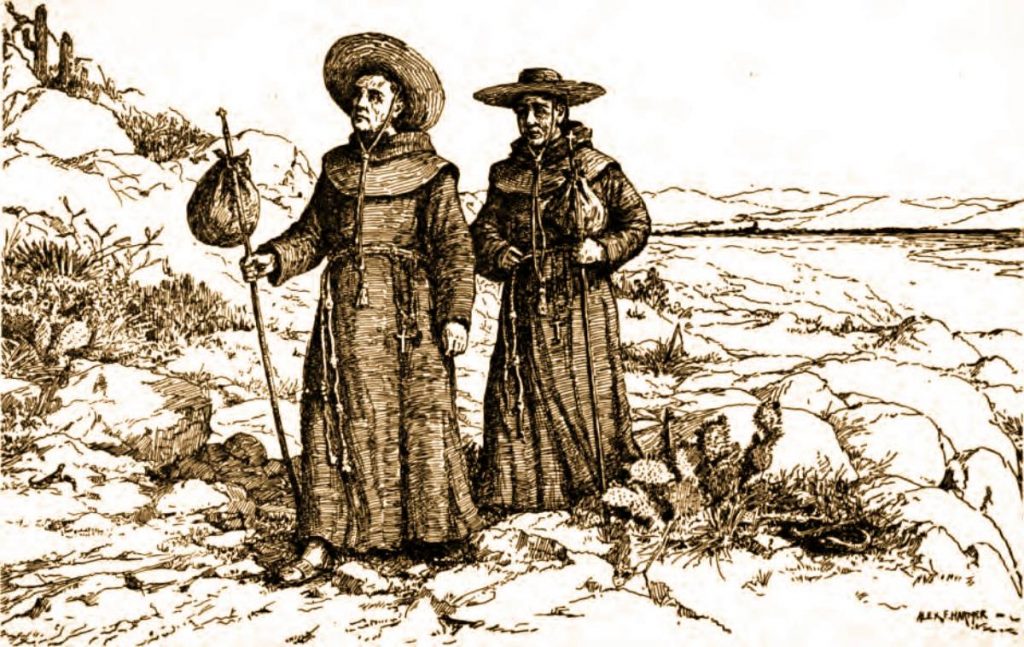
We have seen some of the key factors in the growth of Iberian Catholicism in the American colonies. The evangelistic methods used and the strategies for ecclesiastical structures were effective to sustain growth over time. I have argued that promoting mission as intercultural reconciliation among the Iberian diaspora requires a reckoning with its Christian foundations, renouncing supersessionism and building upon indigenization. Supersessionism was crucial during the early modern phase of Iberian missions and contributed to the cultures that form the Iberian diaspora today. This is true even for those who do not profess Catholic faith because the church’s influence on the Iberian cultures is unavoidable. But I contend that Iberian Catholic legacy should not be rejected but built upon. I have emphasized the value of the indigenization that occurred in the early phase of Catholic missions in the Americas. This indigenization emerged from the openness of some missionaries and some indigenous peoples to a new form of Christianity. Perhaps most of the missionaries saw native cultures as contributing nothing of value to Christian faith and practice. It is likely that most of the indigenous communities of the American colonies would describe their experience as being dispossessed, forcibly converted, and reinvented by colonial masters. 

I believe the primary impetus for the darkest elements of Iberian Catholic missions in the Americas was supersessionism. White Europeans appropriated the ancient messianic hope of the Jewish people, a dispossessed people powerless to oppose this offense. While it is true that Jesus fulfilled the promise that Israel would bless all nations, he never intended to start a new religion. Supersessionism presents Christianity as a universal message of salvation through faith in Jesus’ sacrifice for the sins of humanity. Iberian missionaries were correct in communicating the gift of salvation in Christ, but they erred in embodying the vision of the one new man. The message of reconciliation required the role of Israel as God’s chosen people so that no other nation could claim supremacy in the Kingdom of Christ. It was the exclusion of the special identity of Israel in salvation history that laid the grounds for Christian white supremacy. And this toxic vision fueled and justified the terrorizing colonial project. 

I believe that the heirs of Iberian Catholicism and the institutional forms that still exist should not be rejected but built upon. The indigenizing phenomenon is a wonderful part of Iberian Catholicism and should be celebrated. Mission as intercultural reconciliation is a vision that can honor the legacy of Iberian Catholicism. My hope is that the one new man vision can attract a new generation from the Iberian diaspora to the Spirit’s work today. By honoring Israel as the elder brother, the churches of every Gentile culture can find their place as part of the fulfillment of the one new man. This is the mystery Paul referred to: 

In reading this, then, you will be able to understand my insight into the mystery of Christ, which was not made known to people in other generations as it has now been revealed by the Spirit to God’s holy apostles and prophets. This mystery is that through the gospel the Gentiles are heirs together with Israel, members together of one body, and sharers together in the promise in Christ Jesus. (New International Version, 2011, Eph. 3:4-6) 

Supersessionism and Indigenization in Iberian Christendom, pt 5

As explained earlier in this research, my focus is to promote mission as intercultural reconciliation (MIR). In this series of texts, we have seen how the Catholic Church and the Iberian states mutually established each other’s legitimacy in the colonizing project. And this legitimacy stemmed from the spiritual prestige attributed to both. More than in any other European states, the occupation of high ecclesiastical positions validated the ruling elites of Spain and Portugal. The early colonial era was a time of Spanish and Portuguese exceptionalism (Yun-Casalilla, 2019). The Spanish nobility became the center of European Catholic nobility and its marital market. The Iberian colonizers were exceptionally good at reproducing political structures wedded to Catholicism in the American colonies. And aspects of the ecclesiastical structures that emerged in these colonies both inhibited and promoted the indigenization of Latin-American Catholicism (Yun-Casalilla, 2019). 

Although the Protestant lands also adhered to supersessionism, the fragmentation into several churches meant that they could not represent the “people of God” like Spain and Portugal did. Therefore, proponents of mission as intercultural reconciliation in the Iberian diaspora today face a specific type of supersessionist legacy. The Anglo-Saxon and Continental European Protestantism developed a supersessionism expressed primarily in doctrine. Protestants hammered out supersessionist ideology in centuries of polemics against the Jewish foil. But the Iberian supersessionism didn’t depend primarily on theological argument, but on the prestige and authority of the Catholic Church.

The fact that this prestige had been wounded during the Protestant Reformation gave a particular stridency to Iberian Catholicism’s supersessionism. And the culmination of the Reconquista against the Moors in 1492 strengthened the Iberian Catholic kingdom’s claim to primordial representation of the people of God. The European castles of the Medieval era – most of which were Catholic – have been considered the greatest artistic accomplishment in human history (Hoje Falamos de Notre-Dame, Não Do Nosso Senhor – Contra-Corrente, n.d.). Therefore, proponents of MIR must recognize the prestige of Catholicism in the collective imagination of the Iberian diaspora. This problematizes confronting the cultural appropriation by the West of an ancient Semitic folk religion. The ancient messianic hope of the Jewish people was seized, universalized, and institutionalized by what became European Christendom. Although the message was universal, i.e., for all peoples, white Western Europeans were the idealized heirs called to catechize the nations into Catholic culture. 

But despite supersessionism, there is much evidence that the Spirit of God was at work in the Iberian Catholic missions in the Americas. Natives were groomed for clerical functions and the task of evangelism (Hsia, 2017). And perhaps by targeting elites in these efforts, indigenous agency in the development of theology and worship was fostered. At the top of the Catholic hierarchy the theological premises of supersessionism validated the supremacy of the white European colonizer. But at the grassroots level, the experience of most indigenous members of the missions the experience of Catholicism was predominantly native not Spanish or Portuguese. The translation of Scripture into native languages using the printing press was intended to regulate the communication of the Catholic message. However, what ended up happening was the production of native Christian texts with variant versions of biblical motifs and narratives (Hsia, 2017). 

Proponents of MIR in the Iberian diaspora can draw from the history of indigenous agency in the Americas. Unconventional teachings and practices should not be seen as resulting from an inability to understand Christian doctrine, or a desire to distort it. Rather, we should honor the helpful ways the natives reinterpreted biblical content to suit their needs. The fact that many natives found refuge from Iberian conquistadores should also be considered (Sarreal, 2014). The missions were built through a collaboration of various religious orders and native agency. By the 18th century the missions consisted of multi-generational residents steeped in this way of life. Promoting MIR among Latin American Catholics today requires understanding the two sources of the mission culture that develop. Both the missionaries and the indigenous peoples made biological, technological, organizational, and theological contributions (Sarreal, 2014). It can be argued that without the missions indigenous language and customs would have been eradicated by Iberian colonization (Sarreal, 2014). 

I have discussed the disastrous effects of disease and the imposition of social norms that violated indigenous cultures, particularly among nomadic indigenous communities (Jackson, 2015). This testimony should inform proponents of MIR regarding the damage a supersessionsist evangelistic supremacy can cause. In some contexts, the reconciliation of cultures faces a shorter “gap”, perhaps illustrated by the more fruitful reception of the gospel among the sedentary indigenous communities. But MIR practitioners must recognize when the space between cultures requires relatively greater time, patience, and Spirit-led ingenuity. 

We have also seen how indigenous resistance to evangelization fueled the passions of missionary efforts in mostly negative ways (Rivett, 2014). Opposition to the gospel was interpreted as evidence of demonic influence instead of resistance to incarceration in reducciones (Rivett, 2014). MIR offers a vision of Christian witness that seeks to see the operation of the Spirit in other cultures, even in other religions, according to the promise of the witness of the Spirit throughout the earth (John 16:8-11). 

We have seen research indicating the depth and vibrancy of scientific, technological, geographical, and anthropological work being done on the Iberian Catholic missions in the Americas (Rivett, 2014). This has been posited as contradicting the center-periphery dichotomy between European urban metropolis and primitive rural colonies (Rivett, 2014). MIR appreciates this motif in the history of missions as it engages the reversal of roles in world Christianity. MIR advocates should avoid the center-periphery perspective that has categorized much analysis of colonial missions. This caricature has omitted the agency and contributions of the majority indigenous membership of the missions. There was much oppression and subjugation by missionaries towards indigenous peoples. But the missionaries also arrived during a time of liminal turmoil among the indigenous cultures of the Americas.

Again, we must ask ourselves what the fate of these communities would have been if Iberian colonizers were not accompanied by Catholic missionaries? The point here is that MIR proposes a view of the global work of God that breaks forth across the globe. The Spirit’s work has consistently upended the status quo of Christian predominance and leadership on the world stage. MIR is flexible regarding national loyalties and is primarily concerned with identifying where the Spirit is at work and collaborating with it. When the center of the Spirit’s most vibrant activity shifts from the metropolis to the “periphery”, MIR is ready to learn from new cultural loci of Christian leadership. 

Lastly, the effectiveness of the missions’ organization of space, surveillance, and communication can be seen as either oppressive (Foucault, 1986) or cultivating. MIR recognizes that Christian doctrine has been denounced as a means for governing the soul through the rite confession and a consciousness of the all-seeing eye of God (Foucault, 2003). MIR rejects all forms of Christian surveillance and management which characterizes “ministry” that seeks to exploit and dispossess the cultural other and occupy their land (Zavala-Pelayo, 2020). On the other hand, we see in the story of Iberian missions in the Americas the careful planning of communities that had a sort of beauty. Can we say that the reducciónes were beautiful? We have seen accounts of the carefully planned streets and blocks, each house with its own orchard and garden, the house of the priest, the farmlands, and livestock spaces (Zavala-Pelayo, 2020). We have seen the vast networks of communication, map making, and land administration the missionaries promoted. MIR does not consider all forms of organization and structure in evangelistic efforts as oppressive. God can call members of his church to cross national and continental frontiers to bless other peoples in His name. This cross-cultural witness and service can include administrative and governmental work, if it defers to local authority. MIR seeks to act as a guest enjoying the hospitality of the host people of the land, which does not preclude helping build institutions of governance.

References

Foucault, Michel (1986). Of Other Spaces. Diacritics. 

Foucault, Michel (20030. Abnormal. Lectures and the College de France 1974-1975. London: Verso.

Religious transformations in the early modern Americas / edited by Stephanie Kirk and Sarah Rivett. (2014).

Sarreal, Julia J. S. (2014). The Guaraní and Their Missions: A Socioeconomic History. Stanford University Press

Yun-Casalilla, Bartolomé (2019). Iberian World Empires and the Globalization of Europe 1415–1668. Palgrave Macmillan

Zavala-Pelayo, E. (2020). Religion and space in colonial South America: A technology of geo-political rule and terrestrial-spatial subjectivity in the Jesuit missions of the Banda Oriental. Religion50(4)

Supersessionism and Indigenization in Iberian Christendom, pt 4

The Vision of Human Flourishing and the Agency of the Colonies

The science of geography emerged in the early modern period during the emerging new European empires. The field of chorography developed in which the inhabitants, climate, and vegetation of a specific geographical location are studied. Such research provided the level of detailed knowledge necessary to “support imperial power over a distant territory, varied and extensive” (Rivett, 2014). The science of geography was also essential to Spain’s American colonies, intimately connected to the catechization and subjugation of native peoples. Maps and descriptions of the Amazon Basin composed by Jesuits demonstrate the inseparable connection between Catholic missions and imperial conquest (Rivett, 2014). 

The relationship between the Iberian Crowns and emergent colonial governments is often depicted through a center-periphery dichotomy, between metropolis and colonies (Rivett, 2014). This view of a fixed opposition portrays “asymmetrical power relations between complex political and economic structures in the core, and weak or nonexisting states in the margins”. Recent scholarship has portrayed the situation of Spanish and Portuguese colonies in the Americas differently, identifying multiple domestic centers of power with networks connecting to peripheries. With this has come the recognition of “internal regional differentiation” and the development of “local agencies” (Rivett, 2014). 

The example of Quito is exemplary, which was depicted in writings of Spanish and Creole evangelists as “a new Rome, spreading civility to the margins and leading the spiritual conquest of its own periphery” (Rivett, 2014). Up to the late 17th century, many of the evangelizers were Creoles or Spaniards who had spent most of their lives in the American colonies. Many of these were also involved in scientific work in the areas of “botany, cartography, chorography, and geography, setting the stage for future scientific developments”. The ethnographic and geographic literature they produced prepared the way for a “renewed missionary enterprise”, going “Beyond the scientific and political interest in territorial definition and recognition, these texts spoke of the possibility of spiritual conquest and redemption”. Thus, we can see that part of the impetus for the spread of Iberian Catholicism was a vision of flourishing that coupled spiritual growth with political and scientific progress (Rivett, 2014).

Recent research also indicates that the American missions of the early modern era were initially imagined as “transitional way stations to ‘civilization’, not as enduring settlements” (Bamji, 2013). The missions generally developed in the maelstrom of uprooted communities in flight caused by colonialism. Thus, Christianity in the Americas emerged in a provisional state, becoming identified principally with unsettling, upsetting, and disordering. If the indigenous peoples being dispossessed were moving towards a mission town this was interpreted as “acceptance of the Christian acculturation project”. And if these communities moved away towards the hinterlands, this was seen as a rejection of the gospel (Bamji, 2013). 

            The traditional historical depiction of the missions has been one of invasion where peaceful native environments were disrupted. But recent scholarship argues that the missions were established at a time and place of convulsion and uprooting of indigenous communities caused by colonialism. This perspective is problematic in that it separates state colonialism from religious evangelization. But it stands to reason that      the missions were established during a liminal period of turmoil and the extraordinary movements of communities. Formerly historians primarily described missions as building stark boundaries between cultures. But today some argue that missions built or extended “cultural bridges” (Bamji, 2013This line of reasoning does not make light of the violence that occurred during this meeting of cultures. But an attempt is made to “look beyond forceful imposition” to discern other means by which the American missions operated. Some have posited that the missions “pulled together overlapping networks of spiritual practitioners”, and advanced “shared intangibles such as music, language, heroic ideas, dreams, and even iconoclasm” (Bamji, 2013). Thus, these religious communities emerged as an amalgam of colonial and indigenous contributions. 

The Effectiveness of Organization of Space, Surveillance, and Communication

Michel Foucault (1986) referred to Iberian Catholic missions in the Americas as “heterotopias” that represented a “contestation of the space” in which the indigenous peoples lived. He described the missions as “absolutely regulated” sites “in which human perfection was effectively achieved”. Foucault (2003) described this “Christian pastoralism” as a means for governing the soul which developed into a model of government from above and self-government from within. The friars were obligated to know the actions of their sheep via confession, which in turn taught the sheep to govern their actions since they would become known (Foucault, 2003). And above both shepherd and sheep watched the all-knowing eye of God. 

Zavala-Pelayo (2020) describes the “hard and soft geo-political techniques” used by Jesuit missions in the Americas to promote the “universalist logic of a European Christianity that assumed as its primary task, literally, the making of a Christian orbis terrarum” (“lands of the world”). The soft geo-political techniques included the “management, control, and surveillance” of the territories, their exploration, protection, and grand-scale occupation. Much financial investment was made, for example, in protecting Spanish colonies in Argentina and Paraguay from renegade armies in the neighbor Portuguese colony of Brazil. The Jesuit occupation of vast territories was achieved through the systematic “reorganization of the local indigenous socio-politics, the restructuration of local spaces, and the creation of community spaces” (Zavala-Pelayo, 2020).

 The restructuration of space went beyond the establishment of the mission to the redistribution of spaces within the community, and donation of land to other missions (Zavala-Pelayo, 2020). The Jesuits said of the natives, “they keep their town very well organized, clean and tidy, and their homes in the same way”. The reducciónes were meant to be established near water with access to fishing, good lands with no risk of flooding and no mosquitos. These carefully planned sites were deliberately constructed in streets and blocks – one per every four Indians. Each house would have its own orchard and garden. And provision was made for the house of the priest, as well as farms for growing cotton, fruit trees and vegetables, and space for raising pigs, chickens and doves (Zavala-Pelayo, 2020).

The soft geo-political techniques the Jesuits used included the production and registry of socio-geographic knowledge, geographical counselling, and networked management (Zavala-Pelayo, 2020). The Jesuits helped settle frequent disputes regarding land borders and helped orient new settlements according to vast geographical records. A system of furlough existed so that the friars would return to mission headquarters after stipulated time periods on the field. There were very effective lines of communications between Jesuit missionaries regarding their needs, challenges, and help was able to be relatively quickly mobilized to their avail (Zavala-Pelayo, 2020). 

References

Bamji, A., Janssen, G. H., & Laven, M. (2013). The Ashgate Research Companion to the Counter-Reformation. Taylor & Francis Group. 

Foucault, Michel (1986). Of Other Spaces. Diacritics. 

Foucault, Michel (20030. Abnormal. Lectures and the College de France 1974-1975. London: Verso.

Religious transformations in the early modern Americas / edited by Stephanie Kirk and Sarah Rivett. (2014).

Zavala-Pelayo, E. (2020). Religion and space in colonial South America: A technology of geo-political rule and terrestrial-spatial subjectivity in the Jesuit missions of the Banda Oriental. Religion50(4)

Supersessionism and Indigenization in Iberian Christendom, pt 3

The Socioeconomic Situation and Scope of the Missions

The social upheaval for the hundreds of thousands of indigenous people who joined Catholic missions left is hard to overstate. They left “small, dispersed, and mobile communities to live in large, settled mission towns with Catholic priests” (Sarreal, 2014). For many natives, the missions were a refuge from the pressures associated with Spanish conquest. This is striking in light of the vigorous nature of the enculturation process the indigenous experienced on the missions. The Spanish Crown expected the missions to be means of forming the indigenous peoples into citizens of the empire. They were taught Catholic doctrine, European cultural practices, and settled agriculture. It is hard to think of a modern educational experience with such multidisciplinary, integrated, and all-encompassing scope (Sarreal, 2014). 

The Jesuits alone housed more than 265,000 natives in their missions by 1767 throughout the Americas (Sarreal, 2014). The Jesuit missions of the Rio de la Plata region in current-day Argentina and Uruguay are widely considered to have been “the most successful in terms of the number of indigenous inhabitants, economic prosperity, and historical importance”. To each mission, two Jesuits would be assigned, but these could never force hundreds or thousands of indigenous people to come or to stay. Instead, it was in the face of Spanish and Portuguese colonialism that multitudes of natives joined the missions. By the eighteenth century, most Guarani members of the Jesuit missions were multiple generation residents steeped in mission culture. This way of life consisted of “biological, technological, organizational, and theological systems that incorporated aspects of both native and Jesuit-inspired customs and practices”. In other missions that depended on immigration and new converts, such comprehensive cultural change was not the case. The eventual decline of the Guarani missions in the late 18th century was due to the Spanish Crown’s reforms and intervention. Even still, due to the agency of the Guarani these missions endured until the end of the colonial period (Sarreal, 2014). 

            Some historians have highlighted that Jesuit missions protected the Indians from being taken advantage of and maintained the Guaraní language and other parts of native lifestyle. But less positive analysts draw attention to Jesuits’ depriving the indigenous of freedom, forcing them to change their culture, physically abusing them, and exposing them to disease (Sarreal, 2014). Research shows that a communal structure of shared labor, collective ownership, and administration of mission property was the foundation of the “mission economy”. The native members did not generally work for pay, participate in commerce, or own their own property. Rather, they depended mainly of provisions from communal supplies and worked in groups or individually. Communal property was more prevalent, but a culture of shared ownership did not make the missions “proto-socialist societies” as has been proposed by some research. Inequalities did exist among the natives, and although a level of prosperity existed, the economic system was not efficient. Contributions from the Jesuit order were needed, as well as protection from the colonial authorities. These factors and the lack of competition led to a system that survived but could not thrive (Sarreal, 2014).

After the decline of the missions to the Guarani, reformers proposed exposing the natives to the colonial market economy to intensify acculturation and assimilation (Sarreal, 2014). The result was the destruction of the missions and the benefit of a privileged minority of natives, especially those who could use mission property. The more vulnerable who depended on the missions suffered while “skilled and well-connected” Guarani benefitted (Sarreal, 2014). While these developments represent the decline of the missions, they do not indicate a general decline of Iberian Catholicism in the Americas. For as the missions declined, a level of Christian enculturation had been achieved that laid the foundation for the Catholic church to be the majority religious (nay, exclusive) of Latin America. 

Different Indigenous Receptivity to Missions based on Sedentary Vs Nomadic

The culture of different indigenous peoples also affected how mission life developed, where it thrived and where it was harder to encourage. The encounter in 1492 and beyond between Iberian Catholic colonizers and native populations introduced the latter to Old World diseases and a “sea-change in the demographic patterns of the native populations of the Americas” (Jackson, 2015). Warfare, changes in subsistence patterns, competition between native and European men for sexual partners also contributed to severe population loss (Jackson, 2015). Significant variety existed between different populations where religious orders attempted to establish missions. The Jesuit missions of Paraguay in the Rio de la Plata region and the Chiquitos mission in current day eastern Bolivia were both established among sedentary 

Where missionaries attempted to establish missions among nomadic populations they encountered more difficulties. Imposing new sociological norms offended nomadic culture, such as different paradigms for division of labor by gender (Jackson, 2015). The more difficult process of implementing these changes among nomadic populations led missionaries to impose harsher forms of control. This led to increased conflict and disruption, which explains the different results of attempts at social and political organization among sedentary and non-sedentary indigenous communities. On the Paraguay and Chiquitos mission frontiers a “kinder and gentler form of colonial domination” was used (Jackson, 2015). 

Jackson (2015) draws attention to the difference made by the demographic situation of the different indigenous tribes evangelized by Iberian Catholic missions. Growth was sustainable where missions were established among demographically viable populations with high fertility and high mortality rates. In comparison, missions established among demographically weak populations such as nomadic hunters and gatherers were less sustainable. 

Some missions such as the Paraguay and Chiquitos offered a buffer zone from the more abusive elements of Iberian colonialism (Jackson, 2015). Jackson’s concludes that the epidemic sickness that devastated native populations was neither generated nor exacerbated at the missions. Rather, disease spread to the missions from other highly populous communities such as Buenos Aires. The mortality rates at the missions were like those of “virgin soil” epidemics of the time. In missions such as the Chiquitos that were more geographically isolated, the mortality rates were much lower (Jackson, 2015). 

The Incentivizing Power of Indigenous Resistance (on the Colonizer)

There was often violent indigenous resistance to evangelization in the peripheral areas of Spanish colonies in the Americas. This helped define missionaries as “warriors for Christ engaged in relentless struggle against defiant tribes and the demonic forces that in their view kept the indigenous population in darkness and resistance to Christianity” (Rivett, 2014). From the beginning of the Catholic missions in the Americas,

European Christian images and values made the missionizing friars the protagonists of a drama of male heroism clothed in virtue, selflessness, and utter dedication to the salvation of the souls of peoples about whom they had the greatest doubts. The purpose of evangelization was not martyrdom, even if some friars hoped for it, but when martyrdom occurred it was used to buttress the evangelization campaign and bring material and military support to the missions. (Rivett, 2014). 

Christianity was rebelled against and repudiated persistently during the 18th century (Rivett, 2014). 

            The opposition missionaries faced rose a central issue: what was the nature of the indigenous people? Some accepted Christianity and were therefore seen as different from those who didn’t. Those who rejected the gospel became the embodiment of the evil present in human nature, of those under the influence of demons. But the real reason was that hunters and gatherers in the Northern regions did not want to live in reducciones – towns set up under ecclesiastical or royal authority to facilitate colonization. It was when faced with the threat of losing their customary nomadic life and religious traditions that indigenous communties responded violently. In the late 16th century, the northern provinces known as New Spain were thought of as islands of Christian “civilization”. But they were surrounded by what were considered “barbarian” indigenous communities that resisted conversion (Rivett, 2014). 

The view that indigenous resistance was demonically empowered motivated evangelistic efforts. This was based on the Christian understanding of spiritual warfare, i.e., “You, dear children, are from God and have overcome them, because the one who is in you is greater than the one who is in the world” (New International Version, 2011, I Jn. 4:4). And the fear of nearby barbarous communities would not only motivate the friars to evangelize more fervently. The colonial settlers would see the conversion of neighboring indigenous communities as a necessity. The conversion of the natives would be sought scrupulously by settlers when possible, or alternatively through forced conversion and massacre. 

References

Jackson, Robert H. (2015). Demographic Change and Ethnic Survival Among the Sedentary Populations on the Jesuit Mission Frontiers of Spanish South America, 1609-1803: The Formation and Persistence of Mission Communities in a Comparative Context (Vol. 00016).

Religious transformations in the early modern Americas / edited by Stephanie Kirk and Sarah Rivett. (2014).

Sarreal, Julia J. S. (2014). The Guaraní and Their Missions: A Socioeconomic History. Stanford University Press

Supersessionism and Indigenization in Iberian Christendom, pt 2

The Symbiotic Relationship that Fueled Iberian Colonialism

Catholicism and European economic interests had been closely linked since the beginning of the early modern period. Portugal coupled religion and politics to sustain their conquests during its period of overseas expansion in South America, Africa, and Asia (Rivett, 2014). In the 16th century, the Spanish church was one of the largest in Europe, and obtaining clerical office increased the fortunes of the oligarchs who lived off the sale of jurisdictions, noble titles, unfarmed lands, rents, and municipal taxes (Yun-Casalilla, 2019). The Austrian and Spanish branches of the Habsburg monarchs were traditionally close, but there was increasing doubt among policymakers in Madrid regarding the value of the Viennese connection (Storrs, 2006). The Spanish Habsburgs began to see their foreign allies as “self-seeking and unreliable” (Storrs, 2006). At times the Austrian Hapsburgs used the church as an outlet for the expansion of their power, despite opposition from the Spanish Crown. Thus, the church was increasingly turned into an institution linked to economic power struggles (Yun-Casalilla, 2019). 

The Iberian colonies in the Americas were an essential part of the rise of ecclesiastical institutions which received streams of donations. These resources were not primarily designated from church coffers but solicited from the faithful based on a religious rationale for colonization (Yun-Casalilla, 2019p. 184). It was an enormous territory but the church expanded quickly through religious orders such as the Dominicans, Franciscans, Hieronymites, and Jesuits most of all. In 1543, the Spanish Crown gained complete power to establish episcopal jurisdictions in their colonies and eventually to control ecclesiastical appointments. The spiritual capital and prestige of both the Spanish Crown and the Catholic church mutually benefited from this partnership. In particular, the identification of the church as a bastion against Protestantism moved the Catholic faithful to contribute to things like the Crusades. The Spanish Hapsburgs imposed a confessional character upon their dominions, based on being heirs to both the empire of Charlemagne and their liberation of the Iberian peninsula from the Moors (Yun-Casalilla). 

In Spain and Portugal, the occupation of high ecclesiastical positions legitimized the ruling elites more than in any other European states (Yun-Casalilla, 2019). This moral economy produced Spanish and Portuguese exceptionalism. The Spanish nobility became the “hierarchical center of the European Catholic nobility and its marital market”. Whereas the Protestant lands after the thirty years war saw the progressive fragmentation of their part of Christendom into a variety of churches, the Catholic lands remained united under the pontificate of Rome (Yun-Casalilla, 2019).

The Portuguese and Spanish societies were exceptional in their social ability to “reproduce their political structures” (Yun-Casalilla, 2019), which depended on Iberian Catholicism. The Church was an integral part of the heart of the Iberian monarchies, it “served not only to justify empires but also the system for the transfer and mobilization of fiscal and military resources”. Whereas religious fractures led to alternative forms of the state in England and the Netherlands, religious orthodoxy in Iberian kingdoms remained fundamental, providing the framework “for the forms of allocation of productive resources” (Yun-Casalilla, 2019). 

As colonial societies developed, important changes in ecclesiastical organization occurred in the Americas, the zone of greatest Spanish presence. These colonies became full of parishes, ecclesiastical councils, and archbishoprics to which important sources of income were allocated in the form of land, tithes, and even industries. Organizations of Catholic laity such as charitable foundations, piety projects, and confraternities were influential, in addition to the expansion of religious orders (Yun-Casalilla, 2019). 

These power structures were modeled on Iberian society and were a force against the indigenization of American Catholicism (Yun-Casalilla, 2019). But at the same time traditional indigenous beliefs were mixed with Catholic practice to a high degree. And it was religions’ link to the mainstream population that gave it it’s “stabilizing power upon the social system”. The church was key in creating and sustaining social order amid great internal differences. Thus, Iberian Catholicism in the Americas had the double-boosting effects of a strong colonizer infrastructure coupled with much incorporation of indigenous beliefs (Yun-Casalilla, 2019). 

The Emergent Clerical Order – Fervency and Contextualization

In a theoretical sense, the fervor of Spanish missions to the Americas came from Counter Reformation ideology out of Rome. But in a practical sense the zealous nature of these missions drew from eight centuries of warfare and struggle to reconquer the Iberian Peninsula from Islamic invaders, i.e., La Reconquista (Hsia, 2017). As a result of this conflict, Spanish Catholicism became more radicalized in its religious fervor, becoming less tolerant and more focused on orthodoxy and reform. And the concern for orthodoxy went beyond Jews and Arabs, the clergy were also under pressure due to prevalent laxity (Hsia, 2017). 

Church leadership was divided into regular clergy and the secular clergy, the former are members of a religious order who live according to a rule while the latter are priests living in the general society (Louth, 2022). In general, the secular clergy focused on administering the religious life of the Spanish colonists and the regular clergy engaged the task of evangelizing the natives (Hsia, 2017). While the secular clergy answered to the Crown, the regular clergy answered to Rome. During the reconquest, the regular clergy had become an important force in re-evangelizing territories. The first Spanish missionaries to the Americas were characterized by a vision of evangelism that emphasized “austerity, simplicity, and a preach-by-your-works ideology”. Many embraced millenarian eschatological views that believed the evangelization of the indigenous peoples of the Americas would usher in Christ’s return. Over time, the regular clergy became privileged and powerful. This generating competition with the secular clergy, who would eventually affirm their dominance during the colonial period (Hsia, 2017). 

The members of the religious orders, friars, had planned to groom natives to be trained as clergy for the task of evangelization. Their strategy was to begin with the elites so that these in turn would influence the general population (Hsia, 2017). But the result was not exactly what the friars wanted, the population was evangelized but the result was a Catholicism mixed with indigenous beliefs and practices. The focal point for the work of the friars was the missionary schools where small books with pictures were used to catechize the illiterate. The instruction method of the early years has been described as “an eclectic tapestry of images, song, and oral mediums”. The missionary schools taught natives in different groups with different instruction according to their class in indigenous culture. The native elites received training preparing them to teach their fellow natives, take confession, do administrative tasks, and preach (p. 29). These native church workers and also helped teach their language to the friars. In sum, it can be said that for the native population the experience of Catholicism was predominantly native not Spanish (Hsia, 2017).

Although initially controversial, eventually the translation of Scripture and liturgical texts into native languages was embraced and thrived (Hsia, 2017). Regions where translation and distribution of sacred literature didn’t occur saw inferior church growth. Other regions saw growth spurred using printing presses to distribute literature. Indeed, “The printing press played a key role in the Counter Reformation for both Protestants and Catholics in educating their respective folds. In Spain and its American colonies, the printing press became a means to regulate the communication of the Catholic message (Hsia, 2017). 

Soon however, the natives did begin producing their own Christian texts with variant versions of biblical motifs and narratives (Hsia, 2017). But the emergence of unorthodox should not necessarily be attributed to indigenous authors’ inability to understand the Christian doctrine. Nor should we assume that unorthodoxy was an  intentional form of resistance or blatant rejection of Catholicism. Rather, these unconventional teachings are best understood through the lens of preexisting native practices. Numerous examples exist where the natives reinterpreted historical events or biblical stories in ways that best suited their present needs” (Hsia, 2017). The indigenous peoples of modern-day Mexico adapted their engagement with Christianity to meet personal needs and desires that were fluid. A similarity can be drawn between these attitudes and behaviors and those of many Christians in the West today. Some native Christians added things to conventional religious practice, others subtracted from it what was deemed unneeded. Yet such modifications should not seen as “defiance” or  “rejection” by those who engage in them since most would still define themselves as “good Christians.” (Hsia, 2017). 

References

Hsia, Ronnie. P. (2017). A companion to early modern Catholic global missions. Brill. 

Religious transformations in the early modern Americas / edited by Stephanie Kirk and Sarah Rivett. (2014).

Storrs, C. (2006). The resilience of the Spanish monarchy, 1665-1700 / Christopher Storrs. Biola Library ebooks.

Yun-Casalilla, Bartolomé (2019). Iberian World Empires and the Globalization of Europe 1415–1668. Palgrave Macmillan

Supersessionism and Indigenization in Iberian Christendom, pt 1

Introduction

I am a missionary with 30 years of service in the Iberian diaspora world. I grew up in the majority-Hispanic East San Fernando valley of Los Angeles county. I then worked in urban missions in predominantly Hispanic neighborhoods of Los Angeles before marrying a Brazilian and serving in that nation for 16 years. I currently live in Portugal and my contextual focus includes Spain. I consider myself someone called to the Iberian diaspora, by which I refer to Spain, Portugal, the nations of Latin America, and their immigrant communities worldwide. Such a broad scope of service may appear ostentatious or overstretched. But over the years, my work has transitioned from practitioner to theoretical and I have found that my social science research – most significantly in Brazil and Portugal – leads to implications relevant to the Iberian diaspora described above. I, I am interested in sociological phenomena that impacts both the colonized and colonizer in the Iberian cultural matrix. 

The practical aspect of my service is focused on Christian ecumenism. As a US-American serving in majority Catholic contexts for most of my missionary career, my primary goal is to serve the predominant church rather than try to convert its members away from their rich tradition. As such, Catholic studies are central to my work. I also work toward interfaith dialogue in ways that preserve traditional Christian witness while correcting how this witness has been distorted in the church’s conduct towards other religious communities. I have a passion to discover and foster ways that different religious communities can partner together in learning and serving the common good. 

I promote mission as intercultural reconciliation, hereafter referred to as MIR. This proposal is based on the apostle Paul’s declaration regarding the work of Christ: 

For He Himself is our peace, who made both groups into one and broke down the barrier of the dividing wall, by abolishing in His flesh the enmity, which is the Law of commandments contained in ordinances, so that in Himself He might make the two into one new man, thus establishing peace, and might reconcile them both in one body to God through the cross, by it having put to death the enmity. And He came and preached peace to you who were far away, and peace to those who were near; (New American Standard Version, 1995, Eph. 2:14-17)

The word reconcile here denotes “‘to change, exchange’ (especially of money); hence, of persons, ‘to change from enmity to friendship, (…) and in this text the phrase to reconcile completely is used, a stronger form meaning ‘to change from one condition to another,’ so as to remove all enmity and leave no impediment to unity and peace”. Used in this text, it signifies “the ‘reconciliation’ of believing Jew and Gentile ‘in one body unto God through the Cross’” (Reconcile, Reconciliation – Vine’s Expository Dictionary of NT Words -, n.d.).

Some translations use the phrase new humanity, which I appreciate as being more gender inclusive. However, I choose to use the male-specific term because of its compatibility with the biblical concept of Adam expounded in the New Testament referring to the redemptive work of Christ (Rom. 5:12-20). I feel that “one new man” speaks better to what I hope to express regarding intimate particularity of human culture. “One new man” feels more personal and embodied to me than “humanity”, but I hope my reader understand that by “man” I infer the plenitude of male-female expression in human culture. 

Unfortunately, the vision of one new man was thwarted by a supersessionist theology that abolished the Jewish expression in the church. This biblical interpretive framework affirms that, 

the promises and commitments of God would no longer apply to Israel because it had not recognized Jesus as the Messiah and the Son of God but had been transferred to the Church of Jesus Christ which was now the true ‘new Israel’, the new chosen people of God (Cunningham, 2017). 

The prophetic symbol of the one new man formed of formerly alienated peoples was substituted by a vision of a church united by the nullification of cultural identity. Thus, the instinct of catholicity was born out of which came emphases on episcopal lineage and uniformity of doctrine and practice. The history of Christianity that ensued has been one of serial fragmentation, most significantly in the post-Reformation era. With each separating group claiming to represent the purest expression of Christian culture, devoid of human infiltration and contamination. 

The purpose of this series of articles is to research the key factors in the growth of Iberian Catholicism in the “American” colonies, named after the Italian explorer who first posited that Columbus had discovered a separate continent (Allen, 2016). I explore elements that led to Catholic Christianity becoming the majority religion of the Spanish and Portuguese colonies – what evangelistic methods were used and how the church was structured institutionally to sustain growth over time. My interest in the topic stems from the significant impact of supersessionism on this crucial phase of Catholic missionary history and how it shaped the Iberian diaspora. Through the missionary efforts of Jesuits, Franciscans, Dominicans and others during the Counter Reformation, the indigenous civilizations of what came to be known as the Americas were forever changed. The thesis of this paper is that promoting mission as intercultural reconciliation among the Iberian diaspora requires a reckoning with its Christian foundations, renouncing supersessionism and building upon indigenization. I propose that what emerged from Iberian Catholic missions in the American colonies was a mixture of these two phenomena, the first toxic and the second redemptive. I refer to the foundations of Iberian Christianity rather than its legacy because my focus is the early modern period of colonization in the Americas. My aim here is not to contemplate the legacy of the entire history of Iberian Christianity. 

I explore the symbiotic relationship between Iberian colonialism and the Catholic Church. I investigate what motivated Catholic missionaries and the agency of the indigenous peoples in clerical service and the development of the missions. Variation in the reception of the missions by sedentary versus nomadic indigenous communities will be examined. And the incentivizing power of indigenous resistance on then evangelistic zeal of missionaries will be referenced. We will see the agency of the indigenous members of the missions in science and technology, as well as the effectiveness of missionary administration. I conclude the paper with a brief commentary on the implications of my discoveries for my service promoting mission as intercultural reconciliation among the Iberian diaspora.

References

Allen, E. (2016, July 4). How Did America Get Its Name? | Timeless [Webpage]. The Library of Congress. https://blogs.loc.gov/loc/2016/07/how-did-america-get-its-name

Cunningham, P. A. (2017). The Sources behind “The Gifts and the Calling of God Are Irrevocable” (Rom 11:29): A Reflection on Theological Questions Pertaining to Catholic-Jewish Relations on the Occasion of the 50th Anniversary of Nostra Aetate (No. 4). Studies in Christian-Jewish Relations12(1), 1–39. 

How Protestant Missions Contributed to Democracy and Education in Africa 

A constructive response to critiques of Colonial Era Missions

Missiologist Robert Woodberry (2004) lists the emergence of religious pluralism, democratic theory, civil society, mass education, the public sphere, economic development, and reduction of corruption as mechanisms that explain Protestantism’s tendency to promote democracy over time (p. 48). These phenomena derive from the foundations in Luther that Protestants are independent from the episcopal ecclesiastical structures of the Catholic and Orthodox churches, the doctrine that a believer receives saving faith through individual appropriation of Scripture, and a tendency towards independence from political authorities (Woodberry, 2004, p. 48). The lack of a method for resolving doctrinal divergencies in Protestantism resulted in a pluralism that fostered the mutual independence of church and state which is essential to democracy (p. 50). Since there can only be one state church, Protestant denominations without political privilege had to struggle to obtain and preserve their rights and encourage voluntarism and giving among the congregants (p. 52). Education flourished under Protestant missions because all believers needed to read the Bible in their native languages (p. 53).

This is still reflected in the educational development of non-Western nations that received Protestant missions (p. 54). In comparison to Catholic missions that were connected to colonial powers, Protestants could more effectively fight for social justice, even if specifically motivated primarily for creating openness to evangelism (p. 56). Newer Protestant groups today are lay supported that tend to “develop and promote organizations, skills, and resources among non-elite citizens” which promotes civil society and leads to “stable democratic government” (p. 59).

Woodberry (2006) also argues politically independent missionaries moderated the harmful effects of colonialism. And positively, their work in the 19th and early-20th centuries still bears positive fruit in “levels of educational enrollment, infant mortality, and political democracy in societies” (p. 3). Although missionaries of the 18th and 19th century reflected to pervasive attitude of Western civilizational superiority, their critique of other societies was “cultural, not racial” (p. 4). They believed that the cultures they went to could be transformed the same way pre-Christian barbarian peoples were (p. 4). In education, missionaries “wrote and translated books, built buildings, and trained teachers, which made future educational expansions easier” having long-term effects (p. 6). Evangelical missionaries fought for religious liberty which ended up being extend to anti-missionary groups who developed “identifiable leaders, newspapers, extensive memberships, and cross-regional networks” which led to indigenous nationalism (p. 6).

It was not Enlightenment intellectuals that reformed colonialism, but field missionaries who had personal knowledge, vested interest, and a broad non-state power base (p. 10). It can effectively be argued that the negative effects of colonialism would have been much greater without the presence and activity of non-state missionaries (p. 11).

Comparisons of British and French colonies in Africa show that the former provided a basis for stable democracies while the latter’s legacy was authoritarian governments and internal strife (Palplant, 2014, p. 36). Extensive statistical analysis has demonstrated that missionaries were central to the development of key aspects of democracy such as inclusive education, printing, and grassroots nationalist mobilization (p. 38). A key indicator of a missionary legacy in postcolonial African nations is the level of involvement in nongovernmental organizations, which is much higher where Protestant missionary activity occurred (p. 39). The Protestant doctrine of the priesthood of all believers motivated literacy projects that brought old hierarchies down and fostered democracy (p. 41). Most of the early African independence movement leaders had been educated in Protestant mission schools (p. 41).

Impact of current research postcolonial critique of Christian Missions

Church history scholar Derek Cooper (2016) analyses the development of the church in Asia and Africa before Western colonialism. Cooper’s research motivates me to spread awareness of Christianity’s Eastern roots. At the same time, the demise of the churches of the East is a cautionary tale against the subtle dangers of political affiliation and the overt dangers of severe persecution. The Western church’s centuries of political privilege over a vast empire caused it to focus on catechization and hierarchy. The Orthodox churches of Europe and the East also affiliated with political powers but eventually in an extremely fragmented way.

Philip Jenkins (2008) effectively argues against a history of Christianity focused on Europe and the Mediterranean, recommending a return to the medieval maps of a Christian world as “three continents as lobes joined together in Jerusalem (…) the center of the world, the natural site for Christ’s act of self-sacrifice and redemption” (p. 13). And … sadly describes the degradation of Christian habitus which was not adopted by Constantine at his conversion. We can only imagine what Western Christianity could have been if he had done so (p. 266).

These observations make me open to new conceptions of Christian mission that display the glory and the shame of its legacy. However, I still believe in the missionary nature of the Christian faith and am hopeful that a motif of intercultural reconciliation can provide a more attractive vision in the 21st century.

References

Cooper, D. (2016). Introduction to World Christian History. IVP Academic.

Jenkins, Philip. (2008). The Lost History of Christianity: The Thousand-Year Golden Age of the Church in the Middle East, Africa, and Asia—And How It Died. Harper Collins.

Palplant D., Andrea (2014). The World the Missionaries Made. Christianity Today.

Woodberry & Shaw (2004). Christianity and Democracy: The Pioneering Protestants. Journal of Democracy, Volume 15, Number 2

Woodberry, Robert D. (2006) RECLAIMING THE M-WORD: THE LEGACY OF MISSIONS IN NONWESTERN SOCIETIES, The Review of Faith & International Affairs, 4:1, 3-12, DOI: 10.1080/15570274.2006.9523232

Generalizations About the Poor Overshadow Innovation and Agency

Lisa Cliggett’s Grains From Grass (2005) studies the Gwembe Tonga people of Zambia. This research reveals diverse socioeconomic strategies developed to deal with the complexity of globalization (p. 3). We see development among the Tonga as happening through labor migration, negotiating kinship paradigms of assistance, and religious practice. These forms of finding sustenance can be studied statistically looking at groups but are employed and altered by individuals. Indeed, the individualism demonstrated in various forms of socioeconomic self-preservation counter romantic Western notions of such societies being inherently collectivist and altruistic (p. 2). 

It may seem like a stretch, but this situation made me reflect on my own socioeconomic experience as a missionary from the West. I have spent most of my life outside Southern California where I was born, in two countries – Brazil and Portugal – where supporting myself and my family are much easier with my vocation than back home. Although I come from a Pentecostal tradition that emphasizes divine guidance and prophecy, I believe that my wife and my choice of location has been affected by economic realities. After 16 years in Brazil, my wife and I moved back to Southern California for 3 years but eventually moved on to Portugal. The cost of living in that part of the U.S. was a very real part of our decision to move. We could have stayed in the U.S. but our vocation as missionaries meant this would likely result in a loss of financial support. 

For most missionaries, donations are the main source of income, but increasingly other forms of financial sustainability are sought. This should be done with supporters’ knowledge to preserve accountability and not undermine the validity of a missionary’s appeal for donations. Again, I realize the great different in the Gwembe Tonga experience and my own, but the reality of individual agency versus oversimplified generalizations is shared. I feel that long-term missionaries today are not helped by being given only a few legitimate options for financially supporting their work. 

Cliggett (2005) promotes using a “framework of vulnerability that highlights difference in terms of a group’s resources and its ability to control those resources” that “forces us to develop a more complex vision” of such societies (p. 16). Again, I blush at trying to connect the economic situation of the Gwembe Tonga to my context in Portugal, but I do see some relevance. The Portuguese media constantly discuss the exodus of young people to other parts of Europe looking for better wages (Portugal at a risk of poverty below the EU average, n.d.). A tradesperson, for example, can make 3 or 4 times more in a country like France or Germany. However, diverse groups of immigrants to Portugal are thriving as they compare its economic opportunities to those of former Portuguese colonial nations which they come from (Monteiro, 2024). More recently, increased amounts of immigrants to Portugal are coming from South Asia, who find the country an easier port of entry than other European nations. 

At the same time, Portuguese economists constantly criticize the culture of nepotism and “amigismo” (closing economic circles among friends) as the prime source of its relative poverty and underperformance in Western Europe (Pimentel, 2021). There is no other nation I know in Europe that has an economy like Portugal’s in comparison to its powerful neighbors. As I think of my children’s economic future here in Portugal, I am forced to think of where there are thriving sources of innovation and opportunity. As I look around the metro area of Lisbon where we live, it is obvious that economic prosperity exists here. This is like my experience living in large cities of Brazil. The Brazilian media constantly spoke of the lack of economic opportunities in the nation in comparison to other countries. However, in these huge, teeming metropolises I was aware of millions of people who were finding a way to survive and often thrive. Cliggett’s work encourages me to look beyond the media portrayal of national economics which always makes money off bad news. As a missionary, I believe Cliggett’s work provides encouragement towards a rejection of negative economic stereotypes of the nations we serve. 

Now I will proceed gears to the second discussion prompt regarding gendered land ownership and accusations of witchcraft. I believe it is possible that Gwembe Tonga women may be accused as bulozi(witches) because of increased access to land inheritance from husbands. Elderly men are believed to engage in sorcery to “manipulate the supernatural world for human goals” (Cliggett, 2005, p. 131). Sorcery is believed to be the cause of sickness and death to their relatives (p. 134), and land inheritance disputes are common to so many cultures. Elderly men’s use of mystical powers sometimes backfires, resulting in witch hunts aiming to cleanse the community of evil and unfair practices (p. 136). Therefore, I think it is reasonable to assume that elderly women’s empowerment related to land makes them vulnerable to accusations of witchcraft like elderly men. 

References

Cliggett, L. (2005). Grains from grass: Aging, gender, and famine in rural Africa. Cornell University Press.

Pimentel, A. H., Marina. (2021, December 23). Maria José Morgado: “Cultura de impunidade, nepotismo e amiguismo tem feito de Portugal um país pobre e atrasado.” PÚBLICO. 

Portugal at a risk of poverty below the EU average. (n.d.). Retrieved October 9, 2024, from https://www.portugal.gov.pt/en/gc23/communication/news-item?i=portugal-at-a-risk-of-poverty-below-the-eu-average

Monteiro, C. (2024, April 16). Migração: Factos e Números 2024. EAPN. https://www.eapn.pt/centro-de-documentacao/migracao-factos-e-numeros-2024/