
Introduction
I am a missionary with 30 years of service in the Iberian diaspora world. I grew up in the majority-Hispanic East San Fernando valley of Los Angeles county. I then worked in urban missions in predominantly Hispanic neighborhoods of Los Angeles before marrying a Brazilian and serving in that nation for 16 years. I currently live in Portugal and my contextual focus includes Spain. I consider myself someone called to the Iberian diaspora, by which I refer to Spain, Portugal, the nations of Latin America, and their immigrant communities worldwide. Such a broad scope of service may appear ostentatious or overstretched. But over the years, my work has transitioned from practitioner to theoretical and I have found that my social science research – most significantly in Brazil and Portugal – leads to implications relevant to the Iberian diaspora described above. I, I am interested in sociological phenomena that impacts both the colonized and colonizer in the Iberian cultural matrix.
The practical aspect of my service is focused on Christian ecumenism. As a US-American serving in majority Catholic contexts for most of my missionary career, my primary goal is to serve the predominant church rather than try to convert its members away from their rich tradition. As such, Catholic studies are central to my work. I also work toward interfaith dialogue in ways that preserve traditional Christian witness while correcting how this witness has been distorted in the church’s conduct towards other religious communities. I have a passion to discover and foster ways that different religious communities can partner together in learning and serving the common good.
I promote mission as intercultural reconciliation, hereafter referred to as MIR. This proposal is based on the apostle Paul’s declaration regarding the work of Christ:
For He Himself is our peace, who made both groups into one and broke down the barrier of the dividing wall, by abolishing in His flesh the enmity, which is the Law of commandments contained in ordinances, so that in Himself He might make the two into one new man, thus establishing peace, and might reconcile them both in one body to God through the cross, by it having put to death the enmity. And He came and preached peace to you who were far away, and peace to those who were near; (New American Standard Version, 1995, Eph. 2:14-17)
The word reconcile here denotes “‘to change, exchange’ (especially of money); hence, of persons, ‘to change from enmity to friendship, (…) and in this text the phrase to reconcile completely is used, a stronger form meaning ‘to change from one condition to another,’ so as to remove all enmity and leave no impediment to unity and peace”. Used in this text, it signifies “the ‘reconciliation’ of believing Jew and Gentile ‘in one body unto God through the Cross’” (Reconcile, Reconciliation – Vine’s Expository Dictionary of NT Words -, n.d.).
Some translations use the phrase new humanity, which I appreciate as being more gender inclusive. However, I choose to use the male-specific term because of its compatibility with the biblical concept of Adam expounded in the New Testament referring to the redemptive work of Christ (Rom. 5:12-20). I feel that “one new man” speaks better to what I hope to express regarding intimate particularity of human culture. “One new man” feels more personal and embodied to me than “humanity”, but I hope my reader understand that by “man” I infer the plenitude of male-female expression in human culture.
Unfortunately, the vision of one new man was thwarted by a supersessionist theology that abolished the Jewish expression in the church. This biblical interpretive framework affirms that,
the promises and commitments of God would no longer apply to Israel because it had not recognized Jesus as the Messiah and the Son of God but had been transferred to the Church of Jesus Christ which was now the true ‘new Israel’, the new chosen people of God (Cunningham, 2017).
The prophetic symbol of the one new man formed of formerly alienated peoples was substituted by a vision of a church united by the nullification of cultural identity. Thus, the instinct of catholicity was born out of which came emphases on episcopal lineage and uniformity of doctrine and practice. The history of Christianity that ensued has been one of serial fragmentation, most significantly in the post-Reformation era. With each separating group claiming to represent the purest expression of Christian culture, devoid of human infiltration and contamination.
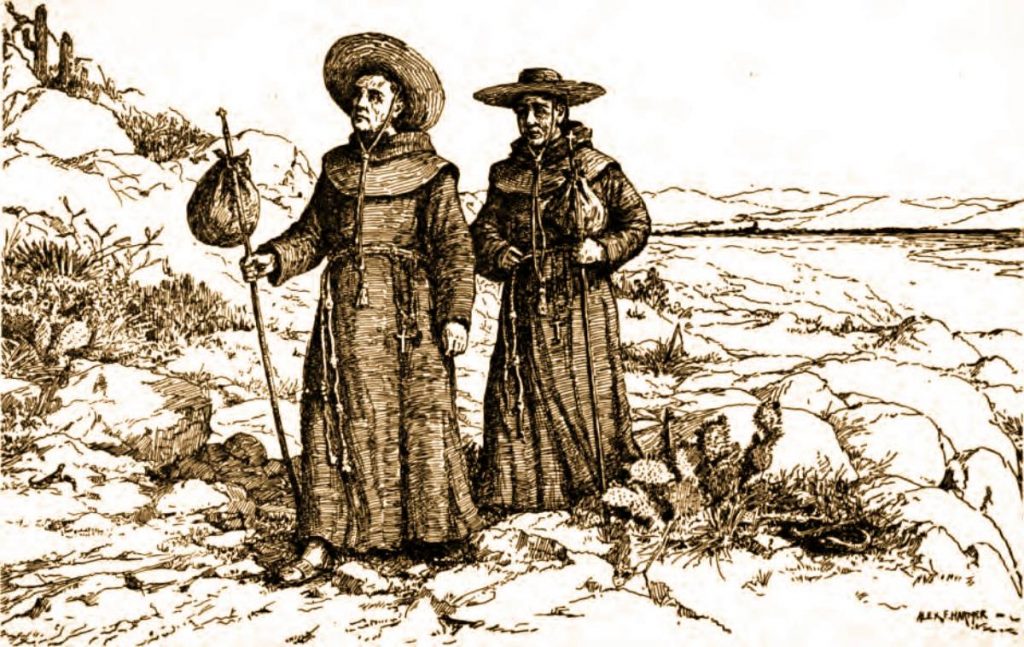
The purpose of this series of articles is to research the key factors in the growth of Iberian Catholicism in the “American” colonies, named after the Italian explorer who first posited that Columbus had discovered a separate continent (Allen, 2016). I explore elements that led to Catholic Christianity becoming the majority religion of the Spanish and Portuguese colonies – what evangelistic methods were used and how the church was structured institutionally to sustain growth over time. My interest in the topic stems from the significant impact of supersessionism on this crucial phase of Catholic missionary history and how it shaped the Iberian diaspora. Through the missionary efforts of Jesuits, Franciscans, Dominicans and others during the Counter Reformation, the indigenous civilizations of what came to be known as the Americas were forever changed. The thesis of this paper is that promoting mission as intercultural reconciliation among the Iberian diaspora requires a reckoning with its Christian foundations, renouncing supersessionism and building upon indigenization. I propose that what emerged from Iberian Catholic missions in the American colonies was a mixture of these two phenomena, the first toxic and the second redemptive. I refer to the foundations of Iberian Christianity rather than its legacy because my focus is the early modern period of colonization in the Americas. My aim here is not to contemplate the legacy of the entire history of Iberian Christianity.
I explore the symbiotic relationship between Iberian colonialism and the Catholic Church. I investigate what motivated Catholic missionaries and the agency of the indigenous peoples in clerical service and the development of the missions. Variation in the reception of the missions by sedentary versus nomadic indigenous communities will be examined. And the incentivizing power of indigenous resistance on then evangelistic zeal of missionaries will be referenced. We will see the agency of the indigenous members of the missions in science and technology, as well as the effectiveness of missionary administration. I conclude the paper with a brief commentary on the implications of my discoveries for my service promoting mission as intercultural reconciliation among the Iberian diaspora.
References
Allen, E. (2016, July 4). How Did America Get Its Name? | Timeless [Webpage]. The Library of Congress. https://blogs.loc.gov/loc/2016/07/how-did-america-get-its-name
Cunningham, P. A. (2017). The Sources behind “The Gifts and the Calling of God Are Irrevocable” (Rom 11:29): A Reflection on Theological Questions Pertaining to Catholic-Jewish Relations on the Occasion of the 50th Anniversary of Nostra Aetate (No. 4). Studies in Christian-Jewish Relations, 12(1), 1–39.
 davidjdawson