
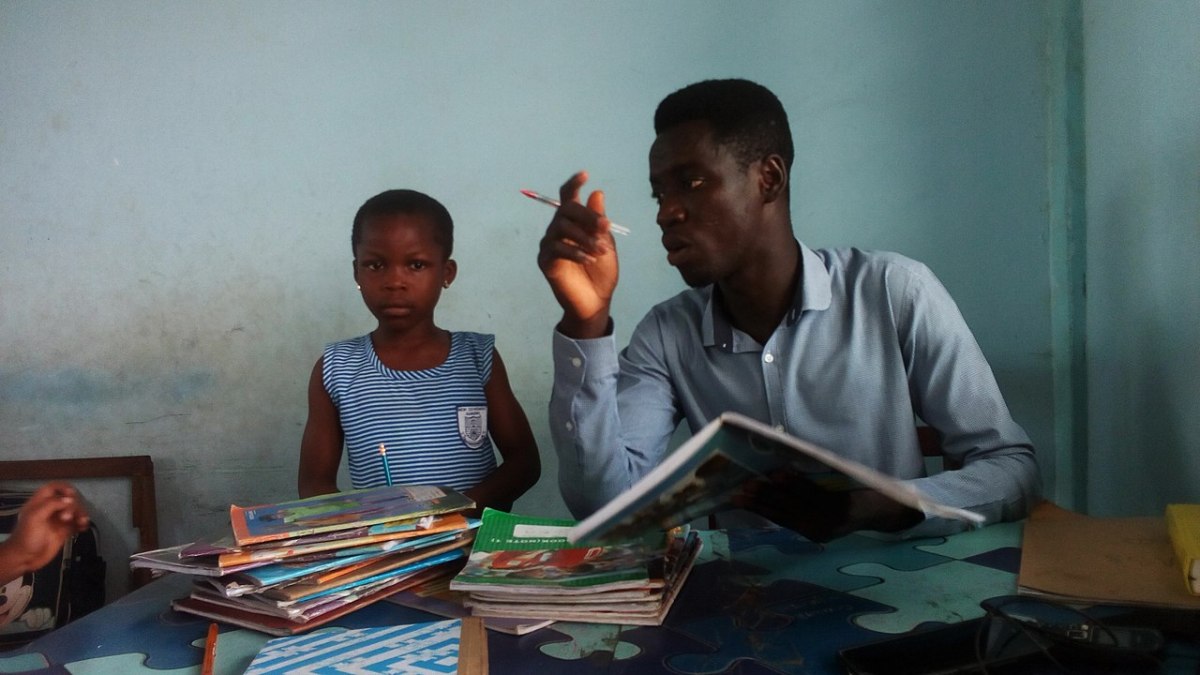
Challenges to teaching across cultures in contemporary analysis that I identify with
Missiologist Craig Ott (2021) states that initial excitement and curiosity on the part of students towards foreign teachers fades quickly but “the sojourner who perseveres” will develop deep relationships and cultural understanding (p. 7,11). One problem as I see it is that cross-cultural teachers are often required to do this kind of work almost purely on a sacrificial basis. In other words, idealistic and highly-motivated young teachers accept the call to cross-cultural vocation but end up disappointed. The teacher can stay overseas long-term with the prospect of marriage and family in a cultural and vocational no-man’s land. The missionary support base in the sending country becomes more relationally distant and the vocational culture on the field makes he or she a perpetual alien. If the teacher decides to return home, often the prestige and gratefulness of the Christian education culture is not what they expected. The teaching profession is very competitive for all candidates and a returning missionary may feel more outdated and outstripped by the “competition” versus feeling honored as a veteran cross-cultural practitioner.
I have had much success with the constructivist pedagogy, but I recognize the liabilities of “self-realization” being prioritized over “community responsibility” (Ott, 2021, p. 12). I have seen this both in my own pursuit of developing a career in Christian education as well as in my students. This predominant Western approach can be described as “privileging the individual learner over the collective, and promoting autonomy and independence of thought and action” (Merriam, 2007, p. 1). It seems that so many of us – I speak as a Gen-x 47 year-old – have been hindered by the lack of institutional loyalty we learned from the constructive approach. Perhaps I am drawing a connection here that is unwarranted. I refer to how the focus on the individual learner translates into a focus on independent development with expendable mentor and peer relationships. Indian educators have challenged the effectiveness of such modes of learning in their context (Seth, 2007). It is definitely problematic when Western modes of learning are proposed as axiomatic and universal, such as the ideal of the self-guided student preparing to become a self-made man or woman.
Most difficult and easiest aspects of adaptions for me if going into cross-cultural teaching situation and why
Ott (2021) lists several aspects of adaptations for teaching in a cross-cultural setting. At present, if I to teach in an unknown cultural context, the most difficult aspect of adaptations for me would probably be social adaptation (Ott, 2021, p. 59). I base this on the experience of teaching in environments where there was a high expectation for relational interaction outside the classroom. Take for example an invitation to teach for a week as a guest professor at a leadership training program, seminary, or conference. I can generally manage if I am expected to teach for 4-6 hours a day, and share meals with students/participants. However, if I am also expected to be available for individual meetings with throughout the week this can become overwhelming. When I was teaching in YWAM and Bible Colleges in Brazil, for example, I had to be prepared for a considerable amount of one-on-one meetings. As an introvert, I sometimes struggled – and still do – to maintain realistic boundaries so that I could be effective. I find it comical to compare this experience with similar teaching invitations I receive in Europe. When teaching in Germany and Holland I can generally expect to have considerable time to myself. I even plan to visit some sites, eat some local foods, and do some shopping because it’s likely I’ll have enough free-time.
I struggle to think of one of Ott’s (2021) aspects of adaptations that I would categorize as “easy”, because I see challenges in all four. However, over the years I have become more efficient at didactic adaptation and content adaptation (p. 59). The main reason for this, perhaps, is that as a missionary I have usually been teaching without a salary, or for a very small teacher stipend. For this reason, I have generally felt free regarding the improvisation of didactic method and instructional content. I hope this doesn’t reveal a lack of motivation on my part, although I’m open to that critique. What I refer to is that generally the only pressure to communicate a specific amount of content in a particular way was self-inflicted. When I was younger, I was excited to develop my understanding of content and come to a level of comfort in the teaching activity. Over the years of teaching, I have increasingly become more relaxed regarding covering all the content in the syllabus or module I am teaching.
Geneva Gay and Craig Ott in Dialogue
Professor Geneva Gay of the University of Washington developed the model of Culturally Responsive Teaching. Gay (2018) suggests that the “content and styles of learning” of a particular ethnic group in a society should be “consistently incorporated” in the classroom instruction and testing (p. 6). Gay seeks to correct the phenomena of teachers and students connecting “academic difficulties to their personal worth” (Gay, 2018, p. 8. Perhaps Ott’s (2021) approach could be described as seeing didactic, social, structural, and content models of education as a toolbox to draw from. Gay (2018) emphasized the “European and middle-class origins (deeply ingrained in the structures, ethos, programs and etiquette of schools” (p. 9). Eisenhart and Cutts-Dougherty (1991) describe this educational environment as “socially situated and culturally constructed”, creating “social barriers or cultural norms” that “define and limit the types and the amount of information” involved in teaching (p. 28).
Shade, Kelly and Oberg (1997) argue that “core cultural characteristics” are shared by members of an ethnic group, indeed, “enthicity and culture” constitute the underpinnings of behavior in general, which Gay (2018) picks up in her model of mitigating variables and expressive behaviors (p. 10). We can compare this with Ott’s (2021) assessment that novelty in intercultural teaching contexts often wears out fast and true fruit comes from deep long-term commitment (p. 7,11).
Gay’s argues that conventional teaching paradigms fail because they concentrate on what students from certain ethnicities and cultures don’t have and can’t do (p. 13). Ott’s suggestion that didactic, social, structural, and content aspects of teaching can and should be adapted contextually is not at odds with Gay’s (2018) proposal (p. 59) . Gay’s (2018) assessment that Western individualistic approaches to contextual adaptation fail (p. 14) is in agreement with Ott’s (2021) indictment of collectivist pedagogies that prioritize self-realization over community responsibility (p. 12).
Gay’s (2018) observes educational assumptions that capability or lack thereof in students is indicative of a general deficiency that will manifest other areas (p. 16-17). I can relate this to Ott’s (2018) observations regarding the emphasis of Western modes of education on individual learning, autonomy and independence (p. 12). The individualistic approach to education demonstrates the tendency towards specialization in the Academy. The ever evolving subdivision of academic disciplines and multiplication of new areas of study fragment the learning environment. The student is encouraged to specialize, and even in popular self-help publications the predominant emphasis ois on the discovery and maximization of individual strengths and abilities.
Finally, Gay’s (2018) comments on the limitations of standardized tests and grades in relation to cultural differences presents the paradoxical situation of immigrant students (p. 18). Immigrant students from Majority World nations are often taken out of the community dynamic that would normally provide them with a better learning situation. The linguistic, cultural, and educational adjustment is something I say my own children go through in immigrating from Brazil to the U.S. and then to Portugal. Ott cites criticism from Majority World educators regarding the deficiencies of Western approaches (Seth, 2007). However, it is still the case that immigrants coming to the West desire to thrive and be a part of that cultural context. I’m aware of the criticism in Europe, for example, that many immigrants only come to seek a better life for themselves whether or not that means becoming a productive contributor to the majority culture. However, research shows that the majority of immigrants to Portugal where I live sincerely seek to work and assimilate into the majority society (Já Poderemos Falar de Segurança e de Imigração?, n.d.).
References
Eisenhart, M., & Cutts-Dougherty, K. (1991). Social and cultural constraints on students’ access to school knowledge. In E. Hiebert (Ed.), Literacy for a diverse society: Perspectives, programs, and policies (pp. 28–43). New York, NY: Teachers College Press.
Gay, G. (2018). Culturally responsive teaching: Theory, research, and practice. (Lower Level LC1099.3 .G393 2018; Third edition.). Teachers College Press; Biola Library Catalog. https://search.ebscohost.com/login.aspx?direct=true&AuthType=sso&db=cat09700a&AN=blc.oai.edge.biola.folio.ebsco.com.fs00001149.5fa32307.b7c3.5027.b081.5fe7ee113c2a&site=eds-live&scope=site&custid=s6133893
Já poderemos falar de segurança e de imigração? – Contra-Corrente. (n.d.). Retrieved May 9, 2024, from https://omny.fm/shows/contra-corrente/j-poderemos-falar-de-seguran-a-e-de-imigra-o
Merriam, Sharan B. 2007. “An Introduction to Non-Western Perspectives on Learning and Knowing.” In Non-Western Perspectives on Learning and Knowing, edited by Sharan A. Merriam and Associates, 1–20. Malabar, FL: Krieger.
Ott, C. (2021). Teaching and learning across cultures: A guide to theory and practice. (Lower Level LC1099 .O83 2021). Baker Academic, a division of Baker Publishing Group; Biola Library Catalog. https://search.ebscohost.com/login.aspx?direct=true&AuthType=sso&db=cat09700a&AN=blc.oai.edge.biola.folio.ebsco.com.fs00001149.eca6bcdd.ba4a.5f1a.a161.26d8b7e3511a&site=eds-live&scope=site&custid=s6133893
Seth, Sanjay. 2007. Subject Lessons: The Western Education of Colonial India. Durham, NC: Duke University Press.
Shade, B. J., Kelly, C., & Oberg, M. (1997). Creating culturally responsive classrooms. Washington, DC: American Psychological Association.
 davidjdawson